Jim Chalmers Reaffirms Support For Australia’s Paid Sick Leave

Treasurer Jim Chalmers has reaffirmed the Federal Government’s commitment to protecting paid sick leave in Australia, saying existing workplace entitlements remain an important part of the country’s employment system.

The comments came after international attention focused on reported changes to sick leave arrangements in Germany, prompting discussion about how different countries manage employee leave and workplace protections. Chalmers said Australia has no plans to reduce employees’ access to paid sick leave and emphasised that workers should be able to remain at home when they are genuinely unwell.

Australia’s workplace relations framework provides paid personal leave for eligible employees under national employment standards. The entitlement is intended to allow workers to recover from illness, care for immediate family members in certain circumstances and help reduce the spread of infectious diseases within workplaces.
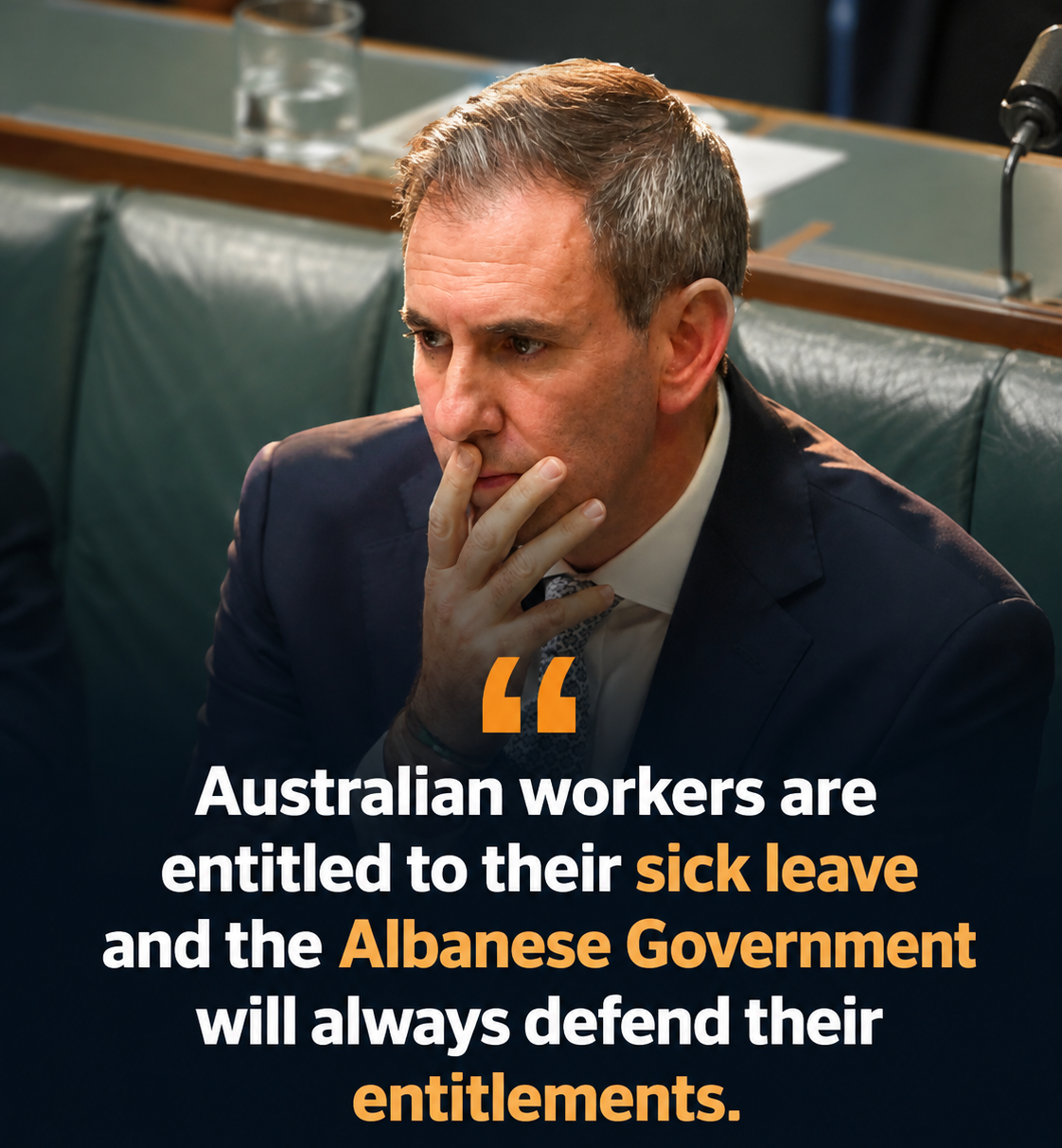
Treasurer Jim Chalmers discusses Australia's paid sick leave protections

Employment specialists note that workplace leave systems differ considerably around the world. Each country establishes its own rules regarding eligibility, employer responsibilities, medical certification requirements and wage replacement during periods of illness. As a result, policy changes overseas do not automatically affect Australian employment law.

Supporters of maintaining paid sick leave argue that the entitlement protects both workers and employers by encouraging people who are genuinely ill to recover before returning to work. They also note that access to paid leave can support public health by reducing workplace transmission of contagious illnesses.

Business groups and labour market analysts generally agree that workplace policy should balance employee protections with business productivity and administrative efficiency. Debate over employment standards often focuses on how to maintain that balance while supporting economic growth and workforce participation.

Any changes to Australia’s workplace entitlements would require consideration through the country’s legislative and regulatory processes. Governments typically consult employers, employee representatives, legal experts and industry stakeholders before introducing significant workplace reforms.

Industrial relations remain an important area of public policy as governments respond to changing labour market conditions, technological developments and evolving workplace practices. Issues including flexible work, employee wellbeing, productivity and workforce participation continue to feature prominently in policy discussions.

While international developments may prompt public debate, Australia’s paid sick leave arrangements continue to be governed by domestic employment law and existing workplace protections unless future legislative changes are introduced through Parliament.


Related Posts

Editorial illustration of Steven Miles and David Crisafulli in Queensland politics

Steven Miles Challenges Crisafulli Over Child Safety After Amanda Camm Quits

Queensland Opposition Leader Steven Miles has challenged Premier David Crisafulli to appoint an experienced replacement for Amanda Camm after she announced her decision to step down from the child safety and domestic and family violence portfolios. Miles says the choice will reveal how seriously the government takes services for vulnerable children and families. Crisafulli has praised Camm’s record and defended the reforms initiated during her term. Camm says her decision was personal and followed major surgery and an incomplete recovery. She has also referred to the stress of her ministerial workload and the impact of public harassment. Her resignation should not be portrayed as an admission that the criticism of her administration was correct. The policy dispute and the reasons she has given for leaving office are separate facts.

Editorial illustration of Sharon Freund and Michael Allen with courthouse imagery, not a photograph of proceedings

Judge Sharon Freund Challenges Watchdog Referral Amid Dispute With Michael Allen

NSW Deputy Chief Judge Sharon Freund has taken her challenge to a watchdog referral before the Court of Appeal amid a prolonged dispute involving Local Court Chief Judge Michael Allen. The latest proceedings concern whether decisions and observations arising from a Judicial Commission process were reached and handled lawfully. The legal contest remains unresolved, and the allegations at its centre must not be treated as disciplinary findings against either judge. Published accounts of the Court of Appeal proceedings say Freund’s lawyers have challenged the Attorney-General’s referral of her conduct to the NSW Judicial Commission. The dispute has been linked to questions about the handling of a criminal case involving a judicial colleague’s adult child and to competing allegations about procedural propriety. Those accounts remain contested, and the Court of Appeal’s task is not identical to a final disciplinary inquiry.

Editorial illustration of Angie Bell and Anne Aly, Australian parliamentary debate

Angie Bell Calls Stoning Remarks ‘Regrettable’ After Anne Aly Criticism

Liberal frontbencher Angie Bell has described her earlier parliamentary remarks about Small Business Minister Anne Aly and Prime Minister Anthony Albanese as regrettable, calling them a poor choice of words after a furious public dispute over violent imagery in political debate. Bell says the comment was neither helpful nor planned, and that she withdrew it and tried to rectify the matter with Aly. The new statement follows criticism from Aly, who described the original language as racist and misogynistic. The exchange is significant not because the words have just been spoken, but because Bell has now publicly addressed them. Her expression of regret should be reported accurately without claiming that she accepted every criticism Aly made or that the parties have resolved their disagreement.

Editorial illustration of Nina Taylor and Fishermans Bend urban development

Nina Taylor Defends Fishermans Bend Plans as Rivals Demand Faster Transport

Labor MP Nina Taylor has defended the Victorian government’s approach to Fishermans Bend as rival candidates in the Albert Park electorate demanded faster public transport and better infrastructure for the growing inner-Melbourne precinct. The debate at a local election forum highlighted the gap between plans for a major urban renewal area and the transport connections residents and businesses can already use. Candidates questioned why promised tram and rail links remain distant prospects despite long-running plans to accommodate substantially more homes and jobs. Taylor pointed to recent planning steps, the Metro Tunnel and expanded bus services, while opponents pressed the government to deliver infrastructure earlier. The disagreement concerns priorities, funding and sequencing; a planning announcement should not be confused with a completed railway or tram service.

Editorial illustration of Angus Taylor and Chris Bowen with the Snowy 2.0 hydroelectric project

Angus Taylor Demands Chris Bowen Resign Over Snowy 2.0 Cost Blowout

Opposition Leader Angus Taylor has called for Energy Minister Chris Bowen to resign after Snowy Hydro revised the cost and completion forecast for Snowy 2.0, reviving a political argument over who is responsible for one of Australia’s most expensive energy projects. The company’s updated target is $22.2 billion, with an allowance for a cost of up to $25 billion, while commissioning is now expected in late 2029. The latest assessment is a major test for the Commonwealth-owned company and for governments of both political persuasions. Taylor was energy minister when the project was approved under the Coalition. Bowen, who oversees the project as a shareholder minister under Labor, says the early design and engineering assumptions left a lasting problem. Neither side’s political account changes the figures Australians now need to assess.

Editorial illustration of David Pocock and Anthony Albanese with parliamentary funding documents

David Pocock Challenges Albanese Over Helen Haines Funding Dossier

Independent senator David Pocock has challenged Prime Minister Anthony Albanese’s explanation of a document circulated from his office about fellow independent Helen Haines, drawing a sharp distinction between routine political briefing and material that can cast doubt on an MP’s integrity. Albanese says the file concerned Haines’s requests for funding for her electorate and was not intended as a personal attack. The row has taken on particular sensitivity after the alleged vehicle attack that left Haines critically injured. That incident is the subject of a separate criminal investigation. No established evidence links the circulation of the political document to the alleged attack or identifies political briefing as a motive. Treating the two events as causally connected would go beyond the facts.




