Deputy Liberal leader Jane Hume has firmly rejected suggestions that the Liberal Party could one day form a governing coalition with Pauline Hanson’s One Nation, drawing a clear line between electoral cooperation and sharing government.
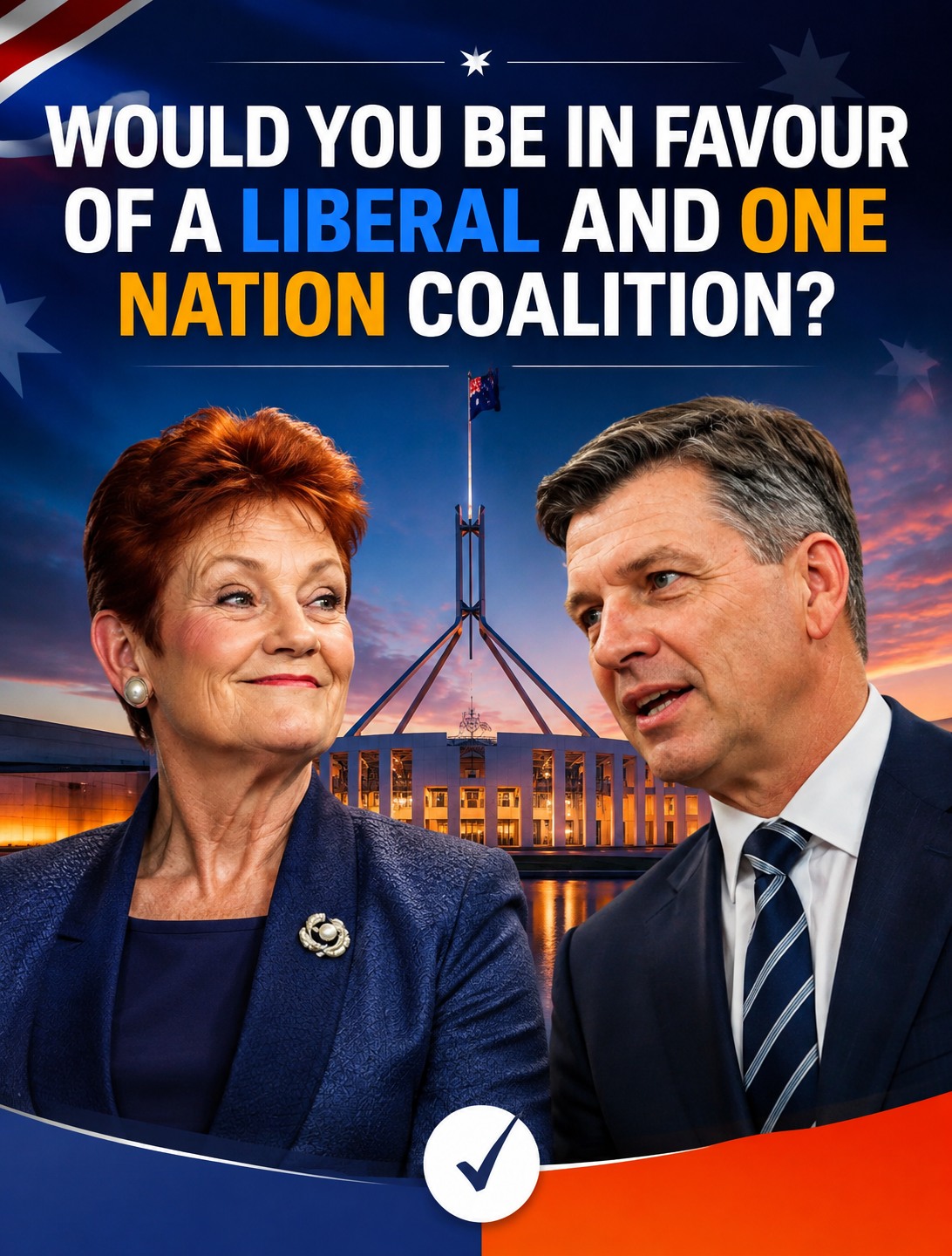
Hume’s comments come amid growing discussion about the Coalition’s relationship with One Nation following a series of opinion polls showing Pauline Hanson’s party enjoying stronger public support than in previous election cycles.
During an interview, Hume repeatedly dismissed suggestions that the Liberals could govern alongside One Nation, stressing that the Liberal Party already has a long-established coalition partner.
“No, we will not,” Hume said when asked whether the Liberal Party could enter government with One Nation.
She added that the Liberals have been in coalition with the Nationals for around 80 years and made clear there were “no plans” and “no intention” to change that arrangement.
Her remarks were prompted by comments from several Coalition colleagues that appeared less definitive.
In recent days, Liberal senator Andrew Bragg suggested decisions about any future parliamentary arrangements would ultimately depend on the composition of the next Parliament, while senior Liberal MP Dan Tehan also stopped short of categorically ruling out future cooperation if circumstances required it.
Those comments fuelled speculation that the Coalition might eventually soften its position should a minority parliament emerge after a future federal election.
Hume sought to shut down that speculation.
She argued there was an important distinction between hypothetical post-election scenarios and the Liberal Party’s actual policy, insisting the Coalition’s long-standing partnership with the Nationals remained unchanged.
Her intervention reinforces the position previously expressed by Opposition Leader Angus Taylor, who has also ruled out forming a formal governing coalition with One Nation while continuing to campaign against the Albanese government.
The issue has become increasingly prominent because of One Nation’s recent electoral momentum.
Several national opinion polls have recorded stronger support for Pauline Hanson’s party, leading to renewed debate about how the Coalition should respond to a growing conservative vote outside the major parties.
Although polling varies between organisations, the results have encouraged discussion about whether closer cooperation could improve conservative electoral prospects in closely contested seats.
The debate has also highlighted an important distinction within Australia’s political system.
A formal coalition involves parties agreeing to govern together, sharing ministerial positions and collective responsibility for government policy.
Preference arrangements, by contrast, relate only to how parties recommend voters rank candidates on “how-to-vote” cards during elections and do not require parties to govern together.
Australia’s preferential voting system allows parties to negotiate recommendations on preference flows while remaining entirely separate political organisations.
Because of this distinction, political parties often cooperate electorally without entering formal governing partnerships.
That difference has become central to the current discussion surrounding One Nation.
Nationals leader Matt Canavan recently said he would be willing to discuss preference arrangements with One Nation if doing so improved the chances of defeating Labor.
Canavan described any discussions as needing to be “a two-way street” but stopped well short of advocating a formal coalition government with Pauline Hanson’s party.
Hume’s position therefore contrasts more with the Nationals’ approach to electoral strategy than with any proposal for a shared government.
She has repeatedly argued that political parties should maintain clear identities and suggested the Liberal Party should continue presenting itself as a distinct alternative to both Labor and One Nation.
During another recent interview, Hume used a football analogy to illustrate that view, saying she supports St Kilda and does not change football teams—comments widely interpreted as signalling her reluctance to blur political identities.
Pauline Hanson has also sought to temper speculation surrounding possible future arrangements.
While indicating she would not necessarily oppose discussions if political circumstances changed, Hanson has said One Nation is not actively seeking to become part of a formal Coalition government.
Instead, she has emphasised the party’s desire to maintain its own political identity while continuing to advocate policies on immigration, cost-of-living pressures, energy and national security.
Political analysts note that minority parliaments can create complex negotiations after elections.
Under Australia’s Westminster system, governments do not necessarily require formal coalition agreements with every supporting party.
A minority government may instead rely on confidence-and-supply agreements or issue-by-issue parliamentary support while remaining politically separate.
For that reason, discussions about post-election cooperation do not automatically imply a formal coalition or merger between parties.
The Coalition’s internal debate reflects broader strategic questions facing conservative politics in Australia.
Some members believe maintaining a clear distinction from One Nation protects the Liberal Party’s broader electoral appeal.
Others argue that greater cooperation on preferences could reduce vote splitting and improve the chances of defeating Labor in marginal electorates.
Those differing views have become more prominent as One Nation continues expanding its organisational presence, including launching an enlarged Victorian election campaign and announcing new candidates ahead of upcoming state contests.
Despite those developments, Hume has left little room for ambiguity.
Her comments represent the strongest statement yet from the Liberal leadership rejecting the prospect of a governing coalition with Pauline Hanson’s party.
Whether discussions over electoral preferences continue is likely to remain a separate political question, particularly if opinion polling continues to show strong support for One Nation.
For now, however, the Liberal Party leadership insists its future remains tied to its historic partnership with the Nationals rather than any formal alliance with One Nation, even as debate over conservative cooperation continues inside Australia’s opposition parties.






