Victorian Premier Jacinta Allan is facing mounting political pressure after plans emerged for a powerful new state agency designed to combat organised crime, including the wave of firebombings, extortion rackets and gang-related violence that has unsettled Melbourne and regional Victoria over the past two years.
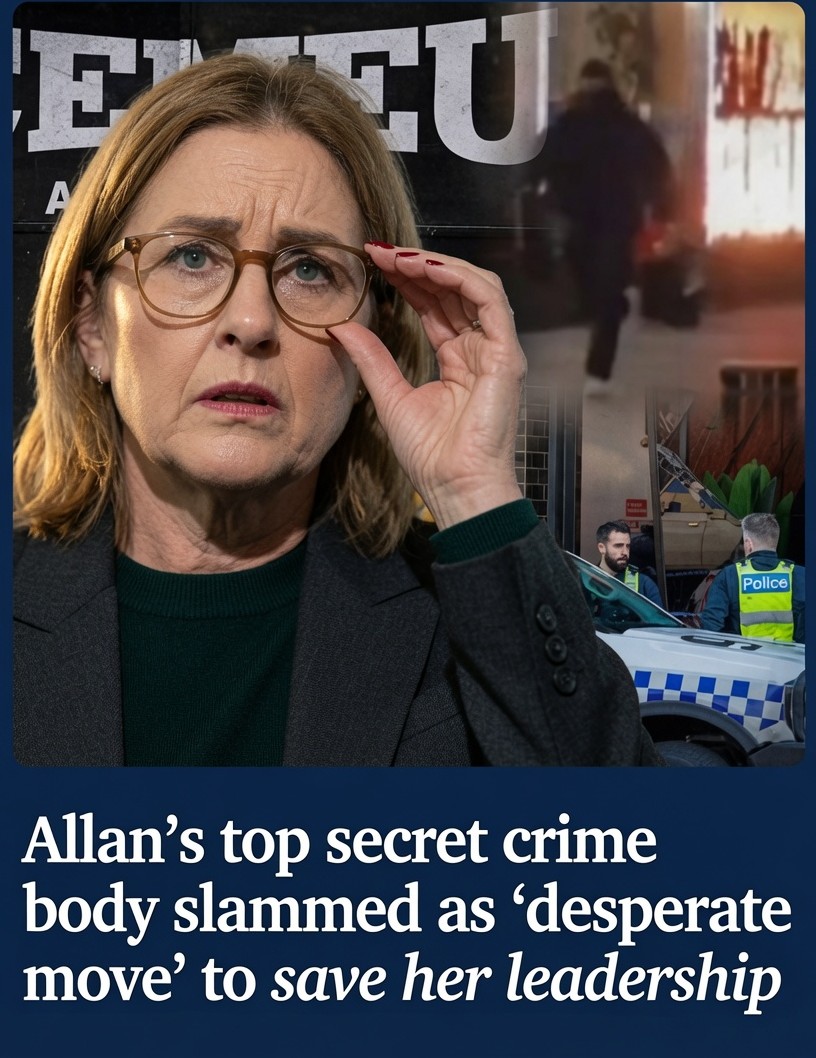
While the Allan government argues the proposed body would strengthen Victoria’s ability to target sophisticated criminal networks, critics from both inside and outside the Labor Party have questioned the timing of the proposal, accusing the government of rushing the plan in an effort to blunt growing demands for a royal commission into alleged corruption linked to the state’s multibillion-dollar Big Build infrastructure program.
The proposal has emerged as law and order becomes one of the defining issues ahead of Victoria’s November state election. Rising concerns over organised crime, illicit tobacco networks, extortion attempts targeting businesses and a succession of high-profile firebombing attacks have intensified public scrutiny of the government’s response.
A new agency focused on organised crime
According to reports, the planned organisation would operate as a specialist intelligence-led body concentrating on serious organised crime rather than day-to-day policing.
Its expected responsibilities include identifying criminal syndicates, tracing illicit financial assets, strengthening intelligence gathering and helping police dismantle the financial foundations of organised crime. Officials are also considering expanded powers to compel financial information from banks and other institutions, allowing investigators to follow money flows connected to criminal enterprises.
The proposal reportedly has the support of Victoria Police leadership, including Chief Commissioner Mike Bush, who has consistently argued that organised crime underpins many of the state’s most serious criminal offences.
However, reports suggest police have been cautious about branding the organisation as a formal crime commission, preferring a structure designed to avoid political controversy while maintaining operational independence.
Political criticism intensifies
The proposal has quickly become politically contentious.
Opposition figures argue the announcement is less about fighting crime than changing the political conversation surrounding allegations that organised crime infiltrated parts of Victoria’s construction sector during delivery of major public infrastructure projects.
Several anonymous Labor sources quoted in local media have also questioned whether the proposal is being developed too quickly, suggesting ministers are working under compressed timelines to unveil the initiative before Parliament resumes later this month. Some insiders reportedly fear the agency could be announced before important governance, accountability and oversight arrangements have been fully developed.
Those concerns have fuelled accusations that the government is prioritising political messaging over careful institutional design, an allegation ministers have rejected.
The shadow of the Big Build
The controversy surrounding the proposed crime body cannot be separated from the broader debate over Victoria’s Big Build program.
For months, the opposition has been calling for a royal commission into allegations that organised crime figures infiltrated sections of the construction industry, particularly through associations involving the CFMEU and contractors working on major government projects.
Business groups, integrity advocates and some Labor MPs have also argued that an independent inquiry would help restore public confidence after allegations involving criminal infiltration, intimidation, unlawful conduct and cost blowouts within parts of the industry.
Premier Allan has consistently resisted those calls, arguing previous royal commissions have produced limited practical outcomes and insisting existing law enforcement agencies already possess significant investigative powers.
Critics, however, contend that establishing a new crime-fighting body should not replace an independent examination of how alleged criminal influence developed within publicly funded construction projects.
Crime concerns driving public debate
The political dispute comes against a backdrop of escalating organised crime activity across Victoria.
Police have spent months responding to violent disputes linked to the illicit tobacco market, with numerous tobacconists, cafés and commercial premises targeted in firebombings, shootings and extortion campaigns.
Investigators believe many attacks are connected to competing organised crime groups seeking control over illegal tobacco distribution and protection rackets.
Authorities have warned that criminal organisations increasingly rely on encrypted communications, sophisticated financial structures and international connections, making traditional investigative techniques less effective than they once were.
Supporters of the government’s proposal argue these developments justify a specialist agency capable of integrating intelligence, financial investigations and cyber capabilities under a single operational framework.
Questions over transparency
Despite broad agreement that organised crime presents an evolving challenge, significant questions remain about the structure of the proposed agency.
Little information has been released publicly regarding its legislative powers, reporting obligations, governance model or oversight arrangements.
Legal experts have long argued that agencies exercising significant coercive powers require strong independent supervision to maintain public confidence and protect civil liberties.
Until draft legislation is released, uncertainty is likely to remain over how the body would interact with Victoria Police, IBAC, the Office of Public Prosecutions and other existing integrity institutions.
Election pressure mounts
The debate is unfolding during one of the most politically challenging periods of Jacinta Allan’s premiership.
Since succeeding Daniel Andrews in 2023, Allan has inherited responsibility for managing Victoria’s record infrastructure pipeline while confronting concerns about government debt, housing affordability, cost-of-living pressures and public safety.
Opinion polling has suggested growing dissatisfaction among sections of the electorate, placing additional pressure on Labor as the November election approaches.
The opposition has made law and order a central campaign theme, promising stronger anti-mafia legislation, expanded unexplained wealth laws and a royal commission into alleged corruption associated with the Big Build if elected.
That means any announcement relating to organised crime is likely to be interpreted not only through a policing lens but also through an intensely political one.
Can the proposal change the conversation?
Whether the proposed agency ultimately proceeds will depend on Cabinet approval, legislative drafting and parliamentary support.
If established, it could become one of the most significant changes to Victoria’s organised crime enforcement framework in years, particularly if granted enhanced financial investigation powers and expanded intelligence capabilities.
At the same time, the proposal is unlikely to silence calls for broader accountability over allegations involving the state’s construction sector. Business organisations, sections of the legal community and political opponents continue to argue that criminal investigations and institutional inquiries serve different purposes and that one should not necessarily replace the other.
For Premier Allan, the challenge extends beyond designing an effective law enforcement body. She must also convince Victorians that the initiative is driven by genuine public safety priorities rather than electoral politics. With organised crime remaining a major public concern and the state election only months away, the government’s handling of both crime policy and transparency is likely to remain under intense scrutiny throughout the campaign.






