Australia’s superannuation industry has mounted a united defence of its independence after Prime Minister Anthony Albanese suggested the nation’s $4.5 trillion retirement savings pool should be viewed as a “national asset” capable of playing a larger role in supporting Australia’s economic development.
The Prime Minister’s comments, delivered during the annual superannuation lending roundtable in Sydney, have reignited a long-running debate about whether Australia’s compulsory retirement savings system should be encouraged to invest more heavily in domestic projects or remain focused solely on delivering the strongest possible returns for millions of fund members.
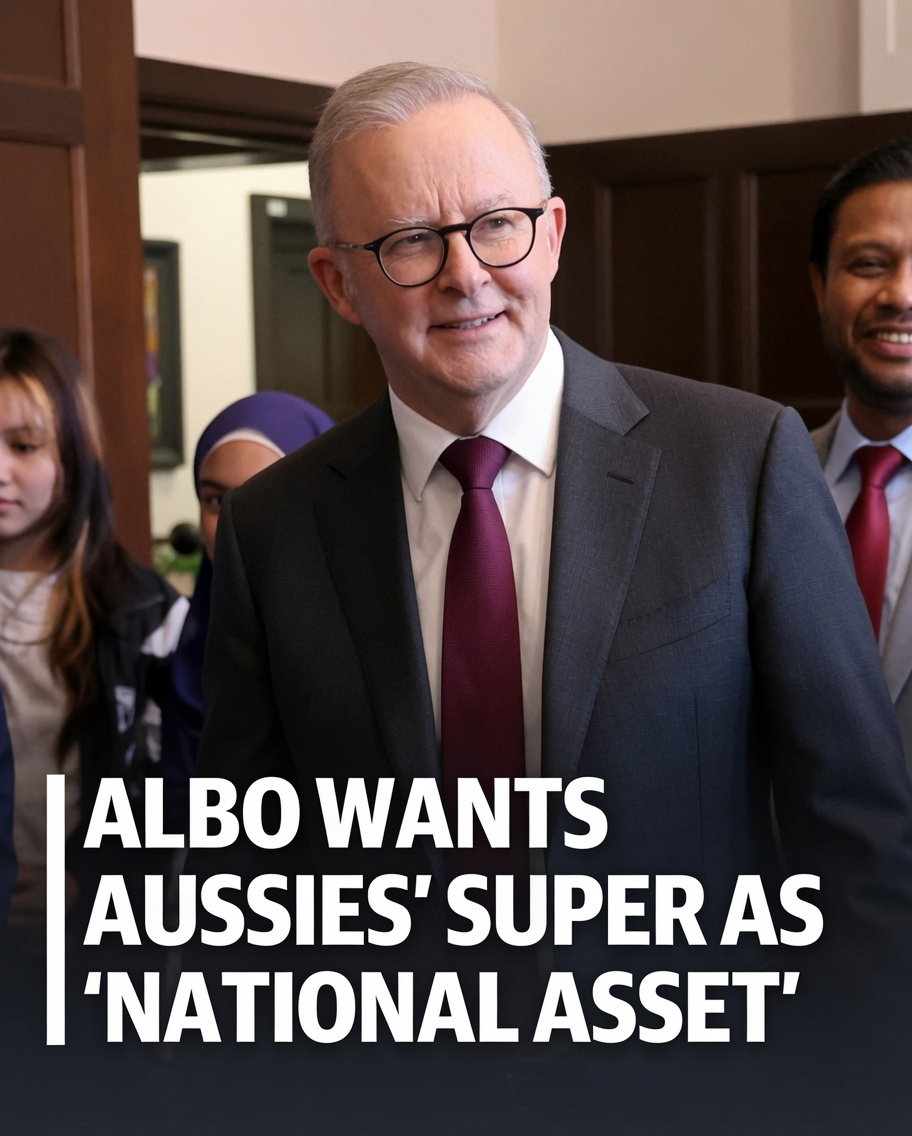
Albanese argued Australia’s superannuation sector represents one of the country’s greatest financial strengths and could help unlock additional investment in areas that improve national productivity.
“There is a real potential to see these funds as a national asset that can be used more appropriately and get better returns as well, not just for individuals and for retirees, but for the nation,” the Prime Minister said.
Former Victorian premier Daniel Andrews supported the concept during the same forum, suggesting retirement savings could be invested in projects addressing housing shortages, transport infrastructure, the clean energy transition, water security and future pandemic preparedness, provided the investments generated appropriate returns.
However, the proposal was met with immediate resistance from senior figures across Australia’s financial sector, who stressed that superannuation trustees already operate under strict legal duties requiring every investment decision to be made in members’ best financial interests.
Westpac chief executive Anthony Miller delivered one of the strongest responses.
“Don’t touch the super complex, don’t direct it, don’t tell it where to go,” Miller said, arguing governments should avoid influencing portfolio decisions that are the responsibility of independent trustees.
AMP chief economist Shane Oliver also warned against political involvement in investment decisions.
“Super funds should be left to decide what is the best investment strategy for their members,” Oliver said.
“They are accountable and having governments direct them would be a big mistake.”
UniSuper chief investment officer John Pearce echoed those concerns, saying trustees’ legal obligation to members “cannot be compromised” and warning that directing investment strategies could undermine confidence in Australia’s superannuation system.
Pearce noted that many funds already invest in Australian corporate debt and infrastructure where attractive commercial opportunities exist, but said investment decisions must remain independent of government policy objectives.
Australia’s largest super fund, AustralianSuper, has likewise defended the sector’s independence, arguing governments should not dictate where retirement savings are invested.
The fund says investing globally allows it to capture opportunities in sectors such as technology while generating stronger long-term returns for members. Executives have repeatedly stated that international investments ultimately bring wealth back to Australian retirees.
The Association of Superannuation Funds of Australia (ASFA), which represents much of the industry, adopted a more nuanced position.
Chief executive Mary Delahunty said super funds are legally required to act in members’ best financial interests, but noted that investments generating strong returns frequently also benefit Australia’s broader economy.
“Super funds invest significantly in Australia, including in local businesses and infrastructure,” she said, adding that productive investments can deliver a “double dividend” by supporting both retirement savings and economic growth.
The debate comes as Australia’s compulsory superannuation system continues to expand rapidly.
According to the Australian Bureau of Statistics, total superannuation assets now account for around $4.5 trillion, making Australia’s retirement savings pool one of the largest in the world relative to population. The compulsory Superannuation Guarantee has also increased to 12 per cent of ordinary earnings, further accelerating growth in the system.
Because superannuation funds invest over periods spanning several decades, they are major investors in Australian shares, infrastructure, commercial property, private equity and international markets.
Supporters of Albanese’s proposal argue those long investment horizons naturally align with projects such as transport, renewable energy and housing, all of which require patient capital and can potentially generate stable returns over many years.
Critics, however, argue that governments should never blur the distinction between public policy and fiduciary responsibility.
Under Australia’s superannuation laws, trustees must formulate investment strategies based on risk, return, diversification and liquidity for members—not broader political priorities.
Many industry leaders fear that even limited government direction could weaken public confidence in a retirement system that Australians rely upon to fund life after work.
The controversy also reflects broader economic pressures facing Australia.
Governments across the country are seeking new sources of long-term investment to finance infrastructure, housing and the transition to lower-emissions energy while keeping public debt under control.
At the same time, Australia’s ageing population is increasing the importance of ensuring superannuation continues delivering strong long-term returns for future retirees.
These competing objectives have fuelled recurring debate over whether retirement savings should play a greater role in nation-building.
Previous governments of different political persuasions have periodically suggested superannuation funds invest more heavily in domestic projects, although the industry has consistently maintained that such investments should occur only when they meet normal commercial investment criteria.
Economists generally agree that super funds already make substantial investments in Australia whenever risk-adjusted returns justify doing so.
Large funds collectively own interests in airports, toll roads, renewable energy projects, logistics facilities, commercial property and major infrastructure across the country.
The disagreement therefore centres less on whether super should invest domestically than on whether governments should actively encourage or influence those investment decisions.
For Albanese, the proposal reflects a vision of using Australia’s enormous retirement savings pool to help strengthen the nation’s long-term economic capacity.
For much of the financial sector, however, the principle remains unchanged.
Superannuation exists to maximise retirement outcomes for members, and while investments that benefit Australia are welcomed, industry leaders insist those decisions must remain independent, commercially driven and free from political direction.






