Hundreds of students and supporters have marched through Brisbane’s CBD in a protest against Pauline Hanson and One Nation, with demonstrators focusing on the senator’s recent remarks about Indigenous Australians and the party’s broader political agenda.
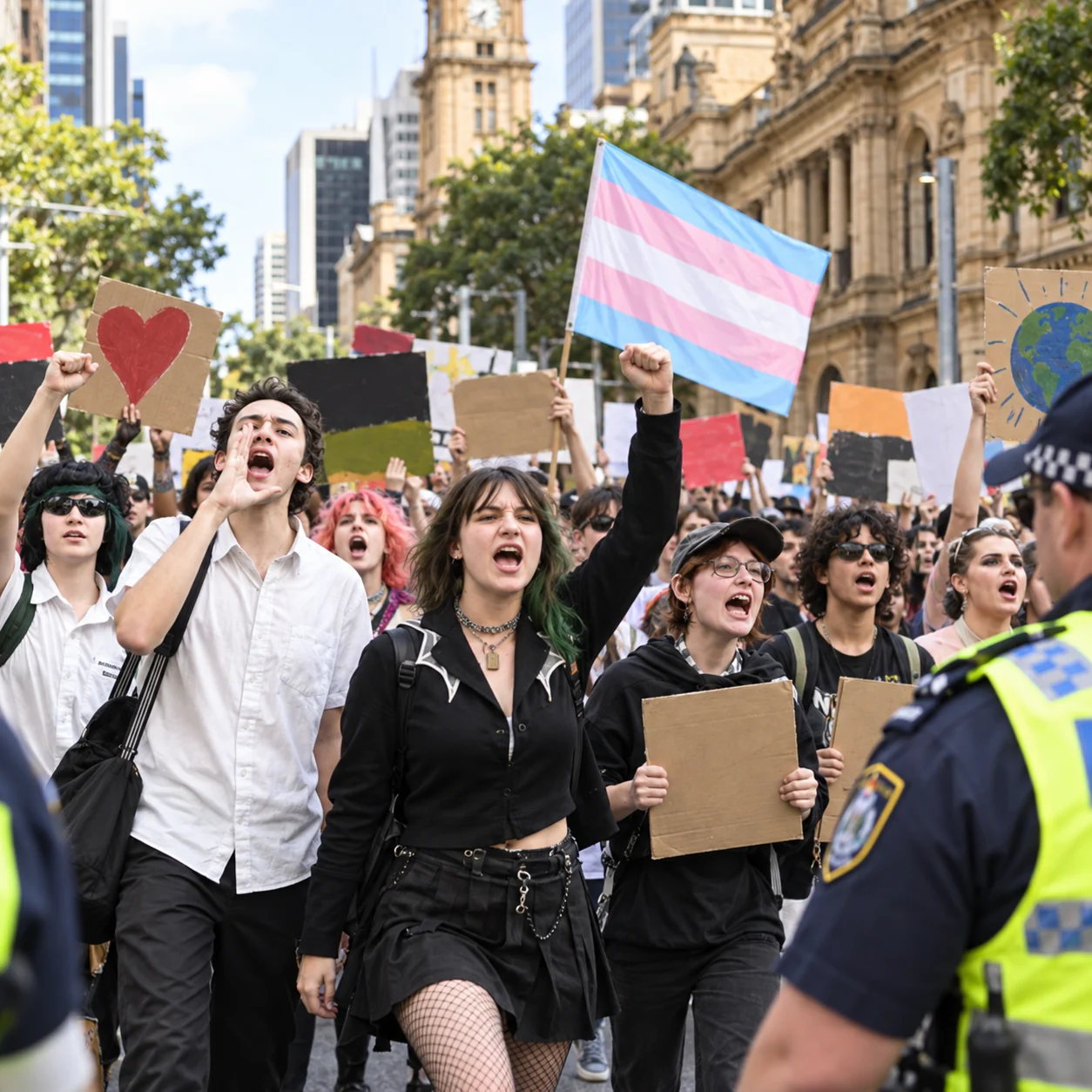
The September 17 rally gathered at Reddacliff Place before moving through central Brisbane under a visible police presence. Reporting by The Courier-Mail said the demonstration was organised primarily by student activist groups including Socialist Alternative and High School Anticapitalists, with support from student representatives at the University of Queensland and Queensland University of Technology.
The protest was part of a broader day of student action in Australian cities. Similar rallies were reported in Sydney, Melbourne, Adelaide, Darwin, Hobart and Perth, with organisers presenting the demonstrations as opposition to One Nation’s policies and rhetoric on race, immigration, abortion, multiculturalism and other social issues.
In Brisbane, protesters carried placards, chanted and addressed the crowd before marching through the city. The event also drew a smaller group of counter-protesters. Police intervened when tensions rose between the groups and kept the opposing sides separated.
Hanson’s remarks about Indigenous Australians were a major focus
A central issue raised by protesters was a set of comments Senator Hanson made on a podcast last year that resurfaced this week. In the recording, she referred to Indigenous Australians as “the most primitive race on Earth” while criticising the amount of Indigenous history and culture taught in schools.
The remarks prompted criticism from politicians and Indigenous leaders across the political spectrum. Indigenous Australians Minister Malarndirri McCarthy described the comments as derogatory and racist and called for an apology. Other political figures, including people who disagree with the government on many issues, also criticised the language.
Senator Hanson subsequently offered what she described as an apology to anyone offended by the use of the word “primitive”. She said she had not intended to hurt people and sought to explain that her comments were part of a broader argument about the school curriculum and her view of Australia’s history. Critics said the apology did not adequately address the substance of the original remarks.
The distinction matters in reporting the protest because the rally was not simply a response to a single sentence in isolation. Organisers connected the controversy to a wider criticism of One Nation’s positions on immigration, Indigenous policy, gender and social issues, while One Nation and its supporters argue that the party is challenging political orthodoxies and representing voters who believe major parties have ignored their concerns.
Student demonstrations against One Nation have grown during 2026
The Brisbane march followed another round of student protests in August. During those demonstrations, high school and university students walked out of classes in several capitals. The ABC reported that about 200 people attended the Brisbane protest in August, while larger crowds gathered in other cities.
The September action was organised separately from some of the groups involved in the August events, illustrating that there is more than one student network mobilising against One Nation. The Courier-Mail reported that the latest Brisbane protest was backed by activist groups including Socialist Alternative and High School Anticapitalists. National student organisations and campus groups have also supported various anti-One Nation actions during the year.
Supporters of the demonstrations say students have the same right as other Australians to participate in political debate, including those who are not yet old enough to vote. Critics of school walkouts have questioned whether students should leave class for political events and have argued that activist organisations can exert too much influence over young participants.
Both views were visible in public reactions to the protests. Some Australians praised the students for engaging with politics, while others criticised the rallies’ organisers or objected to the language used in chants and on signs. Those disagreements form part of a larger debate about youth political participation rather than changing the basic fact that the Brisbane event was a lawful political demonstration monitored by police.
Protest comes as One Nation receives increased political attention
The rallies are occurring at a time when One Nation is receiving heightened media and political attention. The party has sought to make immigration, population growth, housing pressure and national identity central issues in federal politics. Its opponents argue that some of its rhetoric unfairly targets migrants and minority groups; One Nation says its policies are aimed at reducing population pressures, strengthening national sovereignty and responding to voter concerns.
Student speakers in Brisbane argued that the party’s increased visibility made public opposition more important. The Courier-Mail reported that organiser William Sim told the crowd he regarded Hanson’s politics as a threat, particularly to marginalised groups. That was the organiser’s political assessment, not an official finding about the party or its supporters.
One Nation supporters, by contrast, have pointed to the party’s electoral support as evidence that its positions resonate with a substantial section of the electorate. The existence of large protests does not establish the views of Brisbane residents as a whole, just as polling or election results do not erase the right of opponents to demonstrate.
The September 17 protest therefore reflected two features of the current political environment at once: a more prominent One Nation presence in national debate and a more organised effort among student activists to oppose it.
The controversy around Hanson’s remarks also prompted discussion in federal politics about whether the Senate should formally censure her. ABC reporting said crossbench and government figures were considering possible parliamentary consequences after the comments resurfaced. A censure motion, if pursued, would be a political expression of disapproval rather than a criminal sanction and would not remove a senator from office.
Hanson’s response has been to defend the broader argument she was making while apologising for offence caused by her wording. That means the political dispute is not simply over whether the words were spoken — the recording is public — but over what they reveal about her views, whether her explanation is adequate and how voters should assess the party’s platform. Protesters in Brisbane took one position on those questions; One Nation supporters take another.
The September rallies also show how political mobilisation can develop outside formal party structures. Many participants were secondary-school or university students who cannot yet vote or are only newly eligible to do so. Their involvement gives the protests visibility, but it does not make the crowd representative of young Australians as a whole. The size and composition of a demonstration show who turned up, not the views of every student or voter in the city.
Police separated opposing groups as march moved through the CBD
Police maintained a presence around the Brisbane rally and march. According to reports from the event, tensions increased when protesters encountered counter-protesters carrying anti-abortion messages. Officers separated the groups and managed the movement of the crowd through the city.
There was no indication in the reporting reviewed for this article that the main march was prohibited. The focus for police was crowd management and preventing confrontations from escalating. Political demonstrations in busy city centres routinely require traffic, pedestrian and public-order planning, particularly where opposing groups are present.
For organisers, the rally was intended to demonstrate that Hanson’s recent comments and One Nation’s broader platform would continue to face organised opposition from students. For One Nation supporters, criticism of the protest has centred on the organisers, the decision by some students to leave classes and what they see as an attempt to stigmatise legitimate political positions.
Those competing claims are likely to continue as Australia moves through an increasingly contested debate over immigration, housing, Indigenous affairs and national identity. What happened in Brisbane on Thursday was one visible expression of that dispute: hundreds of students and supporters taking their political opposition into the streets, while police managed the demonstration and a smaller group of counter-protesters nearby.