After months of rapid political momentum, Pauline Hanson’s One Nation is facing renewed questions about whether its remarkable rise has begun to lose steam, with new polling suggesting support has slipped for the first time in several months.
According to the latest Resolve Political Monitor, One Nation’s primary vote has fallen four percentage points to 26 per cent, allowing Labor to reclaim first place on 28 per cent. Although the party remains well ahead of the Coalition on primary vote, the result has prompted debate over whether One Nation has reached the limits of its electoral appeal.
The decline follows one of the most extraordinary periods in the party’s history.
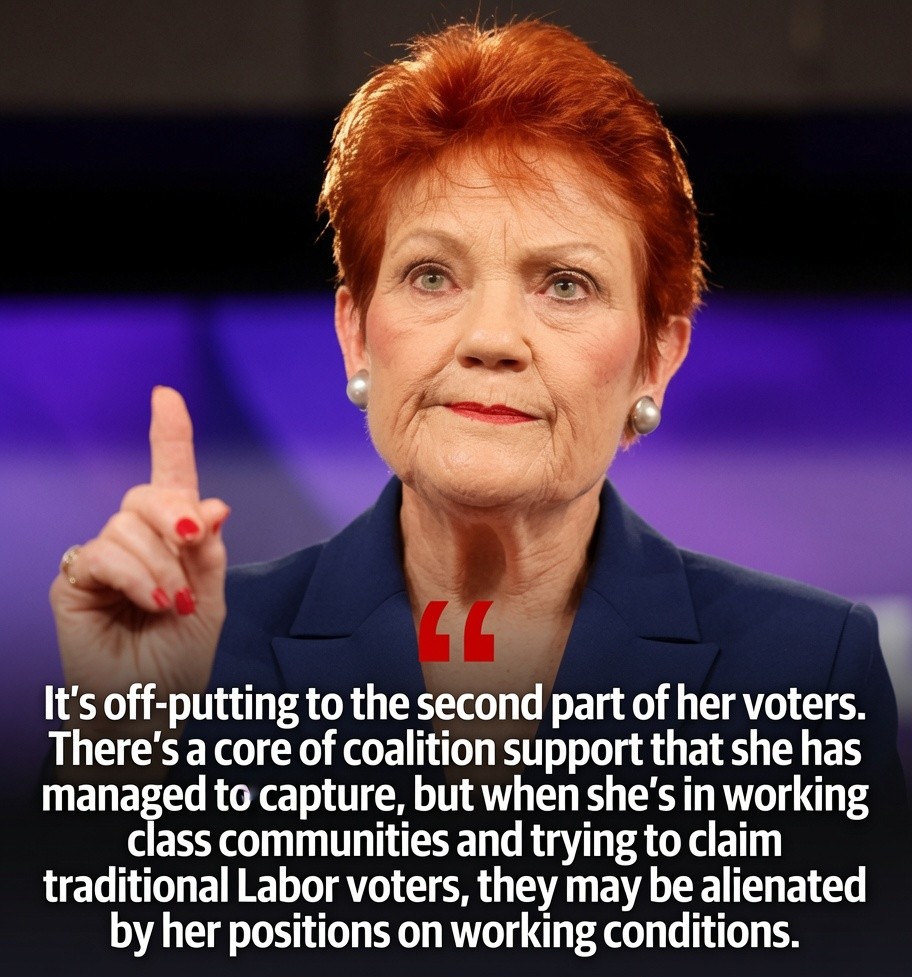
Over recent months, One Nation transformed from a minor political force into one of the country’s most closely watched parties, fuelled by voter frustration over immigration, housing affordability, cost-of-living pressures and dissatisfaction with Australia’s traditional major parties.
Several opinion polls earlier this year placed Pauline Hanson ahead of both Labor and the Coalition on primary vote, a scenario almost unimaginable only a year earlier.
Political analysts have repeatedly described the surge as evidence of a profound realignment within Australia’s conservative vote.
However, the latest polling suggests that momentum may now be slowing.
According to political analyst Josh Sunman, One Nation appears to have “hit a ceiling” after successfully attracting much of the electorate seeking an alternative to Labor and the Coalition.
He argues that expanding beyond that base may prove considerably more difficult.
“They’ve largely captured the protest vote,” Sunman said, suggesting the party now faces the challenge of persuading more moderate Australians who may agree with some policies but remain uncomfortable with others.
Analysts point to three major developments that may have contributed to the recent decline.
The first was Pauline Hanson’s appearance at the National Press Club.
The speech was widely viewed as an important opportunity for Hanson to demonstrate that One Nation was ready to move from protest politics to government. While supporters welcomed her message, commentators argued the address failed to convince enough undecided voters that the party possessed a comprehensive governing agenda.
The second factor relates to Labor’s recent political recovery.
Following improvements in economic messaging and the government’s handling of several policy announcements, Labor regained some momentum in national polling. That rebound appears to have drawn back a portion of voters who had temporarily shifted towards One Nation during earlier periods of economic dissatisfaction.
The third and perhaps most controversial issue has been Hanson’s recent overseas activities.
During a visit to the United Kingdom, Hanson met with several politically divisive figures, including anti-Islam activist Tommy Robinson. The meetings generated significant media attention in both Australia and Britain, with critics arguing the association risked alienating mainstream conservative voters.
Hanson has defended the trip as part of a fact-finding mission focused on immigration and social cohesion, while supporters argue the criticism reflects attempts to discredit the party rather than engage with its policy positions.
The latest polling also suggests some of Hanson’s more controversial policy proposals may be limiting broader electoral growth.
While One Nation continues to perform strongly among voters dissatisfied with the political establishment, surveys indicate less support for some of the party’s more hard-line positions, including proposals relating to multiculturalism and industrial relations.
According to analysts, that presents a dilemma.
One Nation’s outsider image has been central to its appeal for nearly three decades. Yet as the party becomes increasingly influential and begins presenting itself as a potential governing force, voters may expect greater policy detail and broader appeal than is typically required of a protest movement.
Despite the recent setback, few observers believe One Nation’s broader political influence has disappeared.
The party continues to poll substantially higher than at the last federal election and remains one of Australia’s fastest-growing political movements.
Analysts note that the decline represents only a single polling cycle and should not necessarily be interpreted as a lasting trend.
Polling movements often fluctuate over time, particularly following major political events, leadership appearances or media controversies.
Barnaby Joyce, now a One Nation MP, dismissed the latest figures, describing opinion polls as little more than snapshots rather than predictions of election outcomes.
He argued the party remains focused on issues such as migration, cost of living and Australian cultural identity, insisting those concerns continue resonating with many voters.
Political scientists also caution against assuming primary vote automatically translates into parliamentary seats.
Australia’s preferential voting system means One Nation’s electoral success depends not only on its own vote share but also on how preferences flow from Labor, the Coalition, Greens and independent candidates.
In many metropolitan electorates, the party still faces significant structural challenges despite improved polling.
Several election experts argue One Nation remains strongest in outer suburban, regional and rural communities where concerns about immigration, housing affordability and economic insecurity are particularly pronounced.
Its comparatively weaker support in inner-city electorates may limit its ability to convert strong statewide polling into enough seats to challenge for government in its own right.
The coming months will therefore provide an important test.
If One Nation can stabilise its support while broadening its appeal beyond traditional protest voters, the party may remain a major force shaping Australia’s political landscape.
If the latest polling instead marks the beginning of a broader decline, analysts say it could indicate that the party’s rapid rise has encountered the natural limits of its electoral base.
For now, the evidence remains mixed.
One Nation has undeniably reshaped Australia’s political conversation over the past year, forcing both Labor and the Coalition to respond to issues it has championed.
Whether that influence ultimately translates into sustained electoral growth—or whether the latest polling proves to be the beginning of a plateau—will become clearer as additional surveys and future elections test the durability of Pauline Hanson’s political resurgence.






