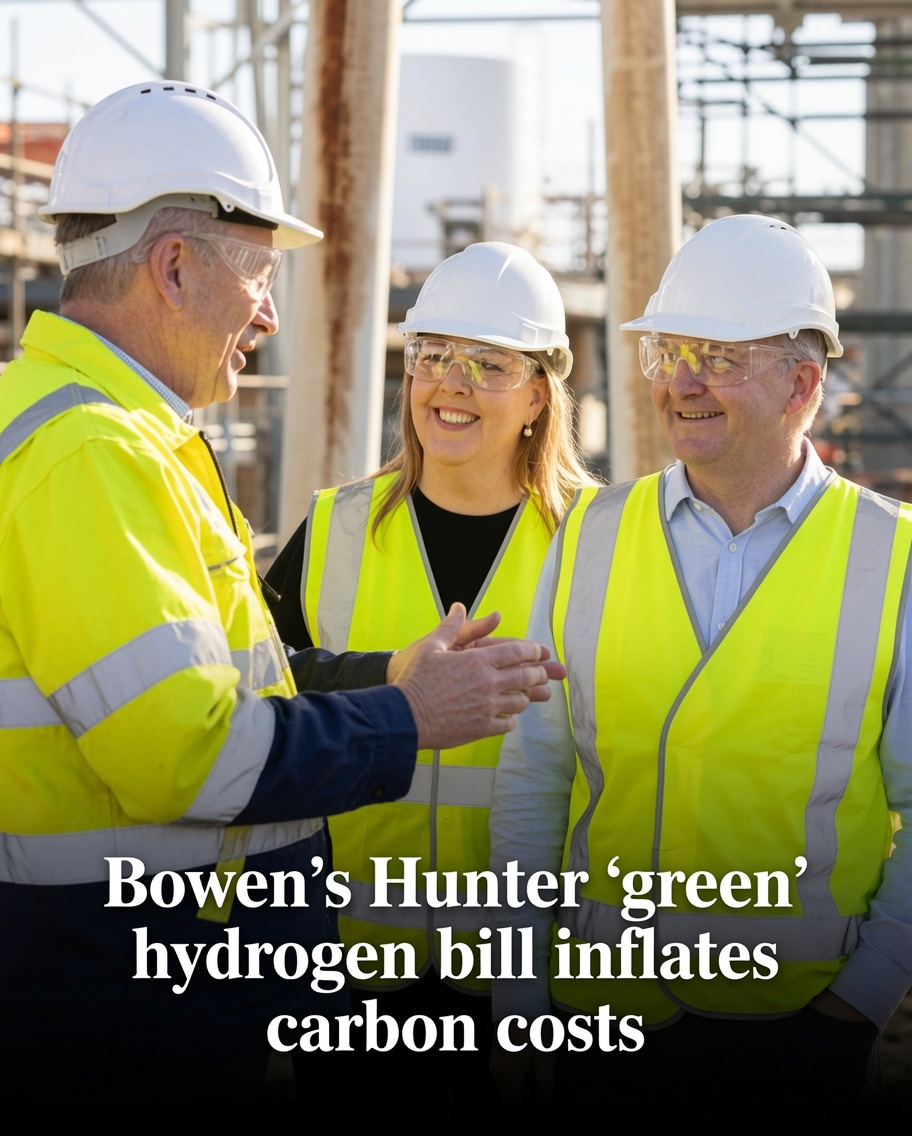
Australia’s green hydrogen strategy has returned to the centre of political and economic debate after questions were raised about the cost-effectiveness of a federally supported hydrogen project planned for Newcastle, New South Wales.
According to published reports, analysis of the proposed project suggests the estimated public cost of reducing carbon emissions could be substantially higher than current carbon market prices. The report also notes that questions have been raised about whether the facility can ultimately achieve the level of emissions reductions anticipated. These assessments reflect the analysis and opinions cited in the published report rather than confirmed government findings or project outcomes.
The Albanese Government has committed significant funding to support Australia’s emerging hydrogen industry, arguing that green hydrogen has the potential to become an important export commodity while contributing to long-term emissions reduction and industrial decarbonisation. Ministers have said early public investment is intended to encourage private capital, accelerate technological development and position Australia as a global supplier of low-emissions energy.
Green hydrogen is produced by using renewable electricity to split water into hydrogen and oxygen through electrolysis. Supporters believe the technology could eventually help reduce emissions in industries that are difficult to electrify directly, including steel manufacturing, chemicals, heavy transport, shipping and some industrial processes.
Critics argue that large-scale hydrogen projects remain expensive and face considerable commercial uncertainty. They question whether public funding should be directed towards technologies that have yet to demonstrate widespread commercial competitiveness and suggest governments should carefully evaluate the cost of emissions reductions compared with alternative climate policies and investments.
Energy economists note that assessing the value of emerging clean-energy technologies requires consideration of multiple factors beyond immediate construction costs. Future electricity prices, technological improvements, economies of scale, export demand, infrastructure development and international market conditions may all influence the long-term commercial viability of hydrogen production.
Independent analysts also point out that many governments around the world are providing financial support for hydrogen projects as countries compete to establish new clean-energy industries. Australia, the United States, Japan, South Korea and several European nations have each announced substantial incentives aimed at attracting investment into hydrogen production and related infrastructure.
Public finance experts emphasise that governments routinely face difficult decisions when allocating funding to emerging technologies. Policymakers must balance the potential long-term economic and environmental benefits against financial risk, opportunity costs and uncertainty regarding future market development.
As Australia’s energy transition continues, debate over hydrogen investment is expected to remain prominent. Whether projects ultimately deliver the anticipated economic returns and emissions reductions will depend on technological progress, commercial performance, future energy markets and ongoing policy decisions, with detailed project outcomes likely to become clearer over time.






