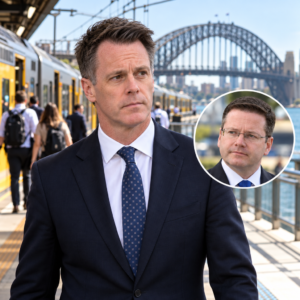
Governor-General Sam Mostyn has become the focus of a fresh political debate after delivering a speech urging Australia to move beyond what she described as a leadership “monoculture”, with critics arguing her remarks ventured into an active political controversy already dividing the Liberal Party over gender quotas.
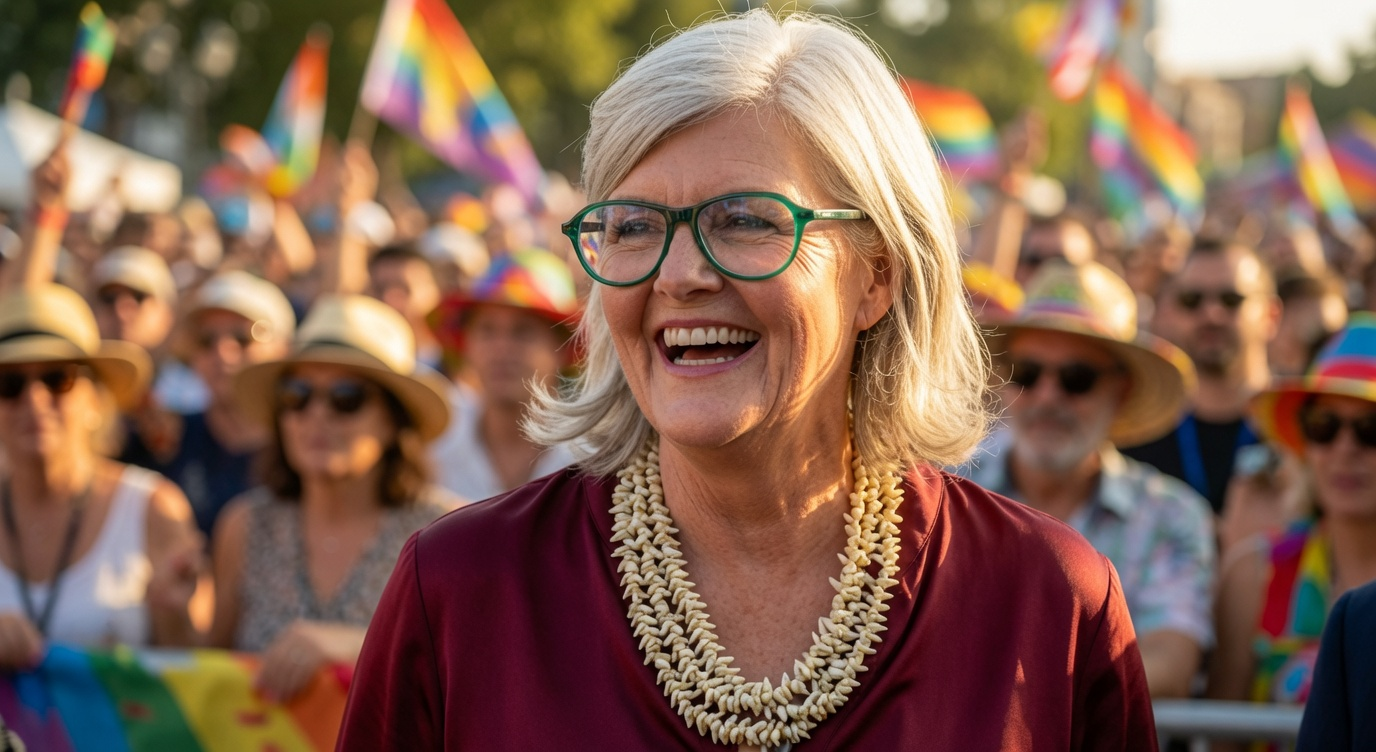
The speech comes as the Liberal Party considers proposals aimed at increasing the number of women elected to Parliament, including a leaked internal discussion paper that raises gender quotas as one possible option to address the party’s longstanding under-representation of female MPs.
According to the discussion paper, women currently occupy around one-third of Liberal and Queensland Liberal National Party parliamentary positions across both houses, while male MPs continue to outnumber women by roughly four to one in the House of Representatives.
By comparison, women now make up more than half of Labor’s lower house representation, highlighting one of the sharpest organisational differences between Australia’s two major political parties.
Addressing a leadership audience, Governor-General Mostyn argued Australia should embrace broader representation in positions of authority and avoid allowing leadership to be dominated by a narrow demographic.
She also warned against what she described as “grievance politics”, encouraging Australians to build institutions that draw upon a wider range of experiences and perspectives.
Although she did not directly endorse gender quotas or refer specifically to the Liberal Party’s internal debate, the timing of the speech attracted immediate political attention because it coincided with intense discussion inside the Opposition over possible reforms to candidate selection.
The Governor-General occupies one of Australia’s most constitutionally significant offices.
As the King’s representative, the Governor-General performs largely ceremonial and constitutional duties, including appointing ministers, granting Royal Assent to legislation, opening Parliament and exercising reserve powers in exceptional constitutional circumstances.
By longstanding convention, holders of the office are expected to remain publicly non-partisan and avoid becoming involved in day-to-day political disputes.
That expectation has become central to criticism of Mostyn’s speech.
Some commentators argued that discussing themes closely connected to a live political controversy risked creating the perception that the Governor-General had entered an ideological debate that should properly remain within the political arena.
Critics contended that regardless of the broader merits of increasing female representation, the office requires particular caution whenever public remarks could be interpreted as favouring one side of an active policy dispute.
Supporters of the Governor-General have taken a different view.
They argue that encouraging inclusive leadership, diversity and respectful public discourse falls squarely within the modern civic role frequently undertaken by governors-general.
They also note that Mostyn has spent much of her professional career advocating for gender equality, community leadership and broader participation in public life before her appointment in 2024.
Those themes have featured consistently throughout her public service, business and community work over many years.
The controversy has unfolded against the backdrop of a significant internal Liberal Party debate.
The leaked discussion paper argues that the Coalition faces a serious challenge in attracting and retaining female parliamentary representatives.
It suggests the issue has become sufficiently significant that the party should consider structural reforms traditionally associated with Labor rather than relying solely on existing merit-based preselection processes.
Not all Liberal figures agree.
Opposition Leader Angus Taylor has publicly rejected gender quotas, maintaining that candidate selection should continue to be based on merit rather than mandated numerical targets.
He has argued that Australians expect political representatives to be chosen because of their abilities, experience and commitment rather than gender alone.
Other senior Liberals have adopted a more flexible position.
Deputy Opposition Leader in the Senate Jane Hume has indicated that all options should remain available while the party considers how best to improve female representation.
Shadow Health Minister Anne Ruston has likewise argued that the current approach has not delivered sufficient progress and that meaningful reform should be considered with urgency.
The debate reflects a broader question confronting political parties across many democracies.
Supporters of gender quotas argue they can accelerate progress towards more representative legislatures by overcoming structural barriers that have historically limited women’s political participation.
They contend that more balanced representation improves decision-making and strengthens public confidence in democratic institutions.
Opponents argue quotas undermine merit-based selection and risk creating perceptions that candidates were chosen because of demographic characteristics rather than individual capability.
Many conservatives also argue that political parties should focus on expanding opportunities for all candidates without introducing mandatory numerical targets.
Australia has experienced this debate before.
The Australian Labor Party adopted affirmative action measures during the 1990s, gradually increasing targets for female representation over subsequent decades.
Labor leaders have frequently pointed to the resulting increase in women elected to Parliament as evidence that structured reforms can change organisational culture over time.
The Liberal Party, by contrast, has historically resisted formal quotas, preferring voluntary approaches and local preselection processes.
The current discussion therefore represents one of the most significant internal examinations of that position in many years.
Mostyn herself entered office in July 2024 after being appointed Australia’s 28th Governor-General by King Charles III on the advice of Prime Minister Anthony Albanese.
Before assuming the vice-regal role, she built a distinguished career across business, sport, higher education and the not-for-profit sector, where she became well known for advocating gender equality, Indigenous reconciliation and community leadership.
That background has occasionally prompted questions about how previous advocacy should be balanced with the constitutional expectation of vice-regal neutrality.
Constitutional experts generally note that governors-general retain considerable freedom to speak on civic themes such as inclusion, volunteering, education and social cohesion, provided they avoid endorsing particular political parties or legislative outcomes.
Where speeches intersect with issues under active political debate, however, perceptions of impartiality can become contentious even if no explicit political endorsement is made.
The latest reaction illustrates the sensitivity surrounding Australia’s constitutional offices.
Although the Governor-General does not participate in party politics, public comments from the office inevitably attract close scrutiny because of its symbolic role as an institution standing above partisan conflict.
Whether Mostyn’s speech should be viewed as a legitimate contribution to national conversations about leadership or as an intervention in a politically contested issue ultimately depends on how Australians interpret the boundary between civic advocacy and constitutional neutrality.
Meanwhile, the Liberal Party’s internal debate over gender representation continues independently of the Governor-General’s remarks.
Party leaders are expected to continue examining possible reforms before determining whether changes to candidate selection processes are necessary ahead of future elections.
The discussion ensures that questions about merit, representation and the role of gender in Australian politics will remain prominent well beyond the immediate controversy surrounding the Governor-General’s speech.