Australia’s medal-winning swimmers have shared in more than A$1.27 million in bonus payments after Hancock Prospecting, the mining company chaired by Gina Rinehart, rewarded the Dolphins for their record-breaking performances at the 2026 Commonwealth Games in Glasgow.
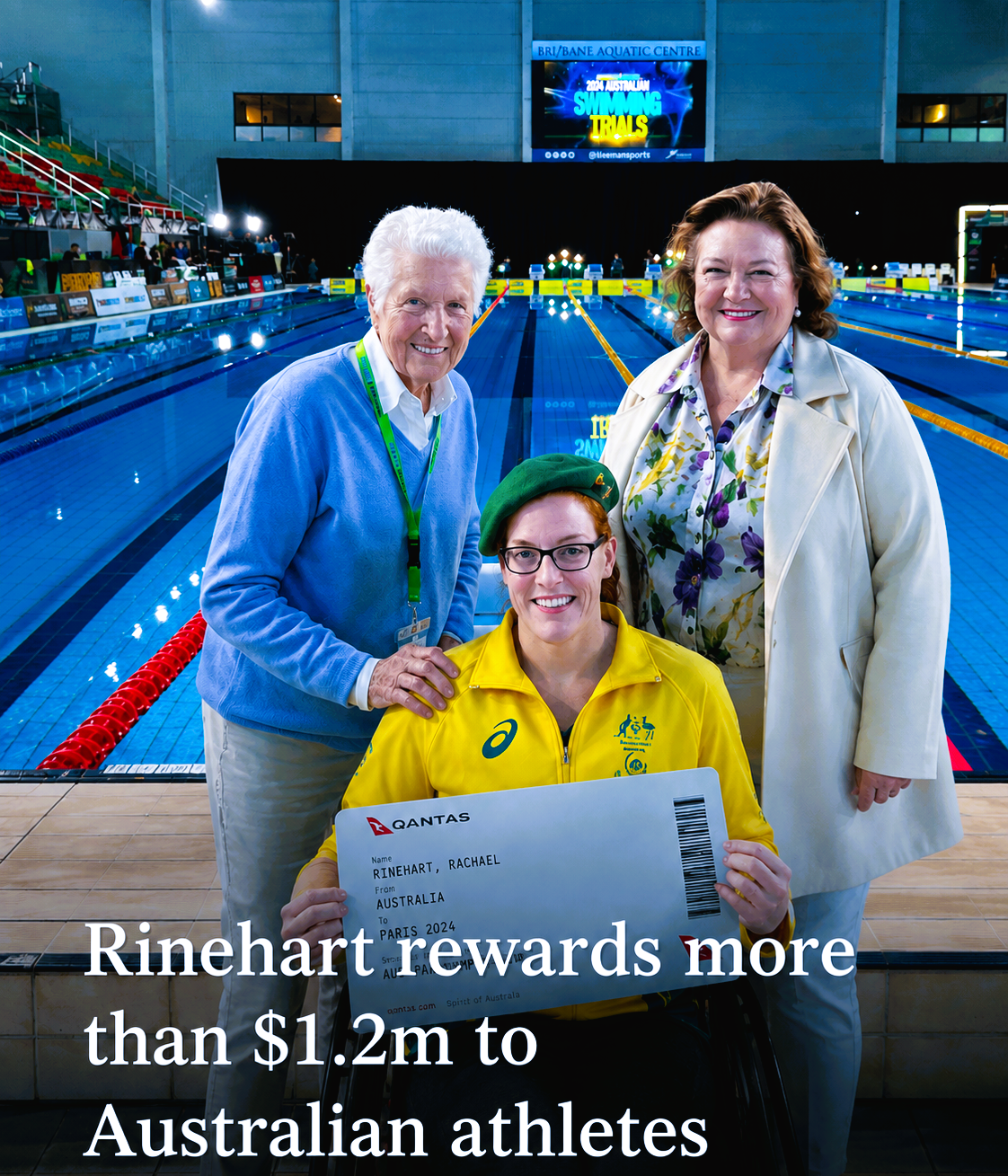
The payments continue a long-running athlete support program funded by Hancock Prospecting, with bonuses paid directly to swimmers based on the medals they won during the Games. The initiative recognises performances in both individual and relay events and has become one of the most significant privately funded reward schemes in Australian sport.
Australia’s Dolphins dominated the swimming competition in Glasgow, finishing with a record haul of 37 gold, 16 silver and 23 bronze medals across Olympic-program events. The extraordinary performance surpassed Australia’s previous Commonwealth Games benchmark and reinforced the nation’s status as one of the world’s strongest swimming powers.
Under Hancock Prospecting’s bonus structure, swimmers receive A$20,000 for each individual gold medal, A$15,000 for silver and A$10,000 for bronze. Relay athletes also receive bonus payments for medal-winning performances, meaning the most successful competitors accumulated substantial rewards across the week-long competition.
The total payout exceeded A$1.272 million, with 48 of Australia’s 60 swimmers earning at least one medal and therefore qualifying for bonus payments.
Several athletes earned particularly significant sums. Distance freestyle star Sam Short and middle-distance champion Lani Pallister were among the highest recipients after winning multiple individual and relay medals, while sprint specialist Meg Harris enjoyed one of the most successful Games by claiming six gold medals. Her achievement placed her alongside Australian swimming greats Ian Thorpe, Susie O’Neill and Emma McKeon as one of the few Australians to win six Commonwealth Games gold medals at a single edition.
Olympic champion Kyle Chalmers also benefited from the incentive program after adding further Commonwealth medals to his distinguished international career.
Following the Games, Chalmers publicly acknowledged the importance of the financial support available to Australian swimmers.
“I am obviously super grateful that we are able to receive that,” he said after the competition.
“To be able to have support of such an amazing Australian, I’m forever grateful.”
Although athletes expressed appreciation for the bonuses, Swimming Australia maintains a long-standing policy that prevents swimmers from publicly promoting individual commercial supporters during official team activities. As a result, athletes generally refer to the support without directly naming Hancock Prospecting or Gina Rinehart in official media appearances.
For many swimmers, the bonuses represent far more than a celebratory reward.
Unlike athletes in major professional sports, elite swimmers often face substantial training, travel and competition expenses while earning relatively modest incomes outside Olympic and world championship cycles. Prize money at international swimming competitions is limited, and many athletes rely on sponsorships, scholarships, institute support and part-time employment to continue competing at the highest level.
Private funding has therefore become increasingly important within Australian high-performance sport.
Hancock Prospecting has spent many years investing in Olympic and Commonwealth sports, particularly swimming, rowing and athletics. The company has supported elite athletes, development programs and national sporting organisations through sponsorship agreements designed to help athletes remain financially secure during Olympic cycles.
Gina Rinehart has repeatedly argued that Australia benefits when athletes are able to focus on training rather than financial pressures. Her company has become one of the country’s largest private backers of Olympic sport, contributing millions of dollars across multiple sporting codes over the past decade.
The Glasgow bonus payments follow a similar approach used after previous international competitions.
Rather than directing funding solely through sporting organisations, Hancock Prospecting provides direct financial recognition to athletes based on medal performances. Supporters argue this model rewards excellence while allowing competitors greater flexibility in how they use the funds, whether for coaching, travel, equipment or personal expenses.
Australia’s remarkable success in Glasgow has also attracted international attention.
British media contrasted Australia’s dominance with Great Britain’s comparatively modest performance, noting that Australia’s extensive high-performance system, strong coaching depth and significant private support have helped establish one of the world’s leading swimming programs. Some commentators specifically highlighted the role of Hancock Prospecting’s athlete incentive scheme in providing financial recognition that few other national programs can match.
Australia finished the swimming competition with 31 of the 42 Olympic-program gold medals and a total of 60 medals in those events, far ahead of every other nation at the Games. The performances included multiple podium sweeps, relay victories and championship records, underlining the depth of Australia’s current swimming squad.
Head coach Rohan Taylor praised the team’s consistency while cautioning that the Commonwealth Games should not be viewed as the ultimate benchmark for international success. With the Pan Pacific Championships and the 2028 Los Angeles Olympic Games approaching, Australia’s coaching staff has stressed the importance of continuing to improve against powerhouse nations such as the United States rather than becoming complacent after Glasgow.
The Commonwealth Games nevertheless provided several breakthrough moments for emerging swimmers.
Meg Harris emerged as one of the stars of the meet after collecting six gold medals, while teenagers and first-time senior representatives gained valuable international experience alongside Olympic veterans including Chalmers, Sam Short and Lani Pallister. Coaches believe that combination of established champions and rising talent places Australia in a strong position heading towards Los Angeles 2028.
Beyond the medal tally, the bonus program highlights the increasingly important role private investment plays in Australian elite sport. While government funding through the Australian Institute of Sport and national sporting organisations remains central to athlete development, corporate and philanthropic support has become an essential complement, particularly in sports where commercial earnings remain relatively limited.
For Australia’s swimmers, the Glasgow campaign delivered both sporting and financial rewards. Their record-breaking performances have not only strengthened Australia’s international reputation in the pool but also ensured that dozens of athletes return home with meaningful recognition for years of training and sacrifice.
As preparations begin for the next major international competitions, the combination of world-class performances and sustained private backing has reinforced Australia’s reputation as one of global swimming’s leading nations. The A$1.272 million distributed by Hancock Prospecting represents more than a financial bonus—it reflects an ongoing investment in the country’s pursuit of excellence at the highest level of international sport.






