Mining billionaire Gina Rinehart has awarded more than A$1.27 million in bonus payments to Australian swimmers and para swimmers following their record-breaking performances at the Glasgow Commonwealth Games, with the generosity of the scheme now accompanied by a broader debate over whether athletes should be free to publicly acknowledge private financial support.
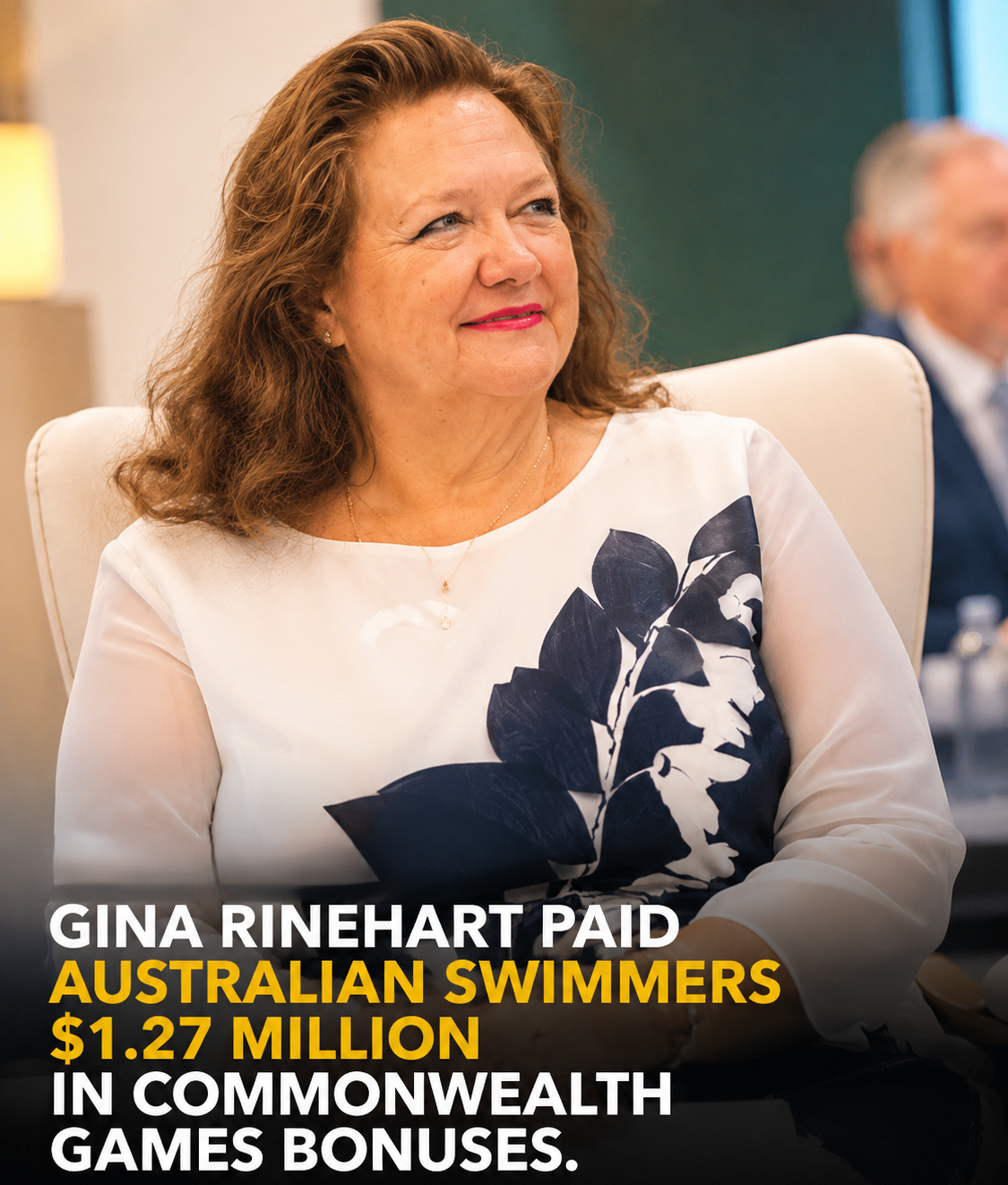
Hancock Prospecting confirmed that a total of A$1,272,500 had been distributed to medal-winning swimmers and para swimmers under a performance bonus program recognising Australia’s outstanding success in the pool.
Under the scheme, individual gold medallists received A$20,000, silver medallists A$15,000 and bronze medallists A$10,000. Relay swimmers received scaled bonus payments, while athletes who established new world records were awarded an additional A$30,000.
The payments followed Australia’s most successful Commonwealth Games swimming campaign on record, with the Dolphins collecting an unprecedented 37 gold medals in Glasgow. Sprint star Meg Harris was among the biggest individual beneficiaries after winning six gold medals, earning bonuses totalling A$60,000.
Announcing the payments, Rinehart praised the athletes for what she described as years of dedication, discipline and sacrifice.
“These outstanding performances are the result of years of hard work, discipline and sacrifice,” she said, congratulating swimmers for continuing Australia’s long tradition of international excellence in the sport.
The latest bonuses form part of Rinehart’s long-standing investment in Australian high-performance sport.
Through Hancock Prospecting, she has provided significant financial backing to Swimming Australia and several other Olympic sports over many years, funding athlete development, coaching programs, sports science, international competition and performance incentives.
Former Olympic champion Cate Campbell has previously credited that support with helping rebuild Australian swimming after one of the most difficult periods in the sport’s modern history.
Campbell said Hancock Prospecting’s investment “helped save the team and rebuild the sport”, arguing that sustained private funding had contributed significantly to Australia’s return to international dominance.
Many current athletes have expressed similar views.
Following the Glasgow Games, several swimmers publicly thanked Rinehart for her support despite reports that Commonwealth Games Australia had advised competitors against posting public messages acknowledging the bonuses.
Olympic champion Kyle Chalmers said Rinehart’s backing had helped him continue competing at the highest level, while other swimmers also publicly expressed gratitude for the financial assistance.
However, the bonus program has also become the subject of a wider ethical debate.
Correspondence reported by News24 indicated that members of the Australian team were subject to provisions within their team membership agreement discouraging or restricting public expressions of thanks relating to the bonus payments, with potential contractual consequences for breaching those provisions.
Some athletes reportedly regarded those restrictions as frustrating, particularly given that the bonuses were funded privately rather than through public money.
The reported restrictions have prompted discussion about the relationship between elite athletes, sporting organisations and private sponsors.
Supporters of Rinehart argue the bonus scheme demonstrates genuine philanthropy that has consistently benefited Australian sport regardless of political debate surrounding her public profile.
They contend that athletes should be free to acknowledge individuals who have directly contributed to their careers, particularly where the support extends beyond ordinary commercial sponsorship.
Others argue sporting organisations must carefully manage public communications to ensure consistency with existing sponsorship agreements and team commercial obligations.
Such policies, they say, are not necessarily directed at preventing gratitude but at protecting contractual relationships involving multiple commercial partners.
The debate has become more complex because of Rinehart’s public political involvement.
The mining executive has previously expressed support for a range of conservative causes and has provided financial backing to Pauline Hanson’s One Nation.
Some ethics scholars have therefore questioned whether athletes who might feel uncomfortable with those political associations could experience pressure when financial support is linked to a prominent individual.
Writing in The Conversation, ethicists suggested the issue is not whether Rinehart should support Australian sport, but whether arrangements surrounding that support allow athletes sufficient freedom to express either gratitude or discomfort without fear of contractual consequences.
Those scholars emphasised that no evidence has emerged suggesting athletes were required to endorse any political position.
Rather, they argued the broader policy question concerns whether sporting bodies should regulate what athletes may publicly say about financial support they personally receive.
The issue illustrates the increasingly important role private philanthropy plays within Australian high-performance sport.
Although government funding remains central to Australia’s elite sporting system, many national sporting organisations rely heavily on private investment to finance international competition, coaching, sports science and athlete welfare programs.
Supporters argue such partnerships have helped Australia remain internationally competitive despite rising costs and increasing global competition.
Critics respond that heavy reliance on individual benefactors can create governance challenges, particularly where questions arise about transparency, contractual obligations or perceived conflicts between commercial interests and athlete autonomy.
For Swimming Australia, however, Rinehart’s contribution has coincided with one of the most successful periods in the nation’s history.
Australian swimmers have enjoyed sustained success across Olympic Games, World Championships and Commonwealth Games while regularly finishing among the world’s strongest teams.
The Glasgow Commonwealth Games represented another landmark achievement, with Australia’s record medal haul reinforcing the country’s position as one of world swimming’s leading nations.
The bonus program rewarded those performances financially while recognising years of preparation behind each medal-winning effort.
Whether the subsequent debate ultimately results in changes to athlete communication policies remains uncertain.
Sporting organisations routinely review membership agreements and commercial arrangements following major events, particularly where contractual provisions become matters of public discussion.
For now, the episode has highlighted two separate but closely connected stories.
The first is the extraordinary scale of private financial support provided by Gina Rinehart to Australia’s swimmers.
The second is the growing debate about how athletes, sporting organisations and private benefactors should balance commercial obligations, personal expression and transparency in an era when every public statement can quickly become part of a broader national conversation.