Australia’s education ministers are backing a renewed push to reduce screen time in classrooms, signalling a significant shift away from the technology-first approach that has shaped school education for almost two decades.
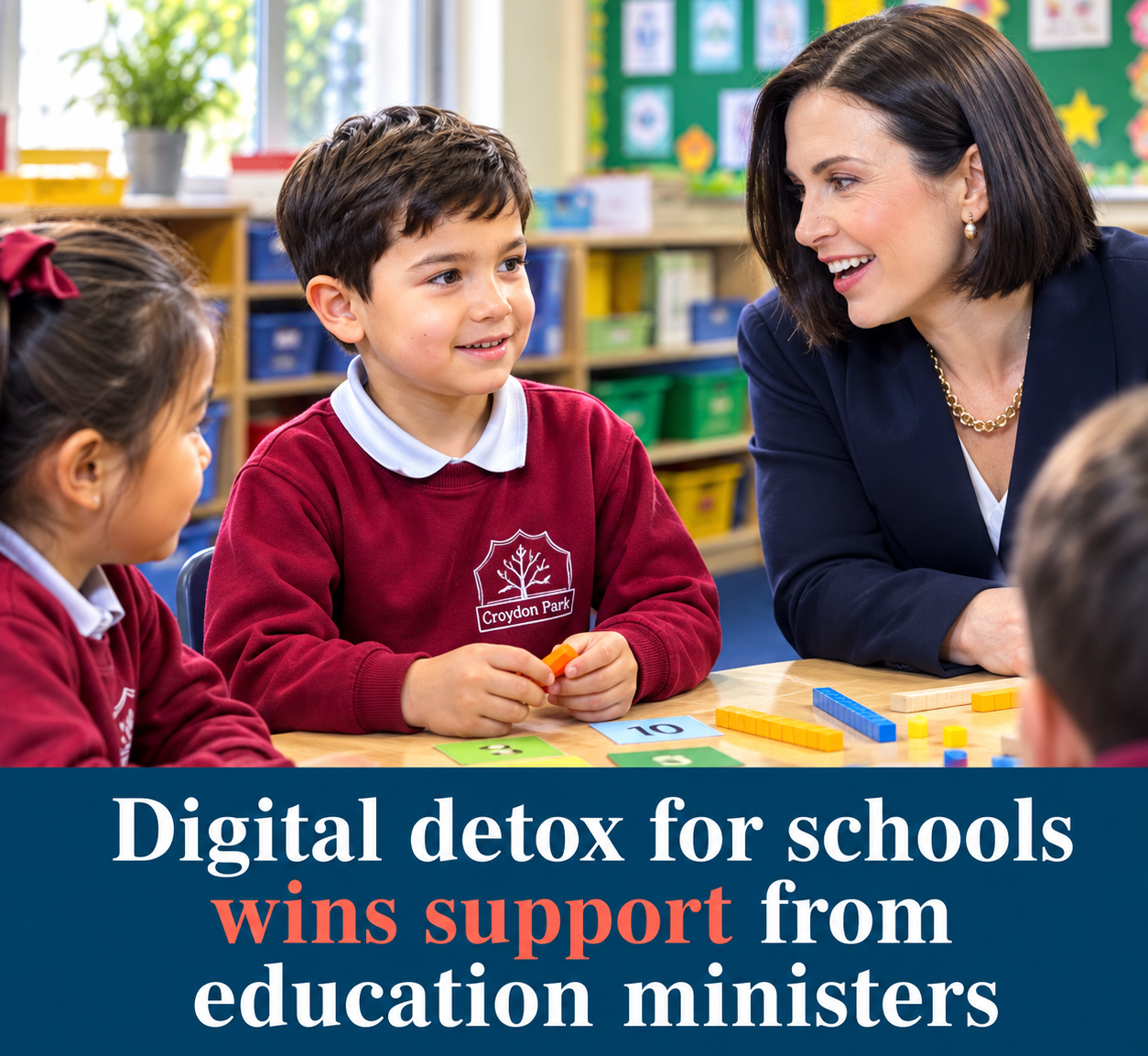
Federal Education Minister Jason Clare says growing evidence suggests excessive reliance on digital devices and artificial intelligence could be affecting students’ reading comprehension, critical thinking and writing ability, prompting education ministers across the country to examine whether schools should limit the amount of time children spend using laptops and tablets during lessons.
The proposal comes nearly 20 years after governments invested heavily in digital learning, encouraging schools to introduce laptops, tablets and online learning platforms into everyday classroom teaching.
Now, with literacy and numeracy outcomes remaining stubbornly below expectations despite record education spending, policymakers are increasingly asking whether the balance has shifted too far towards screens.
Speaking after the release of the latest National Assessment Program – Literacy and Numeracy (NAPLAN) results, Mr Clare said education ministers had asked the Australian Curriculum, Assessment and Reporting Authority (ACARA) to examine whether the national testing program should return to pen-and-paper assessments following technical problems that disrupted testing for around 1.2 million students earlier this year.
However, Mr Clare indicated the discussion extends well beyond NAPLAN.
He said ministers were also examining broader questions about classroom screen time, particularly in primary schools, and the growing influence of generative artificial intelligence on student learning.
“There is a lot of evidence that writing something down by hand has a bigger impact on learning and memory than typing it,” Mr Clare said.
He also questioned whether students are spending so much time communicating through short digital messages that it is affecting their ability to write longer, structured pieces of work.
Another concern, he said, is ensuring students develop genuine understanding rather than relying on AI tools to generate answers.
“How do we make sure that students are learning rather than just relying on an AI prompt?” Mr Clare said, describing it as one of the major educational challenges facing schools.
Support for a classroom “digital detox” is not limited to the Commonwealth.
New South Wales Deputy Premier and Education Minister Prue Car said many parents regularly raise concerns about the amount of time children spend using digital devices both inside and outside school.
She said education experts have consistently highlighted cognitive benefits associated with handwriting, arguing students often retain information more effectively when they physically write rather than type.
Ms Car also pointed to this year’s NAPLAN results, noting Year 3 students—who continue to complete paper-based tests—performed comparatively better than older students who undertake computer-based assessments.
According to Ms Car, schools naturally introduce laptops and tablets earlier so students become familiar with online testing, meaning the assessment system itself may be influencing classroom practice.
She said a return to paper-based NAPLAN testing could help reduce pressure to place young children on digital devices at increasingly earlier ages.
Queensland Education Minister John-Paul Langbroek has also endorsed reviewing classroom screen use.
He argued Australia should continue adopting evidence-based teaching methods, including phonics instruction and explicit teaching techniques, while carefully evaluating the educational role of technology.
Both ministers stressed that digital learning still has an important place in modern education, but should complement rather than replace proven teaching practices.
The renewed focus follows disappointing national literacy and numeracy results despite years of increased investment in Australian schools.
While governments have significantly increased education funding over the past decade, many experts argue improvements in student achievement have not kept pace.
The Centre for Independent Studies says the latest results demonstrate that simply increasing spending is not enough without ensuring resources are directed towards teaching methods that consistently improve learning outcomes.
Education researchers likewise argue that early literacy intervention remains one of the strongest predictors of long-term academic success, particularly for students who fall behind in the first years of primary school.
The debate also reflects a broader international reassessment of technology in classrooms.
Following the rapid expansion of digital learning during the COVID-19 pandemic, education systems in several countries have begun introducing stricter limits on classroom technology, citing concerns over distraction, declining attention spans and excessive dependence on digital devices.
Rather than abandoning technology altogether, many education authorities are now promoting more intentional use—reserving digital tools for activities where they clearly enhance learning while encouraging handwriting, face-to-face discussion and independent problem-solving for core literacy and numeracy instruction.
The emergence of generative AI has accelerated those discussions.
Teachers increasingly report that AI-powered writing assistants and homework tools present new challenges in assessing genuine student understanding.
Education leaders acknowledge artificial intelligence has significant potential to support teaching, but they argue schools must develop clear policies that ensure technology strengthens learning rather than replacing the thinking process itself.
Mr Clare emphasised that evidence-based instruction—including phonics, explicit teaching and targeted tutoring—has already produced encouraging results in schools that have adopted those approaches.
He said governments now want to ensure classroom technology supports those methods instead of competing with them.
Education ministers are also expected to consider simplifying Australia’s early primary mathematics curriculum at their next national meeting, alongside ongoing work reviewing assessment methods, classroom screen time and the educational impact of artificial intelligence.
For schools, parents and policymakers alike, the debate marks a notable change in direction. After years of encouraging students to embrace digital devices as central learning tools, governments are increasingly asking whether the most effective classroom may once again be one where technology is used selectively—and where pen, paper and critical thinking reclaim a more prominent role.