Up to 150 people living in transitional accommodation at Darwin’s YiSSA homeless shelter are set to be moved about 100 kilometres south to Batchelor when the Batten Road facility in Marrara closes on 11 October.
The Northern Territory government says a replacement facility will be established alongside existing emergency evacuation accommodation in Batchelor after negotiations over keeping the Darwin site open failed. Residents have raised concerns about being moved away from jobs, schools, health care and other services in the capital.
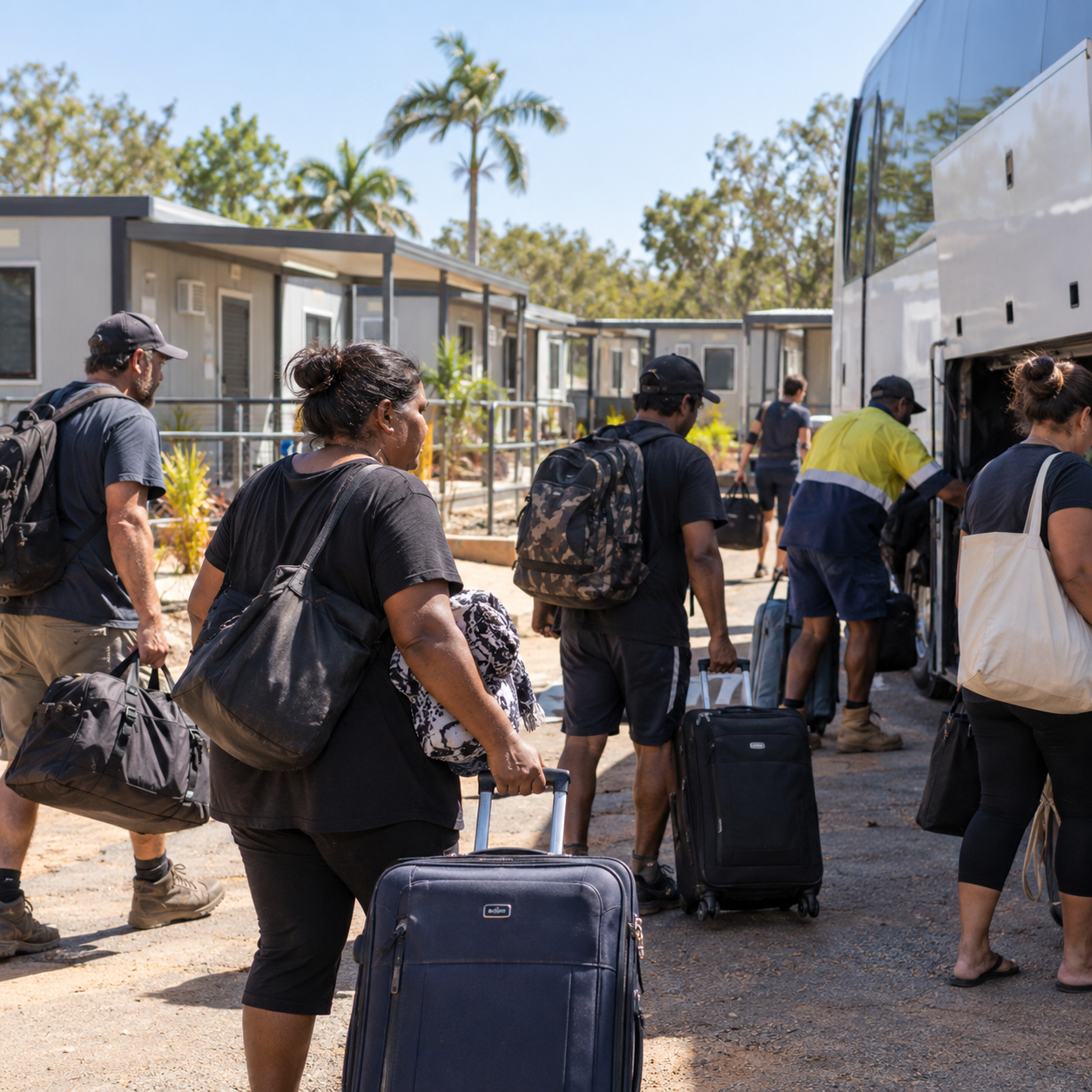
Children and Families Minister Robyn Cahill said the Batchelor option was the best site available before the lease on the Marrara property ends. The decision follows months of uncertainty over YiSSA, which has been providing accommodation to hundreds of people who would otherwise face homelessness or severe housing instability.
The scale of the transition has already changed. Ms Cahill said roughly 380 people — about 230 adults and 150 children — had been staying at YiSSA, but many have since moved into other arrangements.
According to the government, around 30 people have been supported to return to traditional country, others have moved into housing or community-service accommodation, and about 100 people still require work on a longer-term solution. People who have not secured another option by the closure date would be able to move to the Batchelor facility while that work continues.
That means the announced capacity of up to 150 should not be read as a fixed prediction that exactly 150 people will move. The final number will depend on how many residents can be placed in suitable accommodation before 11 October.
For those who do move, distance is the immediate issue. Batchelor is around 100 kilometres south of Darwin. It is a regional town with its own community and services, but it does not offer the same proximity to Darwin’s jobs, hospitals, schools, government offices and specialist support.
One YiSSA resident interviewed by ABC News said relocation would make it difficult to continue working at Charles Darwin University. Other residents face similar practical questions about transport, appointments, education and family connections.
The government says residents with particular medical needs will be considered separately where proximity to treatment is necessary. That is an important safeguard, but access problems can extend beyond acute medical care. Regular appointments, disability support, mental-health services, legal assistance and employment programs can all become harder to reach when transport is limited.
For families with children, continuity of schooling is another consideration. A temporary move can be disruptive even when accommodation itself is safer and more stable than homelessness. Authorities will need to coordinate education and transport arrangements as well as beds and meals.
The Batchelor facility is being established beside emergency evacuation accommodation that has previously been used during disasters affecting remote Northern Territory communities. That means the site has some infrastructure for temporary large-scale accommodation, but the needs of people experiencing homelessness are not identical to those of residents staying briefly during an evacuation.
Transitional accommodation is supposed to be a bridge to something more permanent. If residents remain for an extended period, questions about privacy, family space, access to cooking and laundry, transport, case management and community support become increasingly important.
The move follows unsuccessful negotiations over the YiSSA site in Darwin. The property is owned by Ausco, and the government says discussions stalled despite a proposed $3.5 million Commonwealth intervention intended to help secure the facility’s future.
The failure to reach an agreement means the lease will end and the Marrara site will close. The public record does not support assuming that one party alone caused the negotiations to fail; the confirmed outcome is that a funding and leasing arrangement acceptable to all sides was not reached.
YiSSA has become part of a broader housing problem in the Northern Territory. Darwin has a limited supply of affordable rental properties and social housing, while people arriving from remote communities can face long waits, overcrowding or unstable accommodation.
Homelessness services can then become de facto long-term housing even when they were designed for crisis or transition. That places pressure on providers and creates a bottleneck for people newly needing emergency shelter.
Ms Cahill said government workers had been able to progress housing applications for residents who had spent considerable time on waiting lists. The government’s immediate objective is to reduce the number who need to move to Batchelor by finding permanent or more appropriate accommodation first.
The success of that effort will be measurable. The key numbers are how many residents secure housing before 11 October, how many move to Batchelor, how long they stay there and how many eventually move into stable long-term accommodation.
Simply relocating people out of Darwin does not resolve homelessness if the Batchelor site becomes another indefinite holding arrangement. On the other hand, allowing the Marrara lease to expire without replacement accommodation could leave residents with no safe option at all.
The government’s decision therefore reflects a constrained choice: use a more distant facility while continuing individual housing work, or risk a gap in accommodation when YiSSA closes.
Residents are entitled to judge that choice by its effect on their daily lives. A bed can provide immediate safety, but secure housing also needs to connect people with work, education, health care and community if it is to support a lasting transition.
Transport will be one of the most practical tests. Regular, reliable access between Batchelor and Darwin could reduce the disruption for people who need to keep jobs or attend appointments. Without it, the 100-kilometre move may create new barriers even as it solves the immediate problem of where people will sleep.
The presence of children raises the stakes further. Families need clear information before the move about schooling, health care, food, transport and the expected length of their stay. Residents should also know what case-management support will continue after they leave Marrara.
The YiSSA closure is not occurring because homelessness in Darwin has been solved. It is a property and funding transition taking place inside a much larger shortage of suitable housing.
By 11 October, the government will need to have both the Batchelor facility operational and individual plans in place for residents who remain at YiSSA. After that date, the more important measure will be how quickly temporary placements lead to stable homes.
For now, the confirmed position is that the Marrara shelter is due to close, Batchelor is the government’s replacement location for people still needing transitional accommodation, and work is continuing to reduce the number who have to make the move.