Treasurer Jim Chalmers has publicly backed Victorian Premier Ben Carroll’s decision to establish a royal commission into alleged corruption surrounding Victoria’s multibillion-dollar Big Build program, placing him at odds with Prime Minister Anthony Albanese’s earlier opposition to such an inquiry.
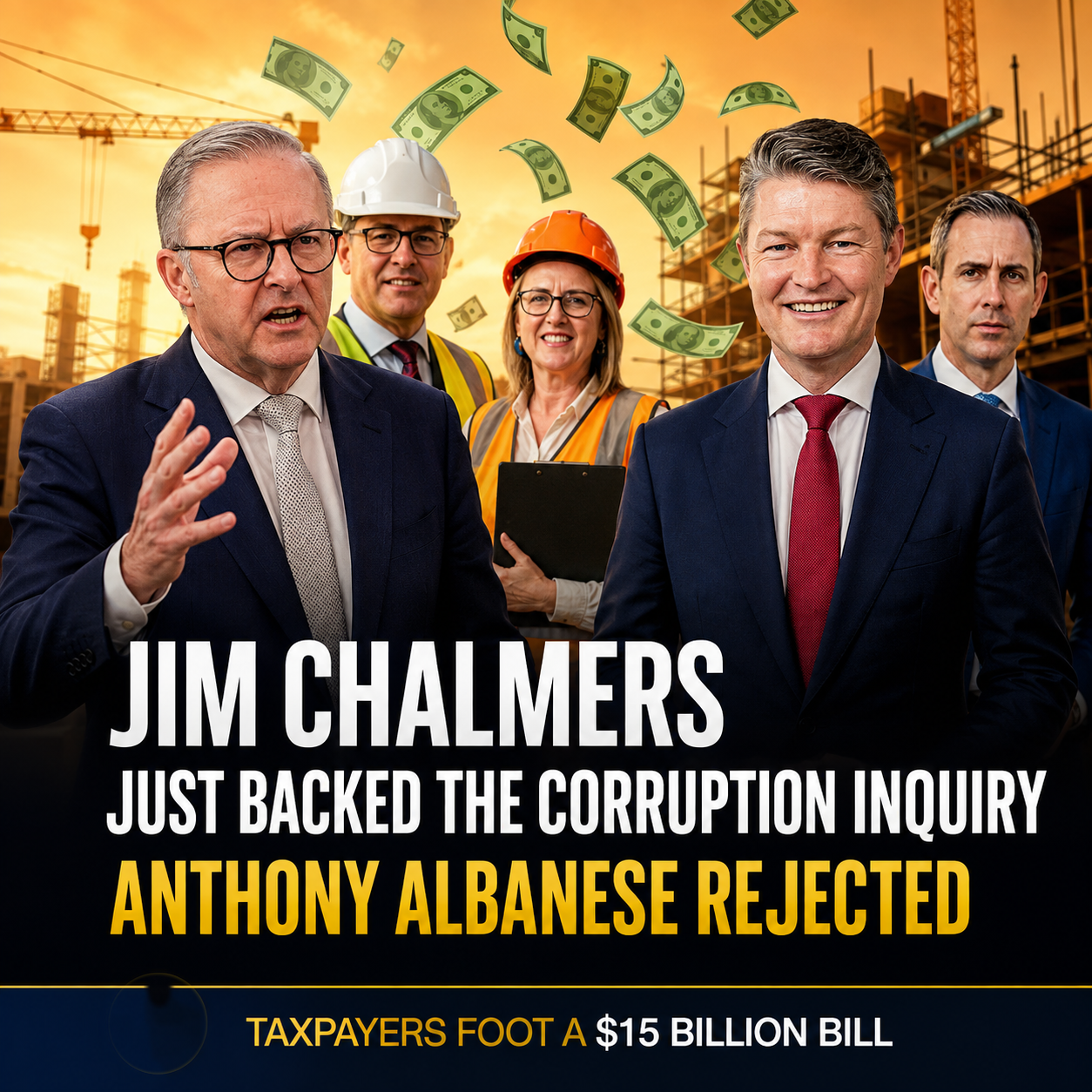
The differing public positions have drawn national attention following a turbulent week in Victorian politics that saw Ben Carroll replace Jacinta Allan as Premier and immediately announce plans for a royal commission into alleged corruption within Victoria’s construction industry and the state’s Big Build infrastructure program.
Speaking after Carroll’s appointment, Chalmers praised the new Premier’s leadership and described the decision to establish the inquiry as consistent with Labor’s broader commitment to integrity.
“I think Ben Carroll will be an outstanding premier. He is pragmatic. He is decisive,” Chalmers told reporters, adding that the royal commission aligned with the federal government’s “zero tolerance” approach to corruption.
Those comments contrasted sharply with remarks made by Prime Minister Anthony Albanese earlier this year.
When asked in February whether he supported a royal commission into alleged CFMEU-related corruption, Albanese rejected the proposal, arguing that the previous Trade Union Royal Commission had been expensive while achieving little practical outcome.
He also supported then Victorian Premier Jacinta Allan’s decision not to establish a state-based royal commission at that time, saying existing authorities were already investigating allegations involving the CFMEU.
The apparent difference between the Prime Minister’s earlier comments and Chalmers’ more recent endorsement has fuelled speculation about whether Labor’s position has shifted following Victoria’s leadership change.
Neither Chalmers nor Albanese has suggested there is a formal disagreement over federal policy. However, their contrasting public statements have become a significant political talking point.
The royal commission itself follows months of controversy surrounding allegations of organised crime infiltration, unlawful conduct and corruption involving elements of Victoria’s construction sector.
In 2024, the CFMEU’s Victorian construction division was placed into federal administration after serious allegations emerged concerning criminal influence, governance failures and misconduct.
The administrator appointed to oversee the union, Geoffrey Watson SC, later produced reports examining alleged systemic problems within the organisation and recommended further action to address governance and integrity issues.
Carroll announced the inquiry shortly after becoming Victoria’s 50th Premier, describing it as an opportunity to restore confidence in the state’s infrastructure program.
He has promised broad terms of reference, indicating the commission will examine contractors, subcontractors, labour-hire companies, government agencies and unions connected with publicly funded construction projects.
Carroll has also said no individual or organisation should be considered beyond scrutiny and has publicly stated he would be prepared to appear before the commission if requested.
The final terms of reference are still being prepared and are expected to determine precisely which projects, organisations and time periods fall within the inquiry’s scope.
Victoria’s Liberal Opposition has called for a wide-ranging investigation that would examine not only the CFMEU but also ministers, government departments and procurement processes associated with major infrastructure projects.
Opposition Leader Jess Wilson has argued that the inquiry should investigate all government-funded construction projects where corruption or misconduct may have occurred and has urged that no current or former government figures be exempt from public examination.
Media reports have suggested former premiers Daniel Andrews and Jacinta Allan could potentially be called as witnesses if the commissioner considers their evidence relevant.
However, no witness list has been finalised, and decisions regarding appearances will ultimately rest with the commissioner once the inquiry formally begins.
The controversy also highlights broader political challenges confronting Labor.
Ben Carroll has sought to distance his administration from controversies that developed under previous Victorian governments, promising a more transparent approach to governance while emphasising fiscal responsibility and accountability.
Political analysts have described the royal commission as one of Carroll’s first major attempts to demonstrate a new direction after replacing Jacinta Allan as Premier.
For the federal government, the issue is more complex.
While Chalmers framed support for the inquiry as consistent with Labor’s anti-corruption principles, Albanese’s earlier comments continue to attract attention because they questioned whether another royal commission would provide meaningful outcomes.
Neither leader has publicly criticised the other, and the government has not announced any change to federal policy regarding the Victorian inquiry.
The debate also reflects a wider discussion about the role of royal commissions in Australia.
Royal commissions are among the country’s most powerful public inquiries, possessing authority to compel witnesses, require the production of documents and conduct extensive investigations into matters of significant public importance.
Supporters argue they provide transparency and public confidence where serious allegations exist.
Critics often point to their substantial cost, lengthy duration and the fact that recommendations are not automatically implemented.
Whether Victoria’s new inquiry ultimately results in criminal prosecutions, governance reforms or procurement changes remains uncertain.
Much will depend on the commission’s final terms of reference, the evidence presented and any recommendations made after hearings conclude.
For now, however, the inquiry has already reshaped the political conversation.
It has become both a test of Victoria’s response to alleged corruption within major public projects and a source of renewed scrutiny over how senior Labor figures have approached one of the state’s most significant governance controversies in recent years.






