The father of the youngest victim killed in the 2025 Bondi terror attack has sharply criticised the participation of pro-Palestine organisations in Australia’s Royal Commission on Antisemitism and Social Cohesion, accusing them of attempting to divert the inquiry from its intended purpose.
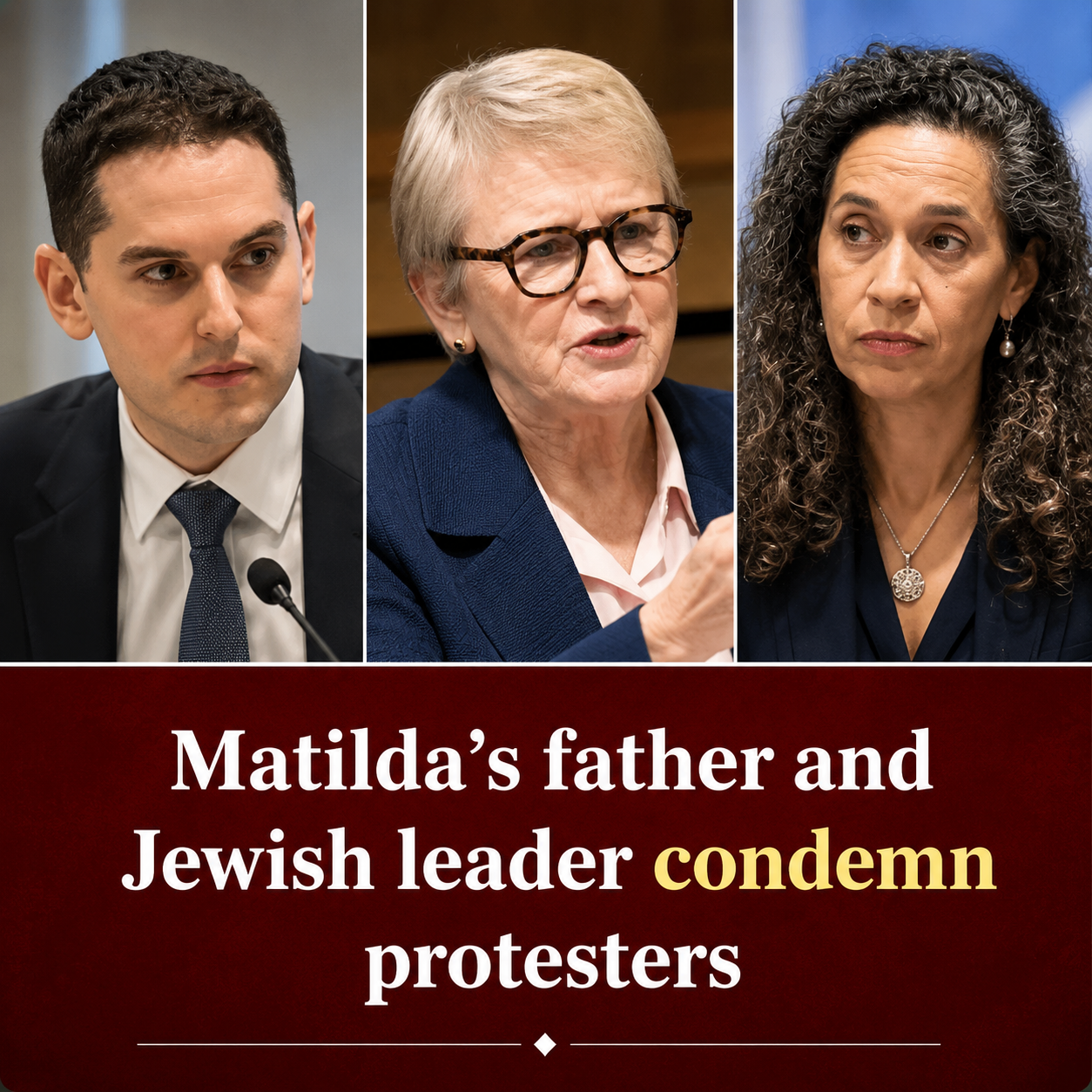
Michael Britvan, whose 10-year-old daughter Matilda Bee was the youngest person killed in the December 2025 Bondi terrorist attack, said he was deeply disturbed that groups he believes support or excuse terrorism were permitted to question witnesses during hearings examining antisemitic protests in Australia.
His comments came after a tense day of evidence before the Royal Commission, where lawyers representing the Palestine Action Group (PAG) and the Australia Palestine Advocacy Network (APAN) cross-examined NSW Jewish Board of Deputies president David Ossip.
Rather than focusing exclusively on alleged antisemitic conduct at Australian protests, questioning frequently turned to Israel’s military campaign in Gaza, civilian casualties and the broader Israeli-Palestinian conflict. That shift prompted criticism from Jewish community leaders, who argued the inquiry was being pulled away from its stated purpose.
“They should be answering questions, not asking them,” Mr Britvan reportedly said, expressing disbelief that organisations he considers sympathetic to extremist causes were allowed to participate in questioning witnesses during the proceedings.
The Royal Commission was established following the deadly Bondi terrorist attack and is examining antisemitism, social cohesion and events surrounding the attack, as well as broader issues affecting Australia’s Jewish community. Earlier hearing blocks investigated the circumstances of the Bondi attack, while more recent sessions have focused on protests, policing and antisemitic incidents following Hamas’ October 7, 2023 attack on Israel.
During Tuesday’s hearing, David Ossip repeatedly argued that the inquiry should remain focused on antisemitism within Australia rather than international political disputes.
When questioned about Israeli military actions before and after October 7, Mr Ossip responded that the Commission was examining demonstrations where antisemitic slogans had allegedly been shouted in Sydney, rather than conducting an investigation into Middle East geopolitics. According to reports, Commissioner Virginia Bell intervened on several occasions to steer questioning back to matters relevant to the Commission’s terms of reference.
The hearing centred heavily on the controversial protest outside the Sydney Opera House on 9 October 2023, held just two days after Hamas’ attack on Israel. The Commission is examining police handling of that protest, allegations of antisemitic chants and broader questions about how authorities balance the right to protest with community safety.
The Royal Commission has stated that Hearing Block 7 specifically examines protests and policing, including events at the Sydney Opera House and later demonstrations at NSW Parliament, with the aim of identifying opportunities to better address antisemitism while respecting democratic freedoms.
Mr Britvan’s intervention reflects continuing frustration among some families directly affected by the Bondi attack, many of whom have argued that antisemitism in Australia cannot be separated from the broader atmosphere that emerged following the October 2023 conflict.
His daughter Matilda became one of the enduring symbols of the tragedy after being killed while attending a Chanukah community celebration with her family. The attack shocked Australia and ultimately prompted the establishment of the Royal Commission to examine not only the attack itself but wider questions surrounding antisemitism, extremism and social cohesion.
Jewish community leaders echoed Mr Britvan’s concerns following the hearing.
Executive Council of Australian Jewry co-chief executive Alex Ryvchin criticised attempts to redirect questioning towards Israel’s military actions, arguing that the hearing was intended to investigate antisemitic incidents occurring in Australia rather than revisit international conflicts.
David Ossip similarly maintained that while discussion of overseas events may be politically important, it should not overshadow evidence relating to alleged antisemitic behaviour witnessed during Australian protests.
Representatives for pro-Palestine organisations have taken a different view.
Lawyers acting for APAN and PAG argued they were entitled to examine the broader context surrounding protests, including developments in Gaza, asserting that understanding the motivations behind demonstrators forms part of the factual picture before the Commission.
Commissioner Virginia Bell nevertheless reminded participants that questioning needed to remain relevant to issues within the Commission’s scope.
The proceedings have also highlighted the increasingly polarised debate surrounding antisemitism and pro-Palestine activism in Australia.
Supporters of the Jewish community argue that criticism of Israeli government policy is sometimes used to mask or excuse antisemitic behaviour directed at Jewish Australians. Conversely, many pro-Palestine advocates maintain that criticism of Israel and support for Palestinian rights should not automatically be characterised as antisemitism.
The Royal Commission has repeatedly stated that its task is to examine evidence relating to antisemitism and social cohesion in Australia rather than determine the merits of either side in the Middle East conflict.
Separately, Commissioner Bell recently condemned abusive Islamophobic emails directed at counsel representing APAN, stressing that both antisemitism and Islamophobia are unacceptable and undermine public confidence in the inquiry. She emphasised that legal representatives appearing before the Commission are entitled to perform their professional roles without intimidation or abuse.
The hearings continue as the Commission gathers evidence from community leaders, police, academics and other witnesses about the causes of antisemitism, the policing of protests, online radicalisation and ways Australia can strengthen social cohesion while protecting democratic freedoms.
Its findings are expected to influence future recommendations on protest policing, counter-extremism policy, community safety and responses to hate speech, making the evidence currently being heard among the most closely watched stages of the inquiry so far.