A live television interview about Pauline Hanson’s controversial visit to the United Kingdom took an unexpected detour after One Nation MP Barnaby Joyce twice interrupted the discussion to shout at his dog, creating one of the day’s most talked-about political television moments.
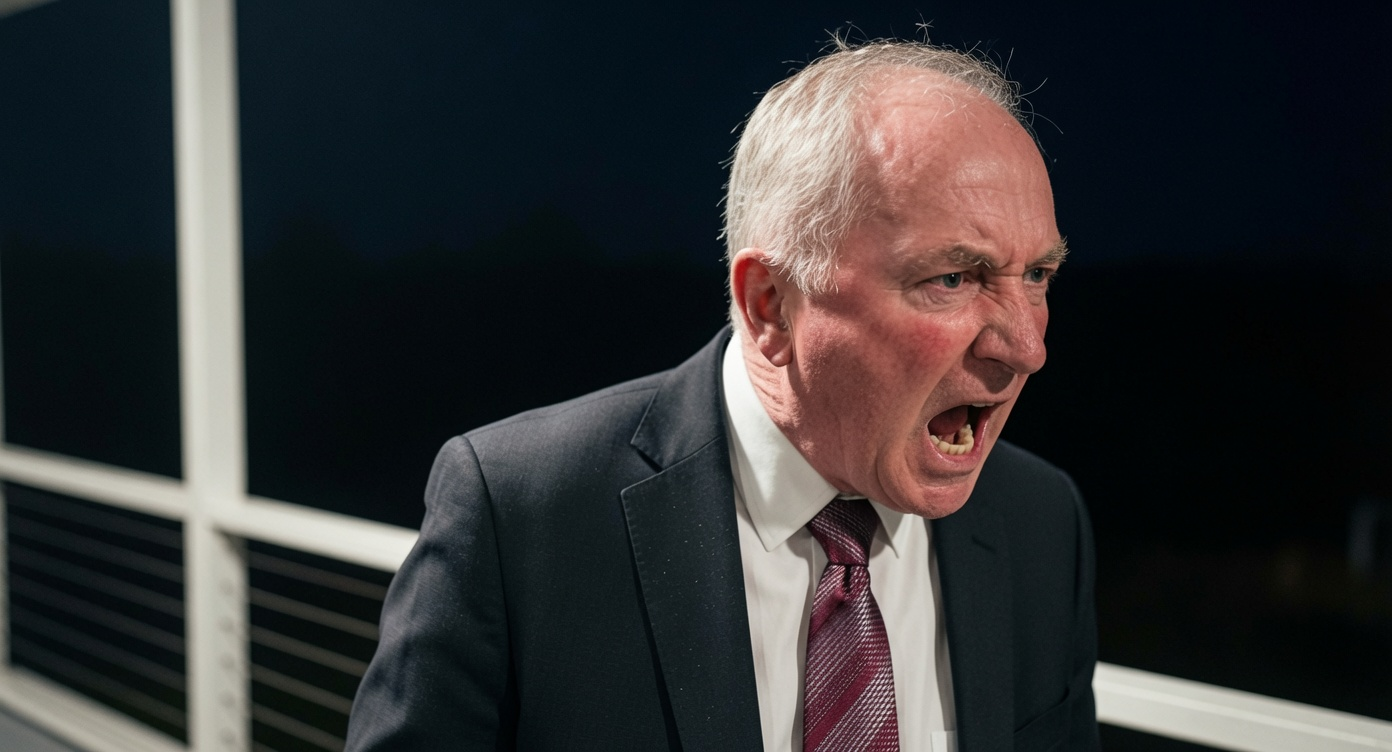
Joyce appeared remotely on ABC’s 7.30 with host Sarah Ferguson to defend One Nation leader Pauline Hanson following widespread criticism of her recent meetings in Britain, including a podcast interview with British far-right activist Tommy Robinson.
The interview was intended to focus on Hanson’s overseas trip and the political controversy that has followed it. Instead, it also produced an unscripted moment that quickly spread across social media.
As Ferguson questioned whether Hanson’s overseas activities had drawn One Nation further towards “intolerance and racial discrimination”, Joyce suddenly looked away from the camera and shouted: “Sit down!”
After a brief pause, he apologised to viewers.
“Sorry, it’s the dog,” Joyce said before continuing his answer.
The interruption, however, was not the last.
Several minutes later, while Ferguson questioned him about a mass deportation manifesto reportedly presented to Hanson during her UK visit, Joyce again stopped the interview after his dog interrupted from off camera.
“I have to apologise for this dog,” Joyce said.
Ferguson responded: “Don’t worry about the dog, just answer the question.”
A visibly irritated Joyce replied: “Don’t be rude. Don’t be rude otherwise this interview will come to a grinding halt, Sarah.”
Although the exchange generated widespread online attention, the interview centred on much broader political issues surrounding Hanson’s European tour.
Joyce defended the One Nation leader against criticism arising from her appearance on Tommy Robinson’s podcast and her meetings with several prominent figures from Britain’s political right.
He rejected suggestions Hanson had deliberately sought out Robinson or intended to endorse all of his views.
“I don’t believe that it was a carte blanche case that One Nation wanted that meeting,” Joyce said.
“I think it was basically suggested by Channel Seven’s Spotlight, agreed to by One Nation.”
That claim reflects allegations previously made by One Nation chief of staff James Ashby, who has argued that Seven’s Spotlight production team originally organised the United Kingdom trip around an interview with Reform UK leader Nigel Farage.
According to Ashby, after the proposed Farage interview fell through, Seven suggested replacing it with a meeting involving Robinson.
Seven Network has rejected suggestions that it orchestrated a “stitch-up”, saying the documentary evolved naturally as events unfolded during filming and that editorial decisions reflected developments throughout the production process.
The broader controversy surrounding Hanson’s UK visit has dominated Australian political discussion throughout the past week.
During her time in Britain, Hanson met Robinson, toured parts of England discussing immigration and demographic change, and later defended proposals for tougher immigration enforcement in Australia.
She also made comments regarding multiculturalism, Islam and Australia’s former White Australia policy that prompted criticism from Labor, the Coalition and community organisations.
Hanson has since insisted she is not advocating a return to the White Australia policy and has argued several of her remarks were taken out of context.
Joyce used the ABC interview to reinforce that defence.
He argued Hanson should not be judged solely by her decision to appear alongside Robinson, maintaining that engaging with controversial figures does not necessarily amount to endorsing every aspect of their views.
Throughout the discussion, he repeatedly sought to shift attention back to immigration policy, border security and public concern over Australia’s migration settings.
Ferguson, meanwhile, continued pressing Joyce about whether he was comfortable with the political direction of One Nation following Hanson’s overseas appearances.
The interview reflected growing scrutiny of the party as One Nation has enjoyed stronger opinion polling and increased media attention in recent weeks.
Political analysts say immigration, border protection and multiculturalism have become increasingly prominent issues in Australian public debate following a series of high-profile comments from Hanson and renewed discussion over migration policy.
Joyce’s appearance also highlighted his evolving role within One Nation.
The former deputy prime minister joined the party after leaving the Nationals and has since become one of Hanson’s most senior parliamentary allies, frequently defending the party’s positions on national television and in parliamentary debate.
Despite the serious political themes under discussion, much public attention quickly shifted to the unexpected exchanges involving Joyce’s dog.
Video clips of the interview spread rapidly across social media platforms, where many viewers focused on the humorous interruption rather than the underlying political arguments.
Several commentators observed that the incident demonstrated how unscripted moments can quickly overshadow substantive policy discussion during live television interviews.
For Joyce, the moment also revived memories of earlier high-profile dog-related episodes from his political career, most notably the international attention generated in 2015 when, as Agriculture Minister, he warned that Johnny Depp’s illegally imported dogs could be euthanised under Australia’s strict biosecurity laws.
While those past events were unrelated to the current interview, they contributed to renewed public interest after the latest on-air interruption.
Beyond the viral moment, the interview underscored the increasingly adversarial political environment surrounding One Nation.
Questions about Hanson’s overseas engagements, her meeting with Tommy Robinson and the role of television journalism in arranging or documenting those encounters continue to generate intense debate.
One Nation maintains Hanson has been treated unfairly by sections of the media and insists the purpose of the UK visit was to examine immigration policy rather than endorse controversial personalities.
Media organisations involved in the reporting have rejected allegations of unfair treatment and maintain they accurately documented events as they occurred.
As political discussion continues ahead of future electoral contests, the exchange illustrates how policy debates over immigration and national identity can quickly become intertwined with questions about media coverage, political judgment and the unpredictable nature of live television.






