An Australian doctor who abandoned his medical career to join the Islamic State group more than a decade ago has reportedly been found alive in a high-security prison in Iraq, reopening a politically sensitive debate over whether Australians who joined foreign terrorist organisations should ever be allowed to return home.
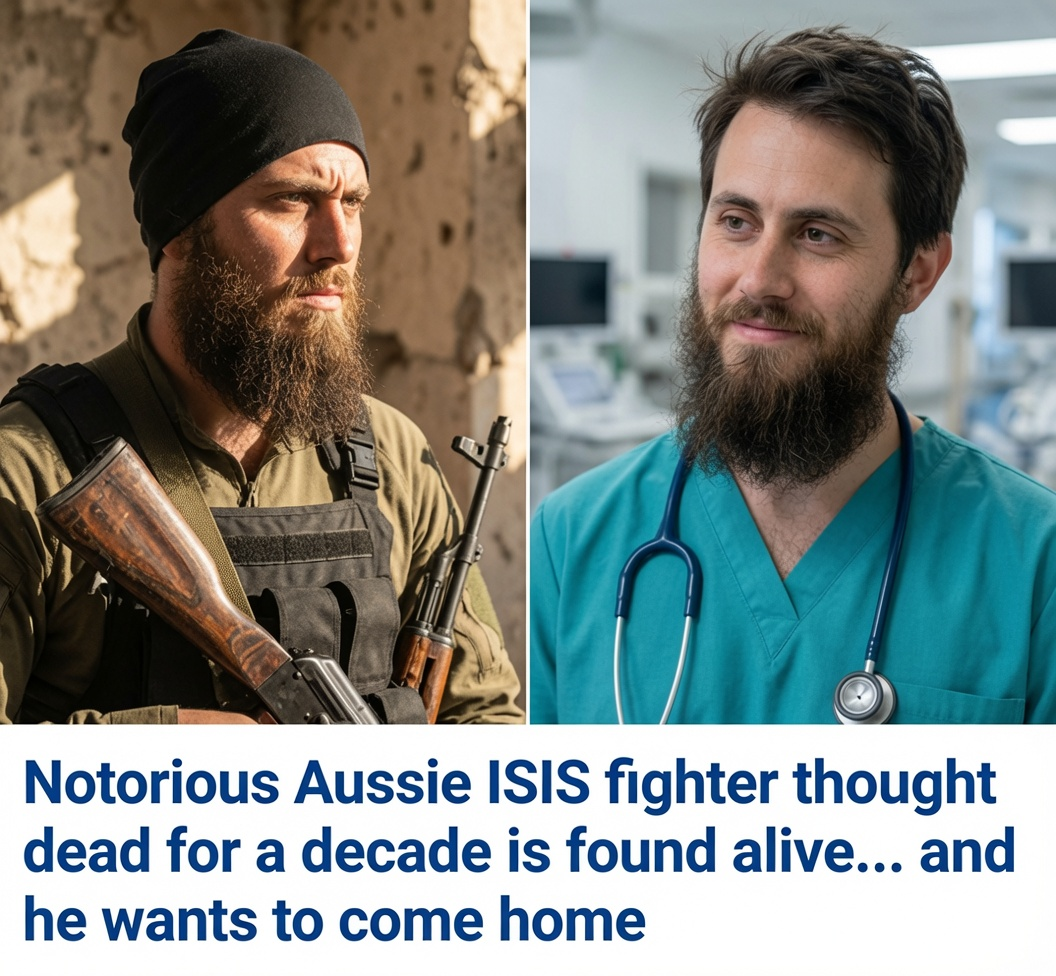
Tareq Kamleh, a Perth-born paediatrician once known internationally as “Dr Jihad” after appearing in Islamic State propaganda videos, was long believed to have died during the collapse of ISIS’s self-declared caliphate in Syria in 2017.
Newly reported Iraqi court documents, however, indicate the 41-year-old is alive and being held in a high-security prison in Baghdad, where counter-terrorism authorities continue to investigate his alleged activities while he was associated with the extremist group.
The reports have prompted an immediate response from the Albanese Government, which reiterated that it will not assist Australians who voluntarily travelled overseas to join terrorist organisations.
Environment Minister Murray Watt said the government’s position had been consistent for several years.
“We won’t be providing assistance, just as we haven’t provided assistance to others to come back,” he said.
“We’ve made clear for some time now that we won’t be providing any assistance as a government to anyone who’s made the absolutely awful decision to join a foreign terrorist organisation.”
Housing Minister Clare O’Neil delivered an equally blunt assessment, saying she did not want Kamleh to return to Australia.
“As far as I’m concerned, I never want that person to return to Australia,” she said, adding that anyone who chose to join what she described as a violent terrorist organisation should be held accountable for those actions.
Kamleh’s story has long been one of Australia’s most high-profile examples of radicalisation.
Born in Perth, he studied medicine at the University of Adelaide before working as a paediatric registrar at Adelaide’s Women’s and Children’s Hospital. He later worked at Mackay Base Hospital in Queensland and in Western Australia before leaving Australia in 2015.
According to former colleagues and investigators, Kamleh told people he was travelling overseas to undertake humanitarian medical work. Instead, he crossed into Syria and soon appeared in professionally produced ISIS recruitment videos encouraging doctors, nurses and other healthcare workers from Western countries to join the terrorist organisation.
The propaganda videos showed Kamleh wearing medical scrubs while holding children and promoting what ISIS described as its health system.
Australian authorities subsequently cancelled his medical registration and charged him in absentia with multiple terrorism-related offences, including allegedly joining and recruiting for a terrorist organisation.
Those charges remain outstanding, and Australian Federal Police have long indicated he would face prosecution if he returned to Australian jurisdiction.
For years, Kamleh was widely believed to have died during the battle for Raqqa in 2017 after ISIS supporters circulated claims of his death.
The latest Iraqi documents instead suggest he survived the collapse of the caliphate, continued moving through remaining ISIS-controlled territory for some time and was ultimately detained in 2019.
The Iraqi judiciary alleges its investigation extends beyond claims that Kamleh merely provided medical treatment, asserting he also participated in propaganda activities promoting ISIS ideology. Those allegations remain part of ongoing proceedings in Iraq.
Kamleh is reportedly one of 13 Australian men linked to ISIS currently detained in Iraq whose future has become the subject of discussions between Iraqi and Australian authorities.
Earlier this year, Iraq publicly urged countries, including Australia, to repatriate their citizens who remain imprisoned following the territorial defeat of ISIS, arguing that long-term detention of foreign nationals should ultimately become the responsibility of their home countries.
Australia’s response has been more cautious.
Successive governments have distinguished between different categories of Australians held in former ISIS territories.
In recent years, several Australian women and children have been repatriated from detention camps in north-eastern Syria after extensive security assessments.
Many of those children had been taken into conflict zones by their parents or were born there and were regarded as victims requiring protection rather than active participants in terrorist activities.
Several returning adults have subsequently faced criminal investigations or prosecution under Australian law.
The situation involving adult men alleged to have voluntarily joined ISIS is legally and politically more complex.
Opposition Leader Angus Taylor has argued Kamleh should not be permitted to return to Australia, urging the government to use every available legal mechanism to prevent his re-entry.
However, constitutional and international legal principles limit the extent to which Australia can permanently exclude one of its own citizens.
Legal experts note that Australian citizens generally retain the right to enter Australia, although governments may impose temporary exclusion orders in certain circumstances while security agencies prepare for their arrival.
Those orders cannot be used indefinitely and do not remove a person’s citizenship or permanently extinguish their right of return.
The Albanese Government has repeatedly emphasised this distinction.
While refusing to facilitate the return of Australians who voluntarily joined terrorist organisations, ministers have also acknowledged that if such individuals lawfully return to Australia they are expected to face the full force of Australian criminal law.
A government spokesperson recently stated that community safety remained the government’s highest priority and that authorities would continue working closely with intelligence and law enforcement agencies.
The case also raises broader questions about how democratic nations deal with citizens who travelled overseas to support terrorist organisations during the rise of ISIS.
Countries including Australia, the United Kingdom, France, Germany and Canada have adopted differing approaches to repatriation, prosecution and citizenship, often balancing national security concerns against constitutional obligations and international human rights commitments.
Australia has increasingly favoured prosecution where sufficient evidence exists, with foreign incursions, terrorism financing, recruitment and membership offences carrying lengthy maximum prison sentences.
Investigators have also relied on overseas intelligence, digital evidence and witness testimony gathered from conflict zones to support criminal proceedings against returning ISIS members.
For Kamleh, any future return would almost certainly be followed by immediate law enforcement action because of the outstanding terrorism allegations already before Australian authorities.
Whether he ultimately returns, however, remains uncertain.
He continues to be detained in Iraq, where investigations remain ongoing, and neither Iraqi nor Australian authorities have announced any agreement concerning his possible transfer.
The revelation that one of Australia’s most recognisable ISIS recruits survived years after being presumed dead has nevertheless revived one of the country’s most difficult national security debates.
It pits strong public opposition to the return of foreign terrorist fighters against the legal realities surrounding citizenship, international cooperation and the prosecution of Australians accused of serious offences committed overseas.
For now, the government’s message remains unequivocal: Australia will not help Kamleh come home, and if he ever does return through lawful processes, ministers say he should expect to face criminal prosecution rather than government assistance.