Australia has reached its highest recorded level of fuel stockholdings since the introduction of the nation’s minimum fuel reserve system, with Prime Minister Anthony Albanese announcing that another 3.2 billion litres of fuel are already on their way to Australian ports.
Speaking during the government’s weekly fuel security update on Saturday, Mr Albanese said 55 ships are currently bound for Australia carrying fuel cargoes that will arrive over the next four weeks, providing an additional buffer as conflict in the Middle East continues to disrupt global energy markets.
The Prime Minister said Australia now holds approximately 6.5 billion litres of fuel across all fuel types, exceeding stock levels recorded before the United States-Iran conflict escalated.
“What that means is that we currently have six and a half billion litres of fuel in Australia in total across all fuel types, which continues to be more than we had at the start of this conflict,” Mr Albanese said.
He described the current position as the strongest since Australia introduced its mandatory fuel stockholding framework.
“This is the highest total amount of fuel in Australia since we introduced our fuel stockholdings — highest ever.”
According to the latest government figures, Australia currently has enough petrol for 46 days, diesel for 39 days and jet fuel for 34 days based on current consumption rates. All three categories have increased compared with the previous week’s update, reflecting continued fuel imports and coordinated efforts between government and industry.
Despite the encouraging figures, Mr Albanese stressed that Australians should not assume the fuel crisis has passed.
The government has maintained Australia’s National Fuel Security Plan at Level Two, indicating that while there are no restrictions or rationing measures in place, authorities remain closely monitoring international developments.
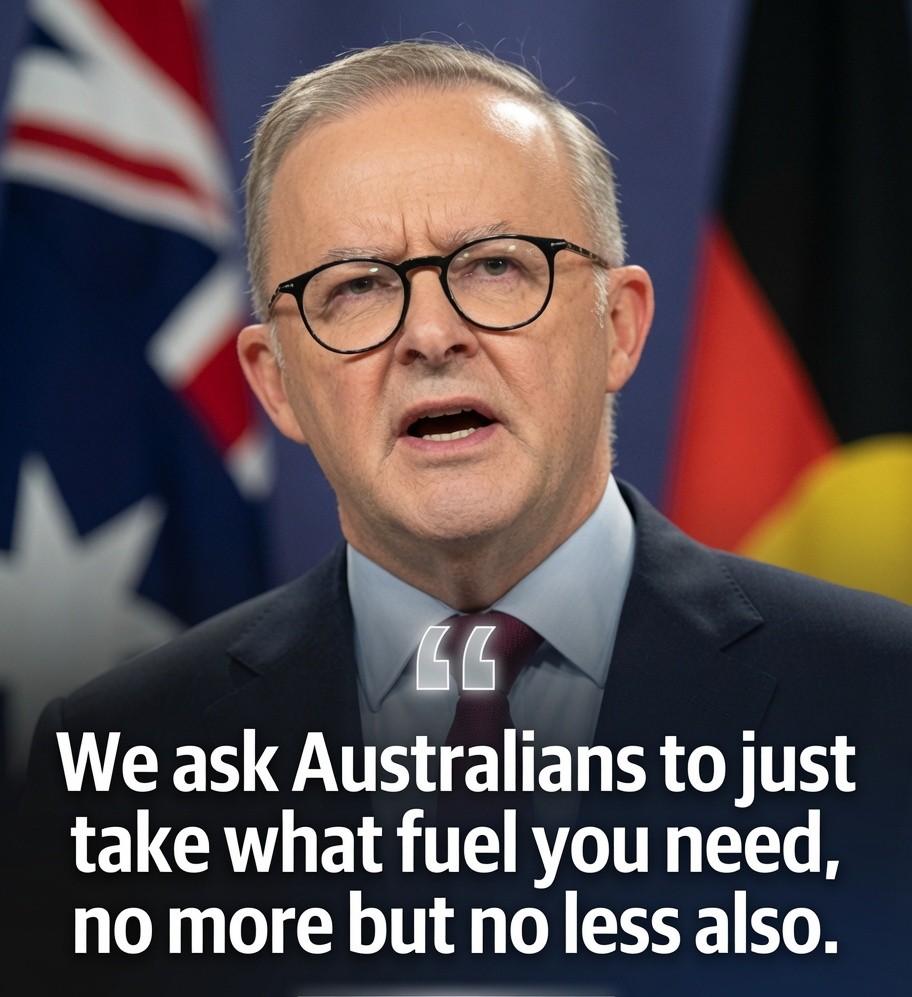
“I’ll say again, we remain at level two so we ask Australians to just take what fuel you need, no more but no less also,” the Prime Minister said.
His comments reflect ongoing concerns about instability in the Middle East, particularly around the Strait of Hormuz, one of the world’s most strategically important oil shipping routes.
Roughly one-fifth of global petroleum supplies normally pass through the narrow waterway connecting the Persian Gulf with international markets. Any disruption to shipping in the region can rapidly push global oil prices higher and affect countries heavily dependent on imported fuel, including Australia.
Although Australia produces some crude oil domestically, it imports a significant proportion of its refined fuels, leaving the country exposed to international supply chain disruptions.
The latest fuel update follows months of heightened uncertainty after fighting involving the United States and Iran intensified earlier this year, prompting governments worldwide to review energy security measures.
In response, the Albanese Government has implemented a series of initiatives designed to strengthen Australia’s resilience against prolonged supply disruptions.
These measures include expanding minimum stockholding obligations, underwriting additional fuel cargoes, investing in long-term storage capacity and introducing temporary fuel excise relief to ease pressure on motorists facing higher global oil prices.
Earlier this year the government also unveiled a multibillion-dollar fuel security package aimed at increasing Australia’s strategic reserves over coming years.
The package includes investment in the Australian Fuel Security Reserve, financial support for additional storage infrastructure and assistance to improve domestic fuel resilience during future international crises.
Mr Albanese credited cooperation between industry, government agencies and international partners for Australia’s improved position.
He said a calm and coordinated response had avoided the panic buying that many feared when tensions first escalated.
“Australians can continue to have confidence in the work that the government has done to ensure that we have fuel security,” he said.
The Prime Minister contrasted the current situation with warnings made earlier in the crisis that fuel rationing might become necessary.
Instead, he argued Australia’s supply chain has remained functional despite unprecedented pressure on global shipping and energy markets.
Government figures show that 47 fuel ships have already arrived in Australia during July after 91 deliveries were completed during June, highlighting the scale of import activity needed to maintain domestic supplies. Another 55 vessels are now travelling towards Australia carrying 3.2 billion litres of fuel already contracted for delivery.
Energy analysts note that maintaining reliable fuel imports has become increasingly important because Australia closed several domestic oil refineries over the past two decades, increasing reliance on overseas refining capacity.
Successive governments have therefore sought to expand strategic reserves while encouraging greater private-sector storage to reduce vulnerability during international emergencies.
Australia remains below the International Energy Agency’s benchmark of holding the equivalent of 90 days of net fuel imports, although recent government investments are intended to narrow that gap over time.
Fuel prices have also remained a major cost-of-living issue for households and businesses throughout 2026.
International crude oil prices surged after fighting intensified in the Middle East, increasing pressure on petrol, diesel and aviation fuel costs worldwide.
While Australian retail prices have fluctuated, temporary reductions in fuel excise and continued import activity have helped soften the impact for motorists compared with what might otherwise have occurred.
The government’s Level Two fuel security status does not impose restrictions on consumers or businesses.
Instead, it encourages voluntary conservation while authorities continue coordinating with fuel suppliers, shipping operators and international partners to ensure supply chains remain stable.
More severe measures, including compulsory rationing, would only be considered if Australia were forced to move to higher alert levels under the National Fuel Security Plan.
For now, the Prime Minister says Australians should continue their normal activities while avoiding unnecessary stockpiling.
He warned that although Australia’s current reserves are the strongest on record, the international situation remains unpredictable.
“We’re not through all of this conflict yet,” Mr Albanese said, adding that the government would continue monitoring developments around the Strait of Hormuz and other critical shipping routes before determining whether additional measures become necessary.
The latest figures suggest Australia’s fuel position has strengthened considerably since the conflict began, but officials acknowledge that long-term energy security will continue to depend on diversified supply chains, expanded storage capacity and stable international trade routes.






