A recorded confrontation at a Canberra rally against violence towards women turned on a disputed account of who asked to address the crowd. Prime Minister Anthony Albanese said he and Minister for Women Katy Gallagher had asked to speak and had been told it was not possible. Organiser Sarah Williams immediately protested, 'That's a lie, that's a full out lie.' Their competing versions became an unwanted focus of coverage of a march intended to put survivors and community demands at the centre.
The incident became a political controversy because it unfolded in front of people demanding that leaders listen to survivors and take gender-based violence seriously. The organisers' dispute with the Prime Minister concerned a speaking arrangement, but it quickly raised broader questions about who controls a community protest and how elected officials should participate without overshadowing its purpose.
Albanese attended the Canberra march with Minister for Women Katy Gallagher. While addressing the crowd, he said he and Gallagher had asked to speak but had been told that doing so was not possible. Williams, one of the organisers, could be heard challenging the statement and saying it was a lie. The disagreement was not a private misunderstanding revealed through anonymous briefings; it was documented in reporting on the rally.
Williams later set out her account publicly. She said representatives of the offices had discussed Gallagher speaking, but that Albanese's office had indicated the Prime Minister intended to walk with the event rather than deliver remarks. She disputed the suggestion that her organisation had refused him an opportunity to speak and criticised the way the issue was presented to the crowd.
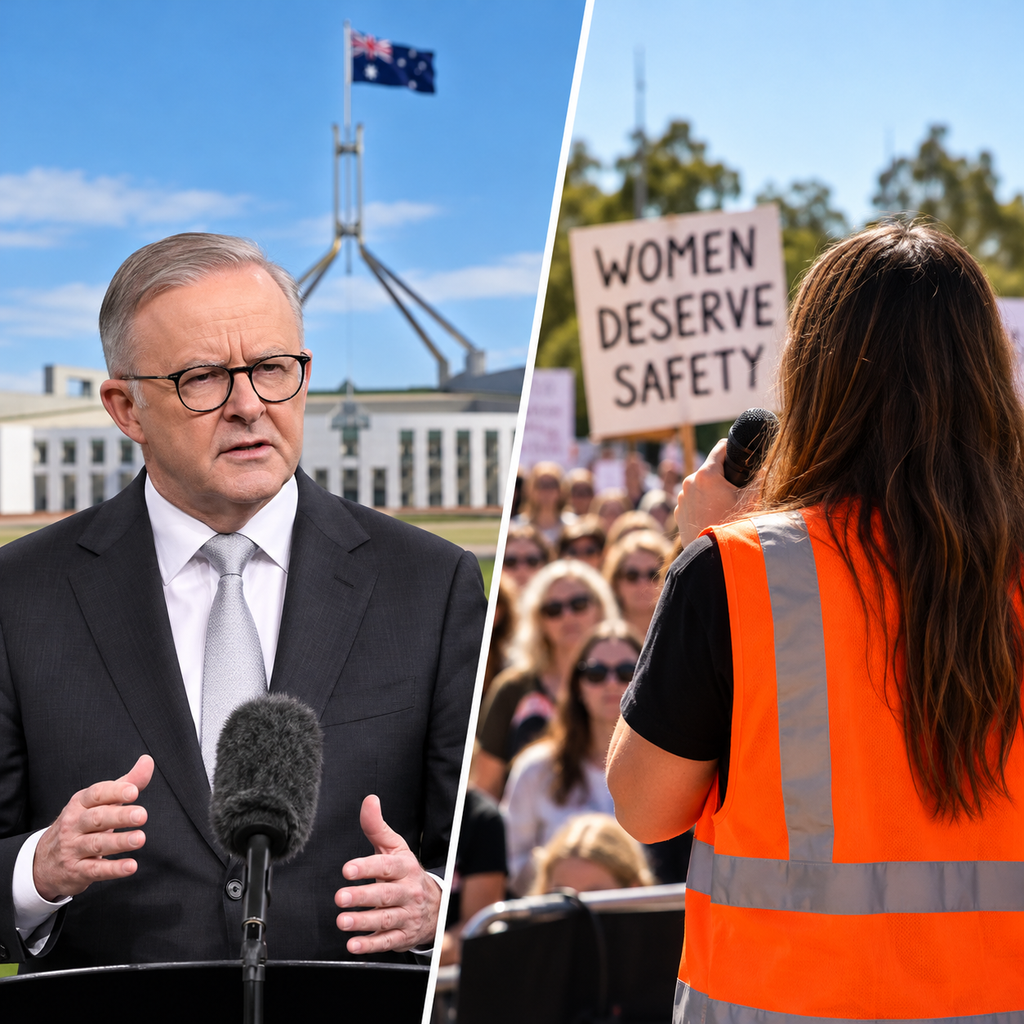
Albanese was asked about the accusation in a televised interview. He did not accept that the disagreement should displace the purpose of the rallies, describing the event as emotional and emphasising the public demand for action on violence against women. The interview recorded his response to the allegation without directly resolving the disagreement over what his office had asked the organisers to arrange.
Footage confirms the words spoken at the rally; it does not establish the full history of contact between political offices and organisers. Williams said Albanese's office had indicated he intended to walk, not address the event, while discussions included the possibility of Gallagher speaking. Albanese maintained his account and argued the dispute should not obscure the crisis the march was protesting. Deliberate dishonesty is a stronger allegation than a disagreement over arrangements and cannot be established by the footage alone.
Questions about who asked to speak are also different from questions about who should speak. A community event may welcome political leaders while reserving the microphone for advocates, survivors or people with direct experience. A Prime Minister may wish to express solidarity and describe government action. Those interests can coexist, but they may clash when expectations are not clearly settled among participants.
The organisers were responding to a wider national debate about violence against women and the need for practical measures to prevent harm. Their stated focus was on safety and accountability, not on creating a confrontation for its own sake. It would be unfair to suggest the movement was defined by the speaking dispute or that every participant shared a single view about Albanese's attendance.
The organisers had reason to care about who held the microphone. Survivor-led events are often structured so those directly affected and the organisations supporting them speak before politicians. At the same time, a Prime Minister attending in a public capacity can expect to be pressed for answers about government action. Both interests were present, but disagreement over protocol meant the exchange became a test of whether leaders were listening, rather than a discussion of the commitments rally participants sought.
At the same time, a Prime Minister who attends as a public official may reasonably be expected to answer questions about what the government will do. That expectation can become difficult if speakers, media and attendees have different assumptions about the format. The Canberra row revealed the need for clear communication between offices and independent community organisers whenever elected officials join public protests.
The episode also shows the limits of political shorthand. The public record does not establish that organisers deliberately tried to silence the Prime Minister, or that he knowingly lied about the arrangements. Williams accused him of lying, disputed his version of events and explained her position. Albanese gave his own account and defended his broader response to the rally.
The march concerned people facing physical and coercive violence, including those seeking help from police, courts, housing providers and specialist services. Someone trying to leave an unsafe household may urgently need emergency accommodation, independent legal advice and secure income. These practical needs were central to the rally's demands. They remained important even as public attention shifted towards the dispute about who had been allowed to speak.
The reported march was among demonstrations that attracted public concern about gender-based violence across Australia. Participants were seeking attention to a crisis, and both organisers and government representatives referred to the need for action. Their dispute was about the speaking arrangements, not whether violence against women was a serious problem.
An effective response requires more than statements of sympathy. Decisions about specialist services, safe accommodation, prevention, court processes and sustained support have practical consequences for survivors and families. Those consequences provide the setting for assessing public leadership, while the contested sequence of conversations about speaking remains a narrower factual question.
Williams maintained that the Prime Minister's description of the invitation was false. Albanese disputed that interpretation and placed his answer in the context of a public demonstration charged with emotion. Their accounts conflict, but the available evidence does not establish that either person deliberately tried to mislead the public.
Gallagher told the ABC that discussions had occurred about government representatives speaking, and she emphasised the Prime Minister's attendance as a gesture of solidarity. Williams drew a sharper distinction between possible remarks by Gallagher and a request from Albanese's office. The difference is narrow enough to be resolved only with reliable communications and a clear account of the arrangements; neither version should be paraphrased into a proven finding that the other side deliberately deceived the crowd.
In a separate television interview, Williams described asking whether the Prime Minister could make a commitment and being told his schedule was tight while Gallagher would be happy to speak. That account adds detail beyond the shouting captured at the rally, but it does not give outside observers every email, message or discussion between the parties. It supports the importance of accurate attribution when the dispute is reported.
In his ABC interview, Albanese expressed good wishes towards Williams and praised the effort involved in organising the demonstrations. He also directed attention to the government's broader response to family and domestic violence. He did not offer a detailed account that independently resolved the disputed approach to the speaking list. His comments explained his position but left the practical details of the disputed speaking arrangements unresolved.
Albanese pointed to policies such as paid domestic and family violence leave, support for single parents and housing measures for people escaping violence, while saying governments needed to do more. Those measures are part of the government's defence of its record, not evidence that every survivor can immediately obtain safe accommodation or support. The practical assessment is whether people can access services and whether institutions reduce risk when it is reported.
That policy context explains why people were calling for more than symbolic attendance. Survivors and advocates may welcome a leader's presence while demanding answers about specialist assistance, prevention and the way institutions treat people who report harm. A speech can recognise grief and public anger, but it is not itself a substitute for funding, safe housing or accessible support.
Williams had spoken of not wanting the event to become a political spectacle centred on her. The disagreement over speaking arrangements nevertheless dominated attention that might otherwise have gone to survivors and service organisations. The underlying questions — whether people can find safe housing, obtain timely support and expect an effective justice response — were not resolved by the confrontation at Parliament House.
Some politicians outside the dispute were critical of the Prime Minister's handling of the exchange. Such criticism may influence public perceptions, but the central factual question remains what the offices and organisers communicated. The best evidence would be contemporaneous messages or a mutually agreed account of the arrangements. Without them, assigning deliberate dishonesty to one participant would go beyond what a recording of the rally demonstrates.
Community organisers and political offices need clear expectations where a rally is independent of government. The immediate question in this dispute was whether Albanese had been refused a speaking opportunity, not whether he was legally entitled to address any public gathering. Those arrangements are often informal, but misunderstanding them can become consequential when a leader speaks from a stage and an organiser contradicts him in front of a crowd.
The reporting on the row includes strong feelings from organisers, a Prime Minister's response and testimony about what was discussed. None of that makes the underlying concern about gender-based violence a partisan question alone. Australians affected by the problem need public institutions to act effectively, whatever position they take on the speaking dispute.
The exchange left a verifiable disagreement, not a finding of intentional deception: Albanese said he had been told he could not speak; Williams said organisers had not denied him a request of that kind. The incident matters because a public response to violence against women was overtaken by a dispute about political participation. The underlying work — reliable services, prevention, housing and justice responses — remained the purpose of the rally.






