The Australian Federal Police (AFP) has formally concluded its investigation into comments made by One Nation leader Pauline Hanson earlier this year, determining that her remarks about Muslims did not meet the legal threshold for any criminal offence under federal law, including Australia’s recently introduced hate speech legislation.
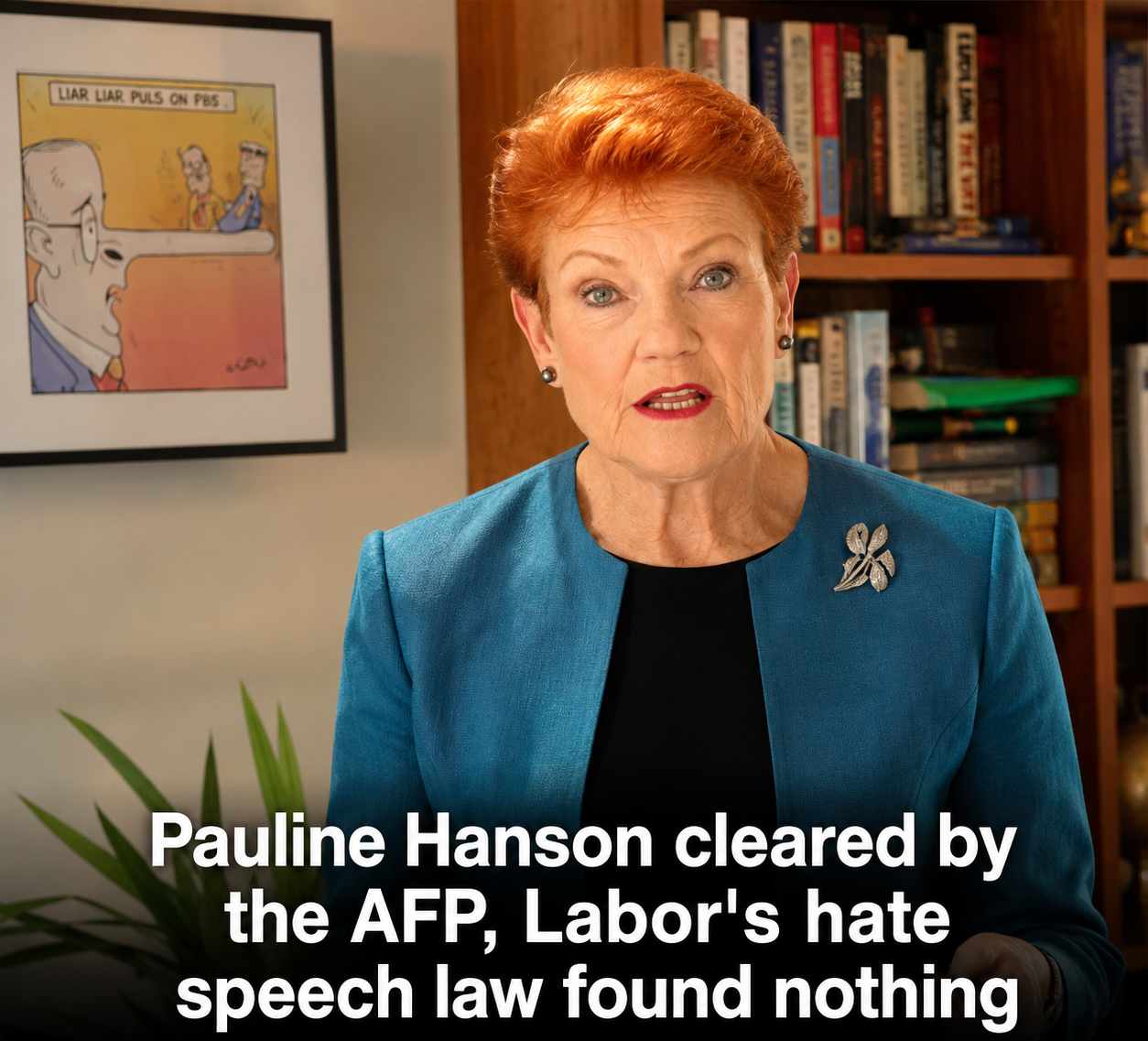
The decision ends more than five months of scrutiny following complaints lodged after Hanson made controversial comments during a February 2026 interview discussing Australian women and children linked to Islamic State who had sought to return from Syria. The remarks sparked widespread political condemnation and prompted calls for police to consider whether they breached Australia’s new federal hate speech laws.
An AFP spokesperson confirmed the matter has now been finalised.
“In February 2026, the AFP received several complaints about public comments made by a federal parliamentarian,” the spokesperson said.
“The AFP has determined the comments do not meet the threshold for relevant offences, including within the Combatting Antisemitism, Hate and Extremism (Criminal and Migration Laws) Act 2026. The AFP has finalised this matter.”
The police announcement means no criminal charges will be laid against Hanson in relation to the interview.
While the AFP’s decision concludes its criminal assessment, it does not amount to an endorsement of the comments themselves. Rather, it reflects the agency’s conclusion that the statements did not satisfy the legal elements required to prosecute under the relevant Commonwealth offences.
The controversy began in February when Hanson appeared on Sky News discussing national security concerns surrounding Australians with links to Islamic State. During the interview she criticised radical Islam and questioned assertions that there were “good Muslims”, comments that immediately drew condemnation from political opponents, Muslim community leaders and anti-discrimination advocates.
Within days, multiple complaints were lodged with the AFP alleging the remarks may have breached Australia’s newly enacted hate speech legislation.
At the time, the AFP confirmed only that it had received reports relating to the comments and that the matter was being assessed. The announcement fuelled significant public debate over whether the recently enacted laws would result in criminal proceedings against a serving federal parliamentarian.
The Combatting Antisemitism, Hate and Extremism (Criminal and Migration Laws) Act 2026 was introduced earlier this year following heightened concerns about extremist violence and religious hatred. The legislation created new criminal offences aimed at the most serious forms of incitement and threats targeting protected groups, but legal experts noted from the outset that prosecution requires a high evidentiary threshold.
As the investigation continued, Hanson remained unapologetic about the substance of her concerns regarding radical Islam, although she later expressed regret if peaceful Muslims had been offended by her remarks. She maintained throughout that her comments were directed at extremist ideology rather than all Muslims and argued the complaints were politically motivated.
The issue quickly became one of the most contentious political debates of the year.
Prime Minister Anthony Albanese described Hanson’s comments as disgraceful and linked inflammatory rhetoric to broader concerns about community cohesion. Foreign Minister Penny Wong subsequently moved a Senate motion censuring Hanson over the remarks, with support from Labor, the Greens and several crossbench senators. Hanson rejected the censure and defended her position during parliamentary debate.
Community leaders also voiced concern.
Australia’s Race Discrimination Commissioner, Giridharan Sivaraman, called on Hanson to apologise, arguing that comments singling out an entire religious community risk undermining social cohesion and contributing to fear among Muslim Australians. Muslim organisations likewise criticised the remarks as harmful and divisive, even while acknowledging that the legal assessment would ultimately rest with police.
Legal observers, however, consistently distinguished between offensive political speech and conduct capable of meeting the criminal standard established by Parliament.
Constitutional and criminal law experts noted that Australian hate speech offences are deliberately narrow, requiring prosecutors to establish specific statutory elements before charges can be laid. They cautioned that controversial or offensive statements do not automatically constitute criminal conduct simply because they generate public outrage.
The AFP’s conclusion appears consistent with those earlier legal assessments.
By determining the comments did not reach the statutory threshold, investigators effectively concluded there was insufficient basis to pursue prosecution under the applicable Commonwealth legislation. The agency has not released further detail explaining its legal reasoning, in keeping with its usual practice when finalising matters that do not proceed to court.
The outcome is also significant because it represents one of the earliest high-profile applications of Australia’s new federal hate speech laws involving comments made by a serving member of Parliament.
Although the AFP has closed its investigation, the political debate surrounding Hanson’s remarks is unlikely to end. Supporters argue the decision demonstrates the importance of maintaining robust protections for political expression, while critics maintain that the comments were damaging regardless of whether they amounted to a criminal offence.
The distinction between legal liability and political accountability has remained central throughout the controversy.
Parliament is free to censure members over conduct considered inconsistent with expected standards, while police apply a separate legal test focused solely on whether criminal offences can be established. The Senate’s earlier censure therefore remains a political response independent of the AFP’s criminal assessment.
The case also illustrates the challenges facing authorities when interpreting new hate speech legislation. Law enforcement agencies must balance Parliament’s intention to combat serious hate-based conduct with Australia’s longstanding protections for political communication and freedom of expression within the limits recognised by law.
For Pauline Hanson, the AFP’s announcement brings an end to a lengthy federal police assessment that attracted national attention and intense political scrutiny. For the government and legal observers, the case provides an early indication of how the new federal hate speech framework may be applied in practice, demonstrating that investigations will continue to be judged against established criminal thresholds rather than political controversy alone.






