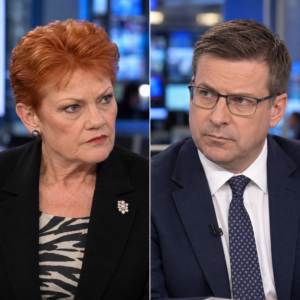
Opposition Leader Angus Taylor has demanded Prime Minister Anthony Albanese intervene to stop the proposed disposal of Sydney’s Victoria Barracks, turning a long-running heritage dispute into a direct parliamentary challenge after a weekend rally brought together veterans and prominent political figures.
Taylor raised the issue during question time on Monday, listing former governor-general Peter Cosgrove, RSL president Peter Tinley, NSW Premier Chris Minns, former prime ministers John Howard and Tony Abbott and others among those questioning the plan. He asked when the prime minister would begin listening to veterans and stop the sale. Albanese responded by recognising the heritage significance of the site and arguing that greater access for ordinary citizens could protect and enhance that heritage.
Those are the core documented elements of the new parliamentary exchange. The underlying proposal, debate about heritage and earlier criticism of Defence Minister Richard Marles are not newly revealed by this question. They have been covered before. The current news event is that Taylor put the issue to Albanese directly and elicited a response in the House, after opponents staged a fresh public demonstration.
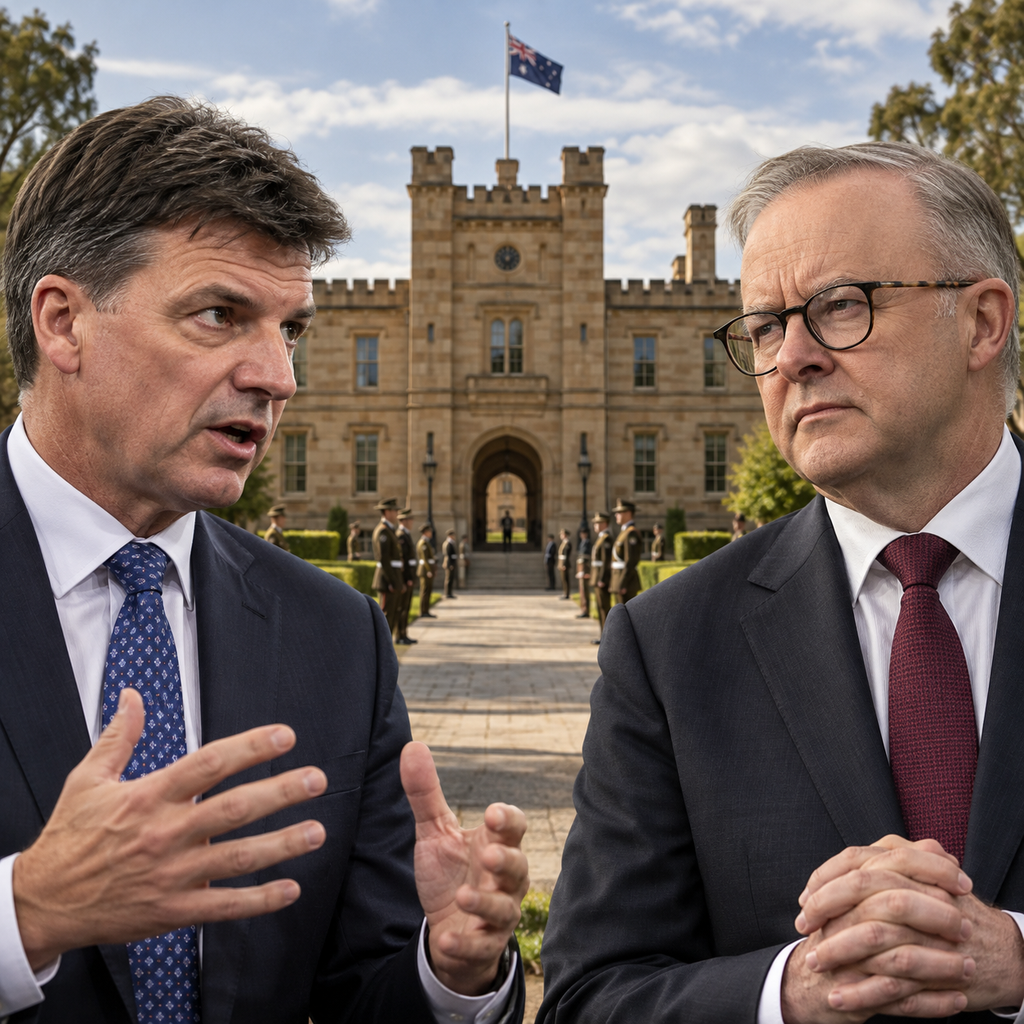
Victoria Barracks is more than a parcel of land. Its historic buildings, military associations and continuing role in collective memory give it symbolic significance for service personnel, their families and people concerned with Australia’s defence heritage. Debate about its future therefore cannot be reduced to a simple balance between an asset sale price and annual maintenance costs. The site represents an institution and a part of national history that many Australians want to remain recognisable.
Taylor’s position is that the government should reverse course before the disposal goes any further. The names he cited are politically significant because they do not belong to one party or ideological faction. Opposition to the proposal has drawn figures from outside the Coalition, including the NSW premier. That breadth of concern helps explain why Taylor chose the question-time setting: it enabled him to argue that the dispute is larger than routine opposition criticism.
Albanese offered a different framing of heritage protection. By referring to access for ordinary citizens, he suggested that preserving a place’s significance can involve allowing more people to experience it, rather than keeping it within a restricted Defence estate. That answer does not, on its own, explain exactly how public access would be guaranteed. Nor does it establish that a private buyer would be permitted to alter protected buildings freely. Those matters require actual planning and heritage documents.
A central question is the difference between ownership and protection. Historic assets can remain in public hands with restricted entry, or move to another ownership model while being subject to heritage obligations. Each arrangement offers different degrees of control. The public should know which buildings and grounds are protected, which activities would be permitted, who would pay for conservation and what rights of access would be legally enforceable.
That last point matters because a public commitment is not the same as a covenant, statute or binding contractual condition. A minister can promise that heritage will be preserved, but future owners and governments need rules that survive changes in leadership. If access is a central justification, the terms should explain when people may enter, whether admission can be charged, what areas remain restricted and whether community or veterans’ events can continue.
The former service community also has interests beyond tourism. A military location may have ceremonial uses, associations with units, memorial spaces or functions that are meaningful even when not visible to casual visitors. Any proposed transition must distinguish the needs of those communities from the preferences of developers and general heritage visitors. Those needs may overlap, but they are not interchangeable.
Financial arguments deserve equal scrutiny. Defence may consider whether a large historic property is suitable for its operational requirements or whether money tied up in the site could be redirected. Critics may question whether a one-off sale provides adequate value after accounting for lost public control and future conservation expenses. Neither side can make that case persuasively by relying only on the property’s symbolic or market value.
An informed comparison would include continuing maintenance obligations, the cost of alternative Defence accommodation, transaction expenses and restrictions that might reduce the sale price. It would also consider whether a public-use arrangement creates ongoing funding duties. The gross proceeds of a property sale are not automatically a net gain for taxpayers, just as keeping a historic site is not cost-free.
Planning uncertainty can create conflict even before a buyer is selected. Local residents may worry about development density, traffic, preservation of open space and changes to public facilities. Conservation bodies may focus on building fabric and the surrounding landscape. Veterans may place greater weight on ceremonial access and institutional identity. Government agencies should address each concern on its merits instead of treating the opposition to sale as a single homogeneous movement.
The parliamentary confrontation took place in an unusually subdued question time while MPs were also responding to the severe injuries suffered by independent MP Helen Haines. That atmosphere is part of the day’s political record, but it must not be misused to imply a link between the Haines case and the Barracks proposal. These are independent stories. Taylor’s question about Defence property and Albanese’s answer about heritage stand on their own.
It is also important not to exaggerate the result of the exchange. Taylor demanded a reversal; the prime minister did not announce one in the recorded reply. Albanese emphasised access and heritage; he did not publish a final sales contract or detailed future-use plan in that answer. An article that says he ‘sold the Barracks’ or ‘confirmed demolition’ would be unsupported by the reporting of this parliamentary moment.
The interests at stake are not identical for every veteran or history group. Some want Defence to retain ownership because they see the Barracks as part of the living military estate. Others may accept a change of use if historic fabric and ceremonial access are protected. A credible consultation should record these differences instead of assuming that a single rally or set of prominent names resolves every competing view.
There is a separate issue of transparency about how surplus property decisions are made. The Commonwealth can identify land no longer needed for operations, but releasing that assessment does not answer whether the particular site should be retained for heritage or community purposes. A strong public case would explain the alternatives considered and why each was accepted or rejected. Without that analysis, opponents may suspect that financial considerations have displaced non-financial public values.
Sydney residents may also ask whether proposed public access would be continuous or occasional. Opening a historic precinct a few days a year is different from establishing a public park, a museum or a broader civic precinct. Access may be restricted by security, conservation requirements and the cost of staffing. Any comparison between continued Defence use and another future arrangement should specify what the public would actually experience.
The debate illustrates a recurring challenge in government asset management: a place can have economic value without being valued principally for the revenue it might raise. Decisions affecting heritage are often difficult to reverse once land has changed hands. That makes advance publication of legal protections and financial assumptions particularly important. It also makes the prime minister’s general assurance about access only one part of the evidence voters need.
Political pressure may still affect what happens next. A cross-party campaign can prompt revised proposals, additional consultation, stronger preservation conditions or a decision to retain property. But none of those outcomes should be treated as inevitable. The pressure created by a public rally and a question-time challenge is meaningful without establishing a policy backflip.
For voters, the useful questions now concern the specific proposal. Which parts of the site are covered? What legal heritage protections already apply? What role would the Australian government retain? Would a future buyer be bound to maintain the buildings? And what guarantees would be available to veterans and community groups? These are questions that can be answered through documents and decisions, rather than political slogans.
Any future decision could also set a precedent for other significant Defence properties. Australia holds buildings and land whose value is partly military, partly cultural and partly commercial. A transparent process for Victoria Barracks would demonstrate whether government has clear criteria for retaining important sites, adapting them or disposing of them. That might include published conservation assessments, consultation summaries and a comparison of alternatives. The need for consistency is one reason this dispute matters beyond the immediate electorate: communities elsewhere may face similar questions about sites linked to service history and public memory.
Taylor has brought the veterans’ campaign directly to Albanese, and the prime minister has defended the idea that public access may improve heritage protection. Until detailed terms or a changed government decision emerge, the conflict remains a contest over the best way to protect a historic place, not proof that its ultimate future has been decided.