Bruce Hales, the senior spiritual leader of the Plymouth Brethren Christian Church, has rejected suggestions that he directed members into political campaigning, as a parliamentary committee questions the church's involvement in a federal election. His denial came amid pointed questions about members' activities at polling booths and allegations involving political agitators.
The disagreement is about more than whether individual worshippers are entitled to support a candidate. Committee members want to establish whether campaigning by people connected to the church was organised or directed, while church representatives insist members made their own decisions and that religious identity should not be treated as evidence of coordinated conduct.
The Joint Standing Committee on Electoral Matters, chaired by Labor MP Jerome Laxale, called Bruce Hales and his son Gareth to give evidence about campaigning connected to the federal election. The inquiry's questions followed reporting about Brethren members' participation and claims that individuals linked to the church had dealings with political agitators associated with far-right views. Those are matters under scrutiny, not findings that the church or either witness committed an offence.
Hales denied that he had instructed or coordinated political participation. He portrayed members as adults capable of deciding independently whether to volunteer, advocate for a party or remain outside politics. That distinction is central to the evidence: a group of people sharing a faith can campaign for the same party without necessarily taking orders from a religious authority.
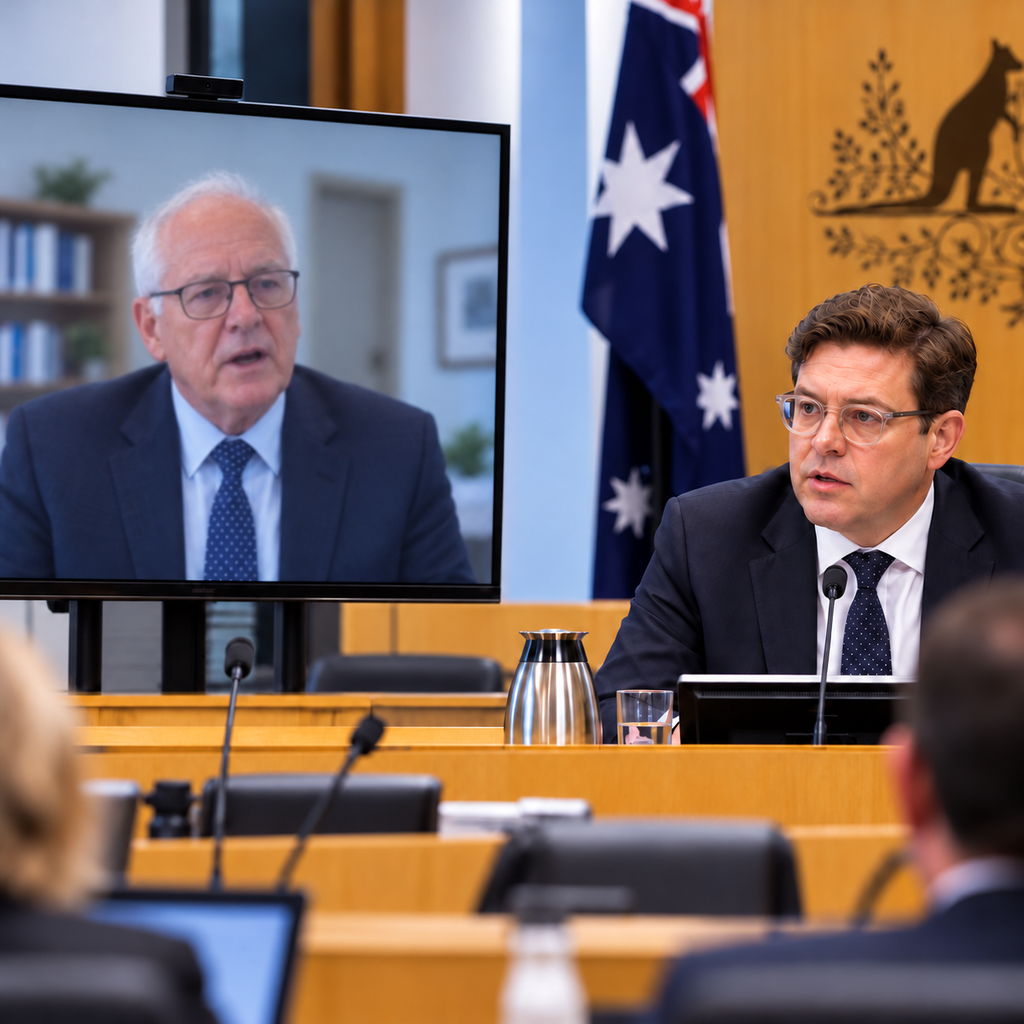
The church's central position is that members retain their political independence even though they share a faith and look to Hales for religious guidance. Hales told the committee he had not directed, coordinated or funded electoral campaigning. His denial answers the question of his own involvement, but it does not establish how individual volunteers organised their work. That is why the inquiry has pressed witnesses for more detail about campaign materials, contacts and who handled arrangements.
Laxale challenged the suggestion that the activity was merely coincidental. In evidence reported by the ABC, he referred to "thousands and thousands" of church members who had "flooded" polling booths. Gareth Hales questioned how the chair knew the people described were Brethren members. Laxale replied that their presence was well documented. That exchange illustrated the gap between the committee's view of the apparent pattern and the witnesses' insistence on individual choice.
Gareth Hales acknowledged doing volunteer work for the Liberal Party but maintained he acted as a private citizen. He also challenged the idea that campaigning alongside people who shared his religion amounted to endorsing every view held by other participants. He said he had not understood that the party's internal review considered Brethren volunteers a support group. These distinctions matter when assessing political association: taking part in a campaign, working alongside an activist and directing that activist's conduct are separate propositions requiring different evidence.
Attention also turned to campaign signs carrying a version of the phrase "Make Australia Smile Again". The committee examined its similarity to language from a sermon by Bruce Hales urging prayers for good government and a happier country. Hales told the inquiry he did not know whether his sons had treated his remarks as an endorsement of the Liberal Party. He suggested that, had they asked permission to campaign, he would have refused it.
The way campaign material was prepared and distributed remains an important issue for the inquiry. Print invoices, correspondence about artwork, distribution arrangements and evidence of who authorised spending could help clarify whether participants acted independently or as part of an organised effort. Similarity between a campaign slogan and religious language does not, on its own, establish that Bruce Hales instructed church members to campaign. Those questions depend on evidence of who made decisions and how the campaign was coordinated.
Bruce Hales also resisted broader characterisations of the church. In the hearing, he said, "We are not a cult. We are Christians," rejecting a description that had been used by political critics. He described himself as the church's senior elder but denied exercising authority over members' political decisions. That account is relevant both to the committee's inquiry and to arguments about religious freedom and the limits of institutional responsibility.
The hearing produced opposition from Coalition members who considered the questioning excessive. Liberal senator Richard Colbeck interjected that it was not "the Spanish Inquisition". Other Coalition representatives accused the committee of pursuing a witch hunt. Their objections reveal a competing concern: that scrutiny of election conduct could unfairly single out a religious minority when the conduct of individual members should be assessed on its own evidence.
The committee and its critics need not agree about the proper scope of questioning. The committee has a public interest in examining attempts to influence an election, potential intimidation and whether electoral disclosure rules captured relevant political activity. But religious membership is not a shortcut to a legal conclusion, and a person's beliefs alone cannot demonstrate involvement in alleged harassment.
There is also an important difference between campaigning and intimidation. Volunteering at a polling booth, distributing authorised electoral material or urging friends to support a party can be lawful activity. Threats, harassment and conduct that breaches electoral rules raise separate questions. Reports about purported payments to people associated with extremist movements make careful testing of evidence especially important, because the reputational consequences can be serious.
The committee can examine particular acts without treating everybody who belongs to the same church as part of a single political organisation. That boundary matters where members volunteered at different polling booths, some carrying electoral material and others simply turning up to help candidates. Laxale described widespread participation; Gareth disputed the basis for identifying people by their faith. Neither position alone answers how many volunteers there were, whether their activity was directed by a party or church officer, or what records the parties hold.
The hearing also demonstrates why the voices of multiple participants matter. Bruce Hales answered questions about spiritual authority and his own knowledge. Gareth Hales discussed his personal volunteer activity and the meanings others might have attached to it. Laxale challenged the witnesses about apparent patterns. Coalition MPs questioned whether the process was fair. Their statements are not interchangeable, and one person's denial should not be paraphrased as somebody else's admission.
The committee's work is part of Parliament's examination of an election, not a court proceeding delivering a criminal verdict. Findings and recommendations, if made, must be distinguished from allegations aired during testimony. The church's public response that it has been unfairly targeted is itself a position to be reported, not proof that the committee acted improperly.
The hearing also examined contacts with individuals whose reported activities gave the inquiry a sharper edge. Gareth Hales acknowledged meeting Chris De Bruyne and Morgan C Jonas, figures described in media reports as linked to far-right activism and alleged campaign intimidation. He characterised the encounters as brief business meetings and said he had not known of their political affiliations at the time. Meeting someone is not evidence of approving that person's beliefs or conduct. The committee's questions concerned whether the contacts went further than the explanation provided.
Gareth Hales also denied allegations that Sante Global, a company with which he had previously been associated, paid people with neo-Nazi associations to disrupt Albanese's campaign. The distinction between a reported allegation, an acknowledged meeting and a denied payment is particularly important. Acknowledging that contact occurred is not an admission of funding or intimidation, and the ABC's report records no such admission from him.
He described his own electoral volunteering as limited, saying he had worked at four polling booths. His testimony acknowledged that he encouraged some fellow church members but denied directing or coordinating their political activities. That nuance complicates any simplistic description of complete non-involvement: a person can admit offering encouragement without accepting that a church ran a centrally planned campaign. Whether the distinction accounts for the wider pattern remains for the committee to examine.
Evidence about individual contacts adds detail that an argument about religious freedom alone cannot resolve. Gareth Hales acknowledged a brief meeting with men identified in reporting as associated with far-right circles, while rejecting suggestions that an encounter amounted to support for their beliefs. The inquiry is entitled to test the purpose of that meeting and any financial or campaign links. It would be wrong to treat an acknowledged meeting as proof of a payment, an intimidation plan or the adoption of another person's ideology.
The controversy has also drawn into view the relationship between political association and religious belief. Church members retain their individual political rights. Parties are entitled to welcome volunteers who share a faith, just as they may welcome supporters from other communities. At the same time, ordinary election rules do not disappear when an organisation has a religious character. If activity is coordinated or financed through an entity, proper disclosure and accountability remain legitimate public questions.
Bruce Hales also said he was surprised to see a photograph of his son at a polling booth and described politics as an uncommon topic in family conversations. The committee can test those explanations against other witnesses' accounts and independent records. A family relationship, however close, does not by itself establish that one person instructed another to undertake political activity.
The hearing left several testable issues unresolved: the origins of campaign signs, whether volunteers communicated through church or party channels, and the accuracy of reports about outside campaigners. Bruce's denial of directing activity, Gareth's admission of personal volunteering and his explanation of contacts are all evidence before Parliament. They are not findings of misconduct. A committee report may weigh conflicting testimony, but accusations heard in a parliamentary room should not be presented as convictions or a proven institutional operation.
The unanswered issue is whether records about campaign organisation, funding, signs and volunteers will establish coordination beyond what the witnesses acknowledged. Hales has denied directing members, while the committee has signalled that it considers the pattern of participation worth examining. That is the real contest shown by the evidence: institutional direction versus individual political choice, with the committee still required to establish what happened.






