The family of a Brisbane man who died after waiting more than two hours for an ambulance is seeking answers about his final hours and why relatives learnt important details about the delay through media reports. Nick Bradford called Triple Zero from his home in Annerley after experiencing chest pain, but paramedics did not arrive until he was dead. Queensland Health Minister Tim Nicholls has apologised for the distress experienced by his family, and the Queensland Ambulance Service has begun a review.
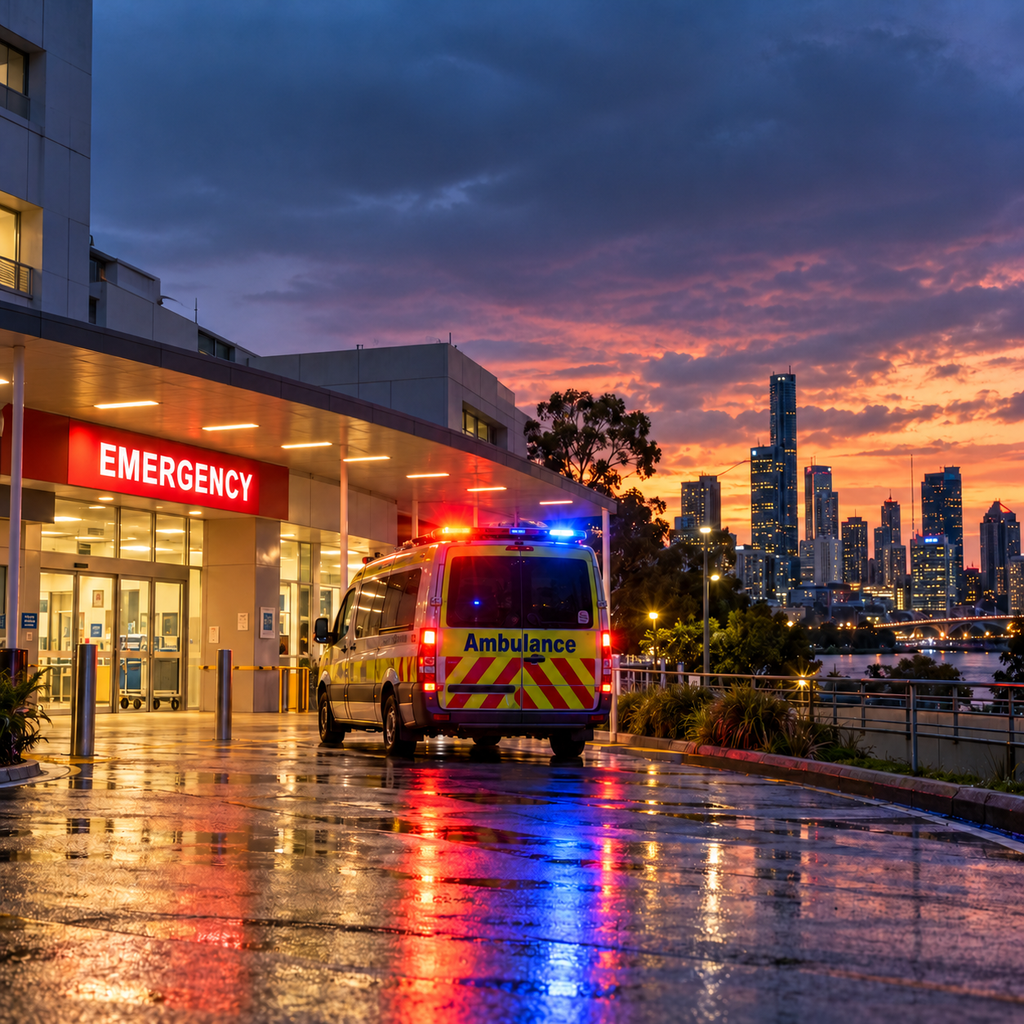
The incident has raised questions about ambulance availability, communication with families and how patients are prioritised when demand is high. The ABC reported that Bradford’s home was only a short distance from Princess Alexandra Hospital. The proximity makes the circumstances particularly upsetting for relatives, but distance to a hospital by itself does not explain ambulance dispatch or why a vehicle was not available. That requires information about what resources were operating at the time and what the emergency service knew.
Bradford’s brother Daniel has spoken about the shock of learning through media coverage that the ambulance had been delayed after his brother called for help. His family had been grieving without a complete understanding of what happened before paramedics arrived. The minister initially referred to the family’s discovery of the delay through the media, while his office later clarified that he had been speaking about the lack of information supplied regarding medical care. That clarification shows why the precise sequence of what officials told the family is part of the story.
The initial emergency call was for chest pain, a symptom that can be associated with serious medical conditions. It would be inappropriate to diagnose Bradford from the description of his call or to state that he would definitely have survived had an ambulance reached him sooner. An inquiry into the dispatch timeline is a separate question from the medical cause of death. Both matter, but one cannot simply be inferred from the other.
According to reporting about the case, there was a period of more than two hours between the request for an ambulance and the arrival of paramedics. The Courier-Mail published additional details about the call sequence and the demand facing emergency services. Those descriptions may help investigators reconstruct events, but the official review must still examine the full records, triage decisions, service capacity and available medical evidence. The account of an individual incident should not be used to assume misconduct by a particular dispatcher or crew member.
Nicholls said he understood why the family was distressed and apologised. Queensland Health and the ambulance service have described review processes designed to determine whether established procedures were followed. An apology for a family’s experience is important, but it is not the same as a finding about the cause of death or a final report on service performance. The family’s request is for a meaningful explanation of what occurred and whether there were opportunities to respond differently.
The circumstances also sit within a wider discussion about ambulance delays and pressure on emergency departments in Queensland. The ABC reported on another, separate patient death involving a long period waiting at a hospital for care. The two cases should not be merged. One concerned a person waiting at home for an ambulance; the other involved a patient already under paramedic care at a hospital. They may raise overlapping questions about system capacity, but they have different medical circumstances and timelines.
Queensland Health performance figures cited by the ABC showed substantial ambulance ramping across major emergency departments. Ramping occurs when ambulances wait to transfer patients to hospital care, potentially affecting how quickly vehicles and crews become available for new cases. The data provide context for the pressures the system faces. They do not, on their own, prove that ramping caused the delay in Bradford’s particular case, and the relationship between statewide measures and a single emergency call must be examined rather than assumed.
A careful investigation may need to consider the time the call was received, how the caller’s symptoms were classified, what ambulances were available, whether the urgency was reassessed and what information was recorded as circumstances changed. Those are appropriate questions for reviewers and the family. This article does not claim to know the answers before the service’s own evidence has been examined. It is precisely the absence of that publicly verified detail that makes the family’s request for transparency significant.
There has also been inconsistent reporting of Bradford’s age in published material, including different numbers within one ABC report. For that reason this article does not reproduce an age that cannot be settled confidently from the checked evidence. It is possible to report the substance of the incident, identify the publicly named man and explain the official response without attaching an uncertain detail. Where information changes or sources conflict, restraint protects the accuracy of the story.
Bradford’s relatives have described a man who was loved by family and friends. Their concern is not only the amount of time recorded in an ambulance system but the absence of answers about what he faced while asking for help. That human dimension is central to the story, provided it is reported from statements the family actually made and without inventing private scenes, final words or details of treatment in the home.
The review will need to separate several issues: whether the service response met applicable standards, what operational pressures existed, whether the family received timely information and what can responsibly be concluded about the death. Those conclusions may not all emerge at the same time. An operational investigation into the handling of a Triple Zero call does not replace medical findings, and a review of communication with relatives is not identical to a clinical assessment of causation.
For Queenslanders who depend on emergency care, the case raises an understandable concern about what happens during a surge in demand. The appropriate response is to seek verified answers from the authorities responsible for dispatch and clinical care, rather than rely on speculation about one person in a complex system. The ambulance service has said the incident is under review. Until the results are known, its findings should not be anticipated as though they were already established.
What is clear is that Nick Bradford asked for emergency help, paramedics arrived after a lengthy delay and his family is grieving while seeking a fuller account. Tim Nicholls has apologised and reviews are underway. The unresolved questions deserve careful scrutiny. Reporting them accurately means neither minimising the family’s concerns nor making medical or legal claims that have not yet been supported by evidence.
The minister’s public response has not satisfied every concern expressed by relatives. Daniel Bradford told the ABC that sympathy alone would not answer the family’s questions. That difference between personal condolences and factual disclosure is important. Families affected by a sudden death may need a clear account of when help was requested, what assistance was available and how they were kept informed. Providing that account does not require an authority to prejudge medical causation, but it does require a reliable chronology. The family’s position as reported is that they want to understand whether anything could have been done differently.
The emergency system has to make triage decisions when several patients require help at once. That basic reality does not mean a two-hour response to a person reporting chest pains is satisfactory, and it does not mean the reviewer can identify a failure without looking at the dispatch record. An honest assessment needs both operational context and attention to what the caller actually reported. Otherwise the debate risks choosing between two simplistic and unsupported positions: that one delay necessarily caused the death or that pressure on the service absolves every decision from scrutiny.
The review may also help determine what information families should receive when a patient dies before paramedics can provide care. The issue is different from publishing private clinical details to the general public. Relatives can have a legitimate interest in knowing that an emergency call was made and how it was handled, while health services must also respect privacy and investigation processes. A clear communication protocol matters because fragmented or contradictory accounts can add distress to a sudden bereavement, even when medical questions remain unresolved.
Bradford’s case has prompted attention precisely because the family’s account, the reported response time and the proximity of the home to a major hospital are so striking. None of those details is a substitute for the eventual findings. The responsible approach is to preserve the timeline that can be verified, note the questions that remain open and report the outcome of the official review when it becomes available. That is how the public can assess whether the response exposes a wider system problem rather than form conclusions from an incomplete record.






