Police are appealing for information after a man was reportedly seen with a firearm near a van that was later set alight in Dulwich Hill, sparking a major response in Sydney’s inner west. Officers searched the neighbourhood while residents were told to stay indoors, a nearby school was placed in lockdown and light rail services were disrupted. Fire and Rescue NSW extinguished the blaze and police said no injuries had been reported. Superintendent Despa Fitzgerald later said no shots were fired, correcting earlier reports.
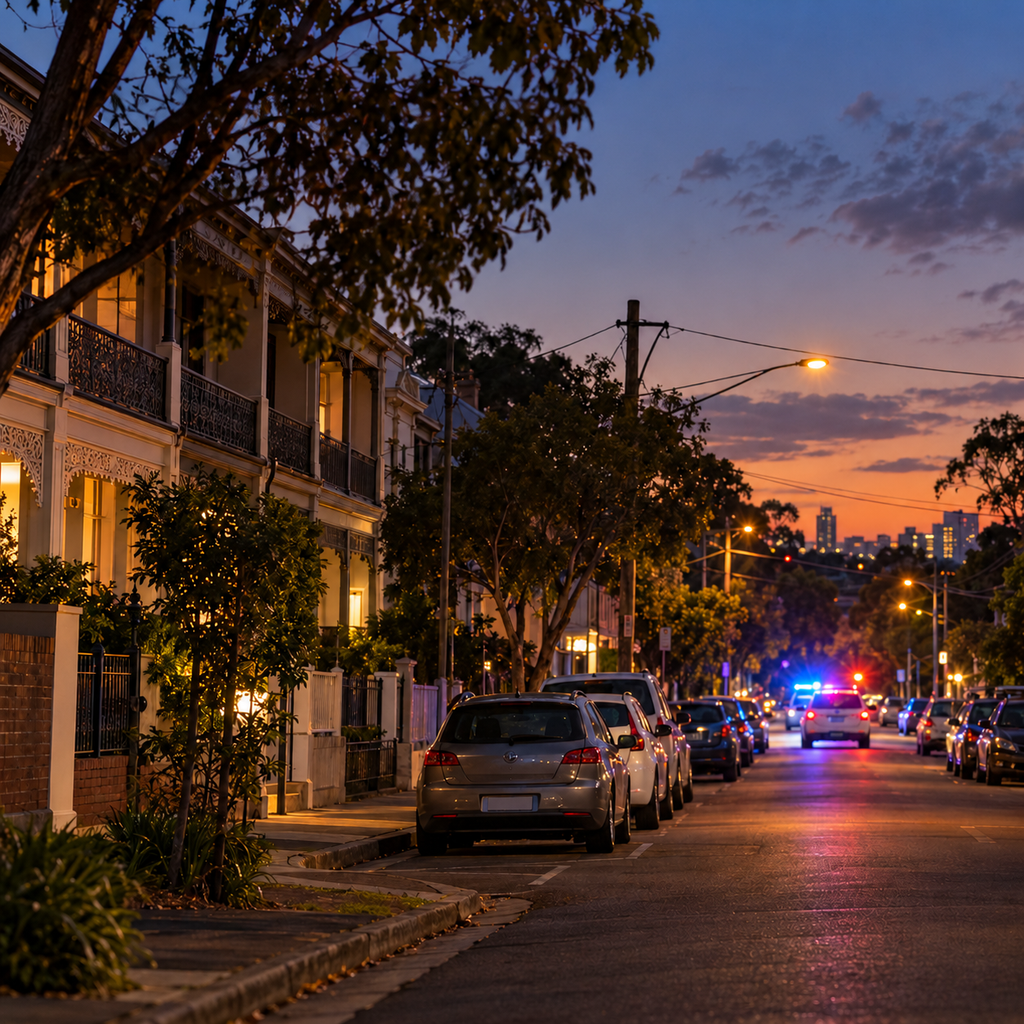
The operation began when officers were called to a carpark on Williams Parade following reports about a vehicle believed to have been stolen. According to NSW Police, people at the scene reported that a man was armed with a firearm while inside the vehicle before it was allegedly set on fire. Fire and Rescue NSW attended and extinguished the blaze. The suspected sequence is drawn from information supplied to police; the public account does not establish the person’s identity or prove each alleged action.
The vehicle was described by police and the ABC as a van that had been stolen from elsewhere in the inner west several days earlier. The sighting in Dulwich Hill therefore brought together a reported stolen vehicle, a possible weapon and a fire in a busy residential setting. Each of those elements required officers to consider risks to bystanders while they looked for a person who had reportedly left the scene on foot. Police said he was last seen on Union Street, and ABC reporting described the search extending towards Laxton Reserve.
The police response was immediately visible. The ABC reported the presence of officers in protective equipment, specialist police and a helicopter searching from above. A school in the area went into lockdown as a precaution, while nearby residents were told to stay inside or were temporarily unable to return home. These steps can have serious effects on people going about their day, but do not mean police had confirmed a shooting. They reflected the precautionary response to a report that someone had a firearm and could still be nearby.
Superintendent Despa Fitzgerald of Inner West Police Area Command told the ABC no shots had been fired, despite reports circulating as the incident unfolded. Police said members of the public had been threatened. Those two details distinguish the confirmed public-safety response from early claims of a shooting. The incident remained serious because of the reported firearm and the fire, even though officers had not identified any gunshot injuries.
NSW Police released an image of a man who may be able to assist with inquiries. Officers described a man in his 20s, about 160 centimetres tall and with shaggy hair; the public appeal included clothing details. Police did not say the person pictured had been charged. Anyone with relevant information should use official channels, rather than identify or accuse people in social-media posts.
Authorities asked anyone who saw the person of interest to contact Triple Zero rather than approach him. They also appealed for mobile phone footage or dashcam recordings captured around Dulwich Hill. Such recordings may help investigators establish a timeline, identify movements near the carpark or corroborate reports of what was seen. Police provided a dedicated evidence-upload portal for people with relevant material. That is different from posting videos online, where images can be misidentified, altered or stripped of details useful to an investigation.
The temporary exclusion zone affected Williams Parade and surrounding streets while police secured the area and assessed whether the reported armed person remained nearby. ABC reporting said local restrictions were lifted during the afternoon, although the carpark crime scene was still subject to police controls and motorists were advised to avoid the immediate area where possible. The end of a lockdown is not the same as the end of an investigation: forensic work on the vehicle and the search for information can continue after residents are allowed to move freely again.
Transport was also affected. The ABC reported that light rail services between Dulwich Hill and Lilyfield were suspended before resuming. For commuters, the restoration of services signalled that the immediate security operation had eased. For investigators, it did not answer the outstanding questions about the van, the reported weapon or the person seen leaving the scene. Those are separate matters, and an accurate account should not imply that normal transport operations mean the person police sought had been located.
The reported theft and subsequent fire also highlight a practical issue for motorists, although police have not released the van owner’s insurance arrangements or said whether any claim has been made. ASIC’s MoneySmart consumer guidance distinguishes compulsory third-party cover, which concerns injuries to people, from insurance for damage to vehicles and property. The names are easily confused. Compulsory third-party insurance does not pay to replace a stolen or burnt vehicle merely because the car was registered. Standard third-party property damage insurance ordinarily responds to damage a driver causes to other people’s property, not the loss of the driver’s own vehicle. Australians looking at a news report involving a stolen vehicle should not assume that registration alone means the vehicle owner is financially protected.
MoneySmart identifies a separate product, third-party property damage, fire and theft, which adds protection for the policyholder’s own vehicle against covered theft and fire events. Comprehensive cover usually protects against theft and fire as well as a broader range of vehicle damage, subject to exclusions and policy terms. Those distinctions matter when a vehicle is found burnt after being reported stolen. The actual policy wording, the circumstances confirmed by police, any excess and the claims investigation would determine the outcome in an individual case. Nothing in the Dulwich Hill police statement identifies a policy type, an insurer, a payout or a refusal to pay. Comparing cover is therefore an explanation for readers, not a claim about this particular van.
The financial exposure can extend beyond the cost of replacing the vehicle. MoneySmart tells drivers to consider whether they could manage without their car and whether they could afford repairs or replacement if it was written off. A van may be needed for work, family transport or regular appointments, but the checked reporting does not establish how the van in this incident was used. Some insurers may offer hire-car or towing benefits, while other policies exclude them or charge extra. MoneySmart advises buyers to compare inclusions, exclusions and the excess before choosing a policy. A cheaper premium alone does not establish that two policies will respond in the same way after a theft or fire.
For comprehensive policies, another issue is the distinction between agreed value and market value. MoneySmart explains that agreed value is a fixed amount set with the insurer, while market value is generally determined by the insurer using industry information at the time of loss. An agreed value can also change when a policy renews. Those details may affect how much someone receives after a covered vehicle is written off; they are not evidence of the condition, valuation or ownership of the reported van. The agency also notes that premiums can depend on the vehicle, drivers, annual use, parking circumstances and the chosen excess. Those are questions worth checking at renewal, independently of any single crime report.
People who encounter a vehicle fire or a possible weapon have a more immediate priority than an insurance claim: follow emergency directions, stay clear of any cordon and give relevant evidence to police. Once police have confirmed it is safe, vehicle owners with a separate incident can check their insurer’s claims instructions and retain police reference details. Evidence, accurate timing and a clear account of loss can be relevant to a claim, but no one should collect photographs at the expense of personal safety or interfere with an active investigation. The Dulwich Hill incident remains a police matter first; the insurance explanation is general consumer information for people who want to understand the financial risks that vehicle theft and fire can create.
A resident who spoke to the ABC described being kept away from his home during the operation, while his partner was reportedly told by officers to return inside after seeing the burned vehicle. Other witnesses described smoke and a sudden heavy police presence near homes and businesses. Their experiences explain why the incident was frightening for people in the street, but witness accounts are not a substitute for forensic findings. Police are responsible for testing such accounts against physical evidence, footage and interviews.
NSW Police continue to ask for assistance from anyone who has relevant first-hand information, including footage from the surrounding streets. People who recognise the person in the released image should give the details to police rather than confront anyone or share accusations online. Reports may be made through Inner West Police Area Command or Crime Stoppers on 1800 333 000. The incident’s immediate restrictions have eased, but the central questions — who was involved, whether a firearm was present and what happened to the van — still require evidence rather than assumption.






