Victorian Liberal leader Jess Wilson has accused the Labor government led by Ben Carroll of playing politics with reproductive healthcare after the government pledged to fund free abortion services if re-elected. The dispute is sharply political, but it also raises an immediate question for patients: what would the promise pay for, and what costs or barriers remain under existing arrangements?
Labor has proposed a funding package valued at $30 million over four years to reduce out-of-pocket costs for eligible abortion care. Health Minister Ingrid Stitt has defended the plan as a way to remove financial barriers, including for women in regional areas who may have to travel for treatment. The pledge forms part of an election platform rather than a program that can already be assumed to operate.
Wilson criticised the timing and political presentation of the proposal, according to reporting on the campaign. She has also said that a Liberal government under her leadership would not change Victoria’s existing abortion laws. Her assurance matters because it distinguishes criticism of Labor’s spending promise from a proposal to change the existing legal framework.
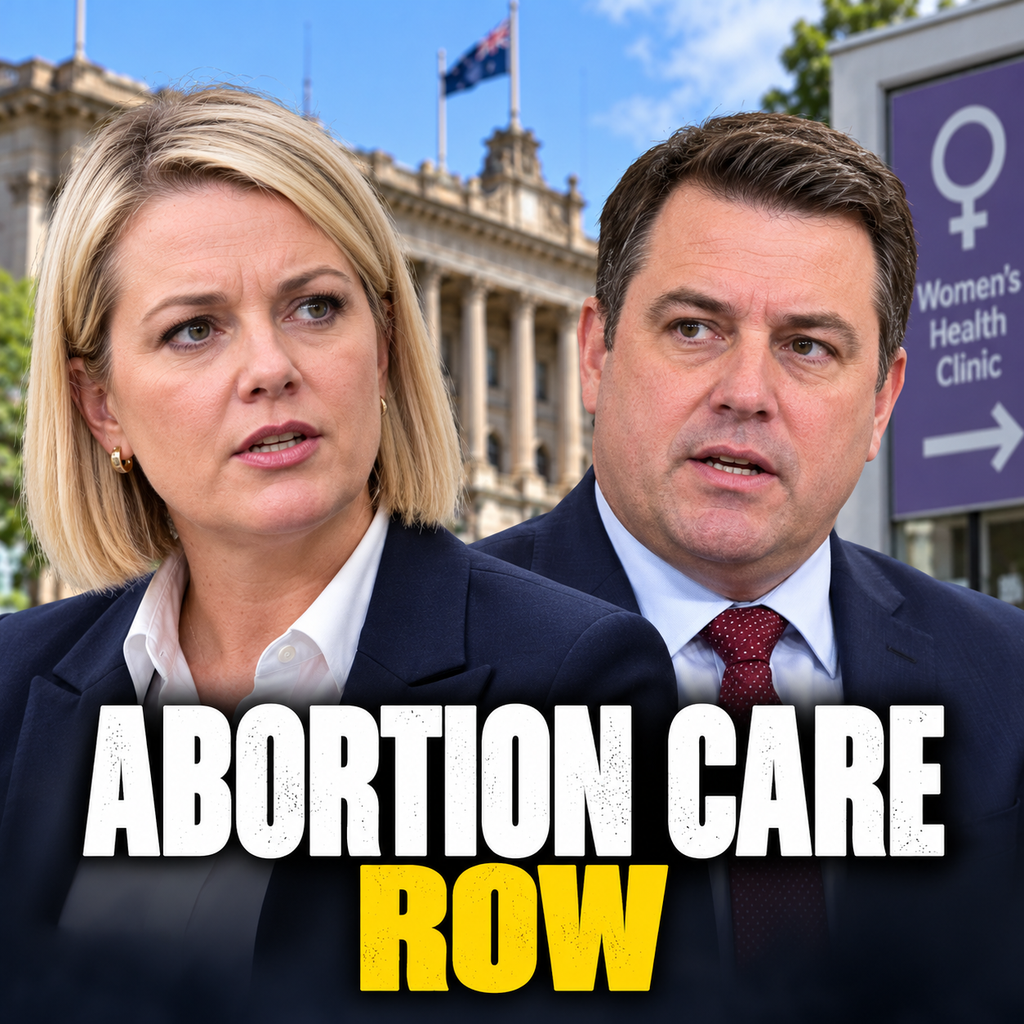
The detail of Labor’s plan matters. Reporting on the pledge indicates that participating providers would be funded to deliver abortion-related services up to 16 weeks of pregnancy, including relevant consultations, testing and medication. The proposal would also provide assistance with travel for patients outside major metropolitan centres. Its intended scope is broader than a single rebate on a medical procedure.
The proposed public expenditure is not a price that would automatically be paid for every service, nor is the four-year budget an estimate of what each patient currently owes. Actual costs can vary according to the procedure, provider, gestation, medical circumstances and whether an individual can use public or Medicare-supported services. The overall public funding allocation cannot be converted into a typical patient bill without service-level figures that have not been provided.
An important distinction is between public hospital care and services obtained through other providers. Victorian health guidance explains that eligible Medicare patients treated as public patients in public hospitals generally do not face hospital treatment charges. Private patients and people without Medicare eligibility may face different fees. Access to a particular service, however, also depends on clinical pathways and local availability, so a general statement about public hospital costs does not prove every abortion service is accessible without expense.
Medicare is relevant but does not settle every question about affordability. A service may attract a Medicare benefit while still leaving a gap between the provider’s charge and the scheduled benefit. Some people face separate bills for consultations, imaging, blood tests, medication or anaesthesia. Patients may also encounter transport, accommodation, childcare or time-off-work costs that sit outside the medical invoice.
Those indirect costs can be particularly important for regional Victorians. A person who cannot access a suitable service locally may need to travel to another town, arrange overnight accommodation or find someone to care for children. Financial support for travel could therefore matter even where the medical component of treatment is partly subsidised. The actual eligibility rules would have to be checked against the final program if it is implemented.
There is also a distinction between medical and surgical abortion. They involve different clinical pathways, timing and provider requirements. Labor’s broader proposal includes steps designed to improve access to care, but the availability of either pathway still depends on clinical assessment. Descriptions of expanded prescribing or treatment windows are general policy information, not a substitute for individual medical guidance.
Women seeking care should receive confidential, medically appropriate information from qualified health professionals. The political dispute should not become an excuse to imply that every patient will have the same clinical needs or that all circumstances can be addressed by a single publicly funded service. The policy is about financial and geographic access, not replacing medical assessment.
The $30 million commitment also creates a public-finance question. Taxpayer funding would be used to reduce charges faced by patients, with the government arguing this could improve access. Critics may question whether the money is the best use of health spending or whether the announcement is driven by electoral strategy. Those are legitimate areas for debate, but no evidence in the sourced material establishes that Carroll or Stitt knowingly misled voters about the proposal.
The budget can be examined through ordinary public-policy questions. What providers would participate? Would patients have to pay upfront and seek reimbursement, or would fees be settled directly? Which associated tests and consultations would be covered? How would regional travel assistance be assessed? What reporting would show whether the program reduced financial hardship or improved access? These are details that determine how useful a funding pledge becomes in practice.
Private health insurance is not central to the announced public funding promise, and no particular policy-level coverage change has been established. Some patients may hold policies that include relevant services while others rely on Medicare and publicly funded care. Insurance exclusions, waiting periods and out-of-pocket arrangements vary. Access to abortion care does not inherently require buying a private policy, and Labor’s pledge does not rewrite the terms of existing insurance contracts.
The disagreement about abortion policy also exists alongside the legal framework. Victoria has an established legal regime for abortion care, with requirements varying according to gestation and clinical circumstances. Wilson has publicly stated that she would not change the existing legal framework, a position distinct from her criticism of Labor’s proposed funding. A speculative future Coalition arrangement is not evidence that the law has already changed.
Stitt has framed the measure as a healthcare access initiative, while Wilson questions the political motive behind its announcement. Neither position alone tells patients what services will be available where they live. The election promise, current fees and clinical requirements are separate considerations for patients.
The proposal could be significant for people facing out-of-pocket bills or long travel distances, but its real-world effect would depend on funding agreements, provider participation and the operational rules that follow any election result. A commitment to make care free should be tested against the entire pathway a patient must navigate, not just the price of a procedure.
Whether a scheme is described as free also depends on how the patient reaches the service. A fully funded appointment is of limited practical use to someone who cannot obtain a timely booking within a manageable distance. Provider capacity, workforce training and referral arrangements are therefore part of the real cost question. The government would need to explain how its proposed funding translates into available appointments and how demand would be handled.
Rural access deserves its own consideration. Travel support may help patients reach a suitable provider, but eligibility can involve distance thresholds, receipts, approved forms of transport and accommodation arrangements. A person travelling with a support worker or arranging childcare may encounter other costs that are not automatically covered. The policy’s final administrative rules would determine how far the commitment to remove financial barriers extends.
Hospitals and other healthcare providers also operate under different funding arrangements. A Medicare-funded public hospital episode is not financially identical to a private clinic visit, and a patient who is eligible for one pathway may not be able to access a particular procedure in every location. The distinction is especially important when comparing headline promises with individual experiences. Patients may need to confirm fees and availability directly with qualified providers, because a government funding announcement does not, by itself, eliminate every bill.
The proposal’s public cost should be evaluated against its scope rather than used to calculate a fictional per-patient subsidy. A multi-year allocation may cover clinical services, administration, workforce initiatives or travel assistance, depending on the final design. Evaluating it requires looking at the budget detail and subsequent reporting on service use. The existence of a $30 million commitment does not prove the system will spend the full amount or that every eligible patient will receive identical support.
An economic assessment should also consider the consequences of delayed or inaccessible care without asserting an unverified dollar saving. Travel, lost wages, further consultations and stress can increase the burden on a patient and family. Whether better access would reduce other health-system costs is an unresolved question that requires evidence. The funding promise alone provides no reliable estimate of any wider savings.
The politics of the pledge sits within this financial detail. Labor says the state should remove barriers to clinically appropriate care. Wilson challenges the motive and timing while saying she would not change existing abortion law. It is entirely possible to scrutinise a public spending proposal while acknowledging that legal assurance. Neither side’s election strategy should be substituted for an account of what patients could actually pay.
A transparent implementation plan would specify participating clinics, eligibility, covered services, possible gap fees, referral arrangements and access outside Melbourne. It would also explain how patients could make a complaint if advertised coverage did not match the fee charged. Those operational details are the difference between a headline promise and a service that people can use with confidence.
The financial and geographic access questions extend beyond the campaign slogans. Wilson’s criticism and Labor’s response do not settle how a public funding commitment would change financial access to confidential reproductive healthcare, or what remains unresolved before the promise could become a service.






