Small Business Minister Anne Aly says she received 19 death threats through social media in a single week, making the disclosure after a parliamentary argument about a Liberal MP's choice of words. Aly described the number in a video posted online, speaking about threats she says she has received and language used against her. The figure is her own account; it has not been independently confirmed in a public police tally.
The dispute followed comments made in the House of Representatives by Liberal MP Angie Bell, who was criticising the government's handling of a tax-office decision affecting credit-card payments. Bell suggested Aly and the prime minister should be shamed and stoned in a public square. She withdrew the remark during proceedings. The words and their withdrawal are established by parliamentary reporting, while the meaning and appropriateness of the language became a separate political controversy.
Aly said the reference to stoning was especially troubling because she had previously received threats expressed in similar language. She characterised the parliamentary comment as racist and misogynistic and argued that it was inconsistent with Australian values opposing violence against women. Those assessments are Aly's stated view, not a judicial finding about Bell's intent or a finding that Bell made or directed any threat.
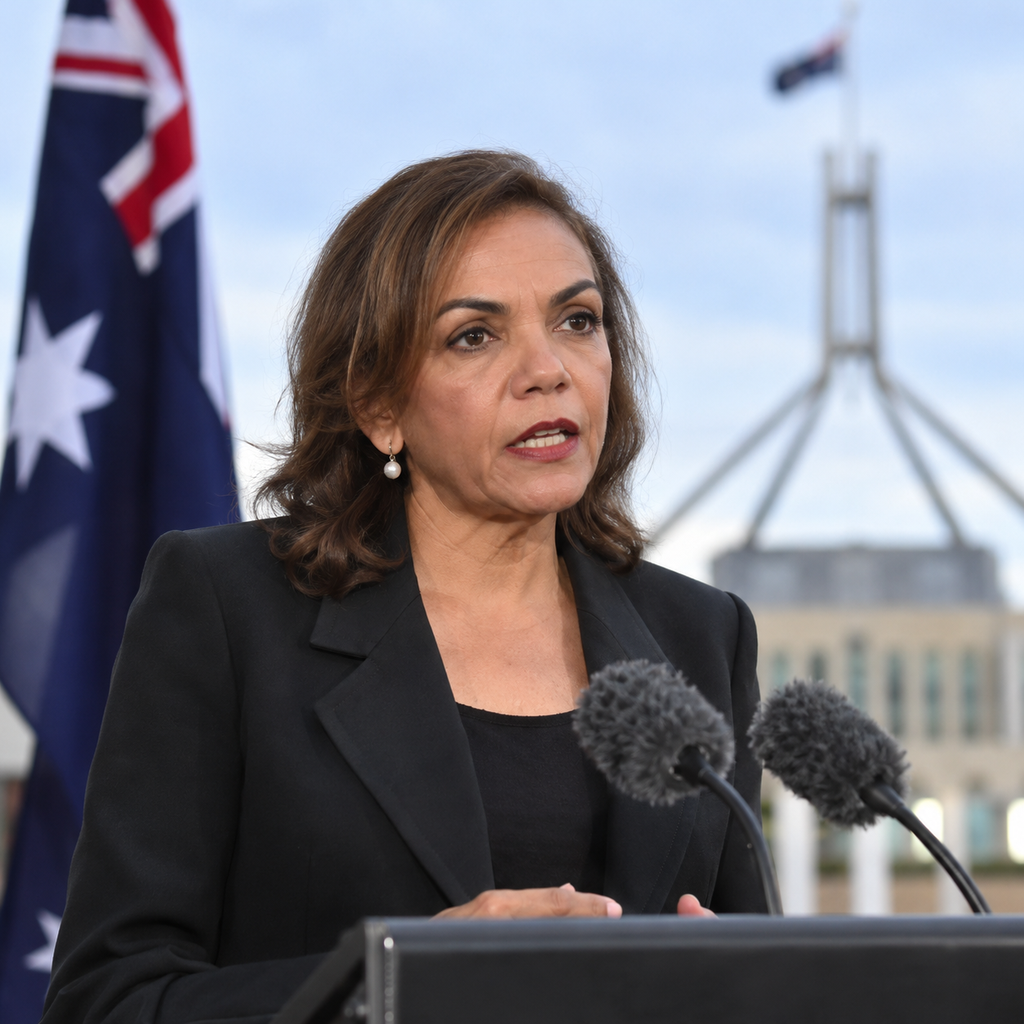
Aly said the messages had arrived on her social media over the preceding week. Public reporting has not established who sent each message, whether any criminal charge has been laid or whether a law-enforcement agency has verified that precise count. The identities of the people who sent the alleged threats and any potential criminal liability have not been established publicly.
Bell’s office subsequently confirmed that the MP telephoned Aly after the parliamentary remark to express personal concern over the matter. The call is an important development because it shows further contact after the original exchange, but the publicly reported description should not be inflated into an agreed apology, reconciliation or withdrawal of every political criticism. The record of what was said on the call is limited.
The parliamentary dispute arose within a broader argument about how a tax-office payment decision affects small businesses. Members of the opposition were questioning government ministers about the consequences of restrictions on using credit cards to settle certain tax liabilities. That policy dispute can be scrutinised on its merits. It does not require violent imagery, and the separate disclosure of threats raises a distinct issue of safety for public figures.
Debate in parliament is often sharp, and members are entitled to criticise ministers, agencies and decisions. The question here is not whether the opposition may challenge tax policy but how political language is used when disagreement becomes personal. Bell’s remark was withdrawn after objections. Aly’s subsequent statement described how language of violence can intersect with a person’s lived experience of threats, while others in parliament have debated what the exchange meant.
There is no demonstrated causal chain between Bell’s parliamentary words and the 19 threats Aly said she had already received. The chronology is especially important: Aly described threats occurring over a week, including before this particular exchange. There is no public evidence that Bell’s comment caused the messages Aly described or that all 19 followed the parliamentary exchange. Aly’s disclosure followed the controversy, but a causal connection has not been established.
Violence or threats against public officials can affect a person’s ability to take part in public life regardless of their party. Yet describing that broader concern should not turn into a claim about the prevalence of threats against MPs without data. The only specific count in this account comes from Aly. No national rate or comparison with politicians of another party has been established by the sources relevant to this incident.
Australia has a national eSafety Commissioner with powers relating to serious online abuse, including particular forms of adult cyber abuse. Official guidance explains that platforms generally receive the first report and that serious matters meeting the legal threshold can then be reported to eSafety. Threats suggesting immediate danger may also warrant police attention. These are general public procedures, not evidence that Aly has used any particular reporting route in relation to the messages she described.
The legal line between offensive speech, abuse and a prosecutable threat depends on the content and circumstances. Aly’s account does not establish that every message meets the legal definition of a threat or that one person was responsible for more than one message. Nor does a political criticism automatically amount to a criminal threat. No public finding has established that every message Aly described met the legal threshold for a criminal threat.
The exchange involved MPs on opposite sides of federal politics, amid a separate disagreement over tax policy. A Liberal MP made a remark about stoning during a dispute over tax policy, the words were withdrawn, and the Labor minister said she had received a substantial number of threatening online messages. Bell’s office later confirmed contact between the two. Neither MP’s private motives or the details of their subsequent call have been established in the public record.
The description of 19 threats also highlights the difference between a statement made by someone affected and an independently concluded investigation. Aly has described her experience publicly, but authorities have not released a corresponding confirmed count. If authorities release further information, it may add context. The figure therefore remains attributed to Aly. The number of messages is not a confirmed count of distinct senders or criminal offences, and no such breakdown has been made public.
Political debate regularly involves arguments about taxation, accountability and the effectiveness of ministers. Those issues remain open to challenge. The public interest in this incident lies in the language used in parliament and in Aly’s account of the hostility she experiences online. The parliamentary comment prompted her public response, but responsibility for the alleged threats has not been established against another parliamentarian.
The incident raises separate questions about robust political criticism and the personal safety of elected representatives. The tax-payment issue was a legitimate subject for parliamentary questions about the effect of an administrative policy on businesses. Aly’s disclosure concerned threatening communications, while Bell’s withdrawn words were spoken on the floor of the House. The withdrawn remark was made in parliament, while the threatening messages were described by Aly; they are not evidence of the same conduct or cause.
eSafety’s public guidance also emphasises that an adult abuse complaint has to meet a high legal threshold before the regulator can compel a platform to remove content. In general, the first step is to report the material to the platform, preserve evidence and use further channels if the platform does not help. There is no public record establishing that Aly made an eSafety complaint about the messages in question.
Bell’s contact with Aly after the incident was confirmed by the Liberal MP’s office. The office described the purpose as expressing personal concerns over the matter. Without a transcript or fuller joint account, that cannot support claims about what either woman accepted, agreed to or rejected on the call. The confirmed event is contact, not the resolution of the disagreement. Any further account of the call would need to come from those involved.
Aly has described receiving threatening online messages, but neither the messages themselves nor their senders have been independently identified in the available public record. The disclosure has added to concern over the treatment and safety of people in public office. The public account does not identify how many senders were involved, whether more than one platform was used or the precise circumstances of each alleged threat.
Aly’s account should also be understood as a report of messages directed at her social accounts, not necessarily a claim that 19 separate people or organised groups were involved. One person could send multiple messages; different platforms may have different processes for preserving records. The available reporting does not establish either possibility. The only public figure for the number of messages in this account is Aly’s stated total of 19.
The immediate development is therefore a combination of a minister’s disclosure and a parliamentary exchange that continued beyond the chamber. Bell withdrew the disputed remark and her office confirmed a later call; Aly has spoken about threats against her and why she found the language distressing. Neither public record nor the available sources identify those responsible for the messages. Questions about the threats and their authors remain unresolved.






