Families of Australians in residential aged care are questioning how optional charges for television, meals and activities can add up to thousands of dollars, after an investigation revealed strikingly different packages offered by major providers. The fees sit within a federal framework designed to let residents pay for extras above the standard level of care. The central dispute is about what should count as an optional extra and whether older people are genuinely free to refuse a package without losing ordinary comforts.
At Uniting's The Marion aged care home in Sydney's inner west, the family of long-term resident Patricia Massa became concerned after receiving information about a proposed fee for an in-room television. Massa, 88, lives with advanced dementia and enjoys watching old films. According to ABC Investigations, a new package indicated that incoming residents could pay $8.80 a day to have a television in their room. Over a full year, that price amounts to more than $3,200.
The proposed charge did not apply to every resident at The Marion. Under federal protections, people already receiving certain services without additional charge before the policy change cannot simply be required to start paying for those same services. The existing resident will retain her television without that new fee. New residents may face a different choice, depending on what the provider supplies as standard and what is offered as an optional service.
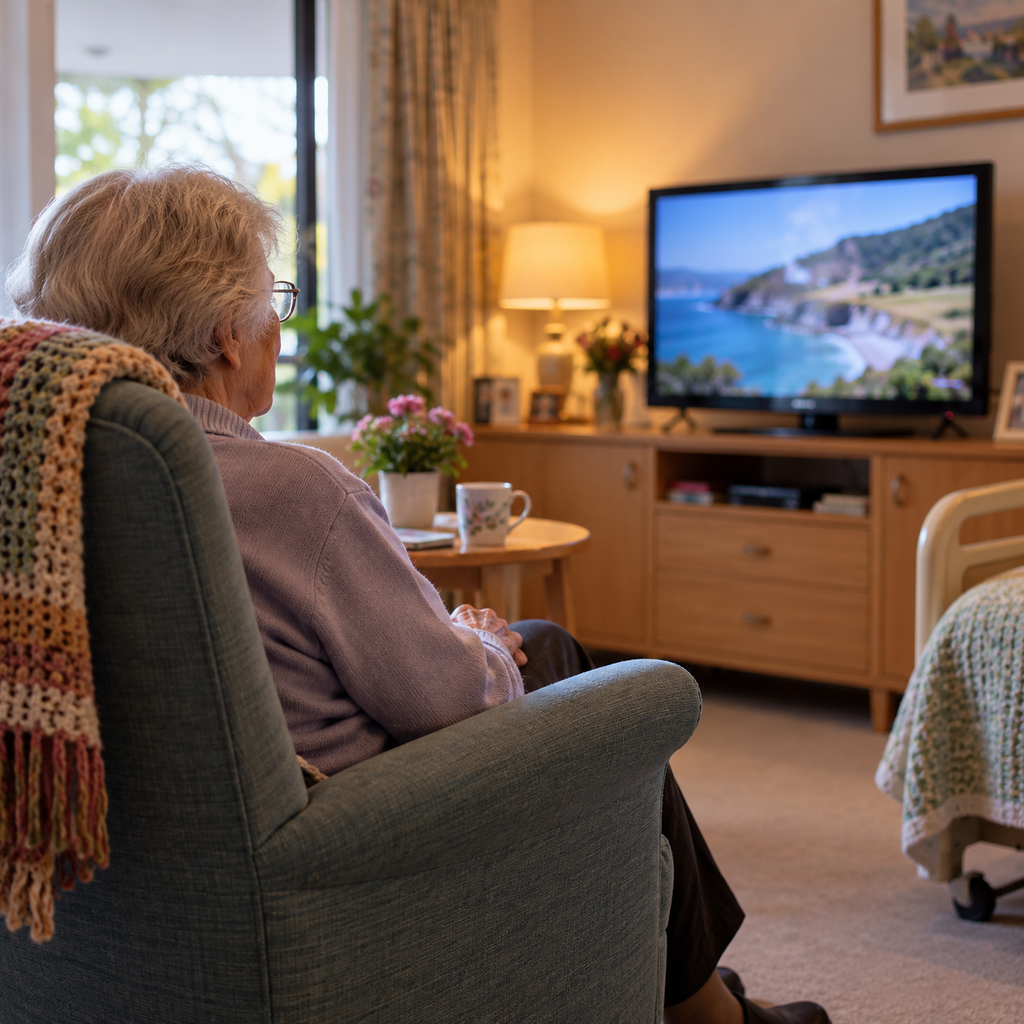
The distinction matters to families reading brochures while trying to understand care costs. Residential aged care already involves arrangements for basic daily fees, accommodation and, for some people, assessed contributions. A higher everyday living fee is not another mandatory government charge. It is an optional agreement for additional or higher-quality services beyond the standard residential care service list, and providers must comply with the quality standards and statement of rights.
Under government guidance, residents must agree to a higher everyday living service before it is supplied under such an arrangement. Providers may offer bundles, but the services within those bundles must also be available individually. A resident cannot be left worse off than if they paid only for the services they can use. These rules matter for someone who has little interest in group activities or who cannot use a particular premium amenity, even if the brochure makes the package appear convenient.
The Marion's proposed Elevate Plus materials went well beyond televisions. ABC reported listed charges including $132 for an additional activity held fortnightly, $66 for a monthly one-hour conversation with a carer and $220 for a musical performance inside the home. The advertised bundle cost $44 a day. The amounts are examples from one provider's materials, not a nationally imposed list of fees and not proof that each resident agreed to or paid every charge.
Patricia's daughter, Elizabeth Tosti, told ABC she feared a system in which people able to afford added services could enjoy more opportunities than residents who could not. Her concern was not merely the cost of a screen. It was the prospect of residents being divided by what their families could afford, particularly when older people might have limited capacity to navigate fee schedules, compare services or complain without assistance.
Uniting told the ABC it was reviewing the proposed package and intended to make changes to support a fair and sustainable model. It said residents could choose the services they wanted and argued that an in-room television was classified as an additional service within the government's funding arrangements. Whether a particular charge is permitted depends on the services already included and the resident's individual arrangements. Uniting maintains that residents can choose which extras they want.
Across the sector, other examples have been equally contentious. ABC reported that Opal HealthCare, a major national provider, was rolling out higher everyday living fees across its homes following trial arrangements. The company refunded about $190,000 to residents who had been charged for services they were already receiving without additional payment. That refund is a concrete development, but it should not be extended into an assertion that every trial fee or every charge at every site was improper.
At an Opal facility in Perth, a trial package included a hot breakfast listed at $12.50 a day and soft drinks or juice at $7 a day. Those prices can become substantial if paid daily over a year, but the individual services were examples in a particular trial, not universally compulsory expenses. Residents may have different preferences, care plans and contractual arrangements. A sensible comparison identifies both the daily rate and exactly what the payment is said to purchase.
Consumer advocates argue there is a broader question about dignity in residential care. Craig Gear of the Older Persons Advocacy Network has called for essentials such as televisions, telephones and wi-fi to be provided without supplementary charges. He told ABC the network had received reports of higher living fees being proposed for items as ordinary as butter or room delivery of a meal. These are claims and examples the advocacy service has received; any individual allegation still needs examination against the relevant care obligations.
The Aged Care Quality and Safety Commission has said it is investigating concerns about possible misuse of the higher everyday living rules. Its publicly described examples include charging for services already provided as standard, presenting voluntary charges as compulsory, and planning to charge for performances delivered by unpaid volunteers. The commission is examining whether the rules have been followed, but its investigation does not amount to a finding that every provider or charge mentioned was unlawful.
The federal department has separately explained that a higher everyday living agreement cannot be used to charge residents for care and services that homes are already legally required to provide. The protections for people receiving services without charge before the newer system took effect are especially relevant to existing residents. A family presented with a change should therefore ask not just how much a service costs, but what the person previously received, what the standard service includes and whether any written agreement has been entered into.
For a prospective resident, comparing an accommodation price is only part of understanding affordability. A package price quoted per day can look small beside a large room deposit, yet recurring payments create meaningful annual costs. A package is most useful when its contents are transparent, available individually as required, and genuinely wanted by the person receiving them. A resident who cannot enjoy a concert or additional activity should not be forced into a package that leaves them worse off than purchasing suitable extras separately.
Residents or representatives who believe optional charges have been imposed without agreement can raise the issue with the provider and, where necessary, the Aged Care Quality and Safety Commission. Government information also explains the difference between existing additional-service arrangements and newer higher everyday living agreements. The rules are not identical for every resident because entry dates, previous services and written agreements can change the relevant protections.
The emerging debate is not whether older people should ever be allowed to buy optional extras. It is whether the boundary between routine comfort and premium service is being drawn consistently and fairly, especially for people who rely on others to speak on their behalf. Families weighing a care placement need plain-language prices, clear information about what is already covered, and confidence that declining optional charges will not remove essentials required under law.
An optional-fee agreement is also a document that families can ask to see and understand before deciding. The government's guidance distinguishes continuing arrangements from newer HELF agreements and requires information to be provided about the services purchased. The practical importance of that paperwork is obvious when a resident's needs change: an additional activity or amenity suitable on entry may no longer be useful later, and families need to know how the terms can be reviewed rather than assuming the original bundle must continue indefinitely.
Annual figures calculated from daily rates are illustrative and may differ from the amounts an individual resident actually pays. A quoted rate multiplied across a year illustrates potential cost, but a resident might subscribe for a shorter period or select just one service. That does not make the daily rate unimportant; it simply prevents illustrative annual totals from being reported as if providers had already charged every resident the full amount.
For Patricia Massa's family, a television represents a familiar activity and a connection with everyday life. For providers, higher living fees represent a way of pricing services outside the standard package. Government regulators must ensure the two positions are reconciled within the law. The dispute concerns which everyday services should be included in basic residential care and which can be sold separately as genuine extras. No universal television fee has been introduced for all aged-care residents.






