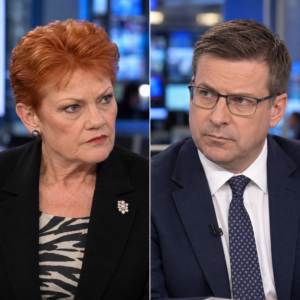
A dispute over the way Australian businesses can pay tax has spilled into a personal confrontation in federal parliament, after Liberal frontbencher Angie Bell used violent imagery about Prime Minister Anthony Albanese and Small Business Minister Anne Aly. Bell withdrew the words following an objection in the chamber. Aly subsequently condemned the remarks as racist and misogynistic, drawing attention to threats she said she had already received.
Bell was arguing for a Coalition proposal to reverse restrictions on credit card payments to the Australian Taxation Office. The issue had caused concern among small business groups because a change in accepted payment methods can affect how businesses manage cash flow. During her speech Bell said the prime minister and the minister should be publicly shamed and stoned. The imagery prompted Leader of the House Tony Burke to object, saying it was physically violent language. Bell withdrew it. The political issue under debate remained separate from the propriety of those words.
Aly’s response explained why she considered the remark especially serious. She said language invoking stoning was not merely an exaggerated criticism of a government policy; it was linked to forms of violence against women and to threats that had been directed at her. She disclosed that she had received 19 death threats on social media before Bell made the remarks. Those threats must not be described as something Bell organised, issued or caused. The available reporting establishes what Aly said about the threats, not a causal link between the threats and a parliamentary remark that followed them.
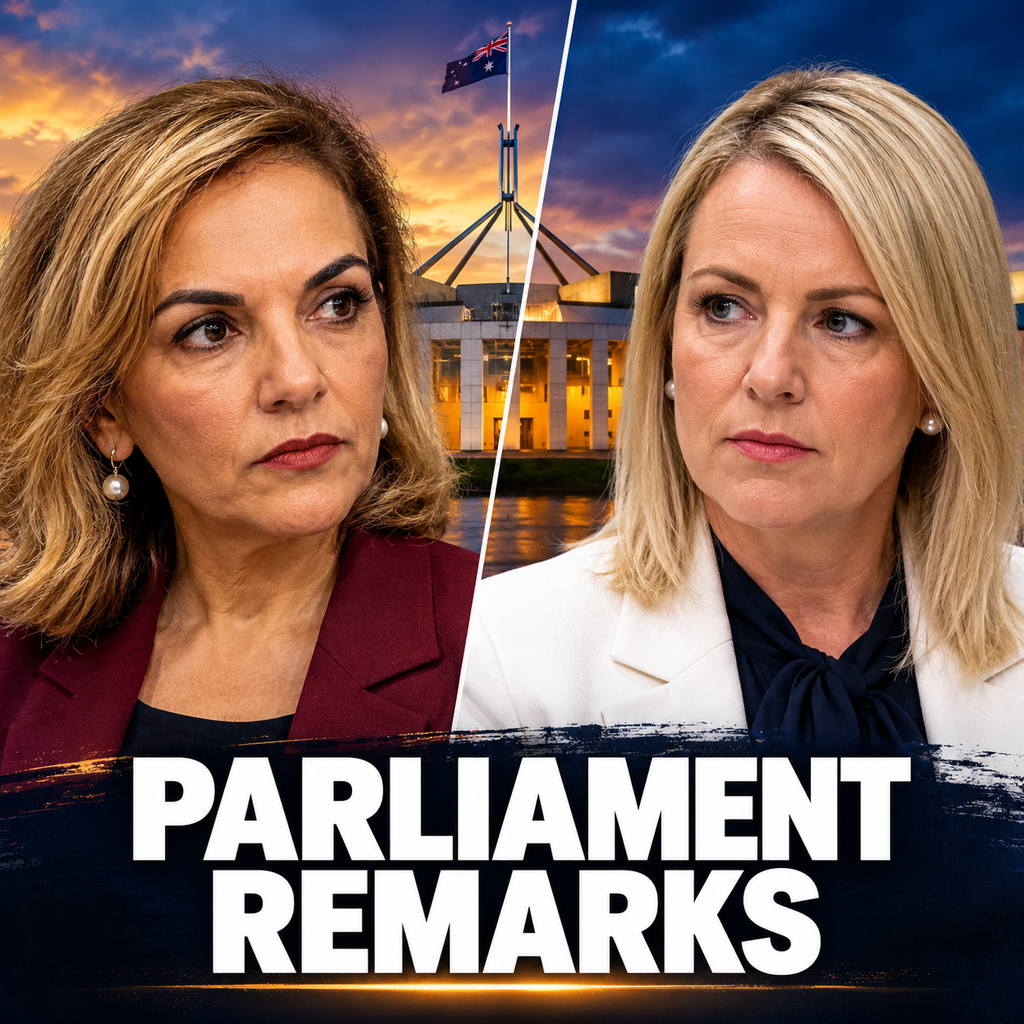
The incident provides two distinct lines of accountability. First, did the government handle a proposed change to business tax payments properly? Second, what standards apply when politicians criticise their opponents? These issues can be reported together because they arose in the same parliamentary exchange, but answering one does not settle the other. A critic can raise a legitimate financial concern while being responsible for inappropriate language. Equally, a minister’s condemnation of that language does not by itself resolve whether the tax-office proposal was sensible.
The Australian Taxation Office’s proposed restriction concerned credit card payments, a familiar tool for some small and family businesses facing uneven revenue. Businesses may use such payments to manage the timing of a tax obligation even though credit cards can attract interest or other charges. That does not mean every small business depends on a card or that all credit products are equally suitable. The underlying policy question is whether reducing a payment option imposes avoidable difficulties on businesses and whether any tax administration rationale justifies those difficulties.
The federal government intervened to delay implementation after concerns were raised. That is an important distinction from an outright reversal. A deferred change may still matter to businesses planning future payments, and a proposed parliamentary solution may not become law simply because it has been introduced or advocated. Readers need to distinguish what the ATO proposed, what the government delayed, and what the opposition sought to reverse. Reporting all three as if they were a single final decision would wrongly suggest the issue had been settled.
Payment systems can have hidden consequences. If a business must pay tax electronically without a familiar credit option, it may need to draw down cash reserves, negotiate a different facility or change its accounting arrangements. Those are possible operational consequences, not established outcomes for particular firms. The costs of borrowing, merchant fees, payment timing and the treatment of business tax obligations can vary. A business owner concerned about a specific liability would need current, authoritative payment guidance rather than assumptions drawn from a parliamentary argument.
Against this policy backdrop, Bell presented the government as letting down employers who have tight operating margins. She framed the tax-payment decision as a threat to small businesses and the people who work in them. That is the substance of her political case. It is possible to describe that case accurately without reproducing her violent metaphor repeatedly or using an image that shows the two ministers as victims of an actual physical attack. The moment was a spoken political controversy, not a reported assault.
Aly focused on the opposite risk: how violent political rhetoric can land when its subject is already coping with harassment. The first Muslim woman elected to the federal parliament, Aly described Bell’s language as inconsistent with Australian values. She argued that it should not be normalised as part of the rough exchanges that occur between elected representatives. Her response did not treat violence as a metaphorical detail; it situated the words within a wider concern about threats against women in public life.
There is a meaningful distinction between intention and impact. Bell’s words were delivered while arguing about tax policy, and she later withdrew them. That is not the same as establishing that she meant to encourage physical violence. But an audience can reasonably scrutinise the impact of an image that invokes stoning, particularly when it is directed at a woman who has publicly discussed receiving threats. A fair account should include both the withdrawal and Aly’s objection rather than either omitting the apology-related context or inventing evidence of malicious intent.
Opposition representatives defended Bell’s work as an advocate for the Gold Coast and for businesses, while acknowledging that withdrawing the words was appropriate. That response is part of the story, too. The fact that members of her party defended her broader work did not erase the withdrawn statement. Nor does withdrawing a remark necessarily settle how the people targeted by it experienced the language. In parliamentary politics, procedural closure and public reaction can move at different speeds.
The chamber has mechanisms for objection and withdrawal because elected representatives must be able to contest policies without indefinitely escalating personal language. A member’s withdrawal addresses the immediate parliamentary record and procedure. It is not a criminal conviction, civil judgment or formal finding that the member intended the literal violence described. Treating it as one would distort the legal status of the episode. Equally, describing it as nothing more than a joke would minimise the concern raised by the minister who was named.
For voters, the clash creates a challenge that is familiar well beyond Canberra. The most provocative sentence can overwhelm the actual policy proposal, leaving a business-tax question almost invisible. That can be convenient for politicians seeking attention, but not for small businesses that want accurate information about their options. It is possible to condemn violent imagery and still demand a detailed explanation of why the tax-office change was proposed, how the delay works and what practical alternatives will be available.
There is also a question about verification of threats. Aly publicly described threatening messages. Their content, senders and any investigations require independent evidence before additional claims can be made. No reporting examined here establishes that Bell had any involvement in those messages. That caveat must travel with the story wherever it appears, including a shortened social caption or a graphic headline. Sensational presentation could otherwise create a damaging and false implication.
The confrontation has clear participants and clear recorded actions: Bell made the remark, Burke objected, Bell withdrew it, and Aly condemned it. It also has an unresolved policy question about how tax payments should work for Australian businesses. A careful account keeps those threads distinct. Readers can evaluate Bell’s advocacy of small-business payment flexibility and Aly’s warning about harmful rhetoric without being forced to assume either a criminal allegation or a final outcome on the proposed financial change.
The difference between a credit card ban and a payment surcharge is important for small firms. A surcharge affects the cost of using a method, while a ban removes that method altogether. Neither description should be casually substituted for the other. The ATO change at issue related to how liabilities could be paid, while the opposition sought a parliamentary reversal and the government announced a delay. The precise scope of the measure matters for companies budgeting payroll, supplier invoices and tax obligations. Without it, political arguments can give owners the wrong impression that their current payment options have already vanished.
Accountants and business advisers can explain what practical adjustments might follow, but those effects are not identical across industries. A seasonal retailer with uneven receipts has different cash-flow needs from a firm paid regularly on long-term contracts. A business with a revolving card balance may also pay more for temporary liquidity than one paying its bill in full. Those are general financial distinctions, not claims that a particular business has been harmed. They demonstrate why governments need to explain the policy carefully and allow enough lead time for adjustment.
The discourse about Aly’s threats also requires precision. It is possible for a public figure to disclose threatening online messages without releasing identifying details, particularly when authorities may need to examine them. Responsible reporting should neither demand that someone publish harmful messages nor embellish the disclosure into a confirmed criminal investigation if none is reported. The fact that the minister cited threats in her response establishes a serious safety concern. It does not grant permission to link the threats to an opponent by implication.
Political accountability involves more than whether a remark is withdrawn. Parties can set expectations about language, parliament can enforce procedural rules, and voters can assess how representatives conduct themselves. None of those processes requires an editor to exaggerate the event. The useful distinction is between the content of the policy dispute, the impact of the words used and the response that followed. This case demonstrates why preserving that sequence matters when the incident becomes a shareable headline.
The parliamentary row should not leave the original practical matter forgotten. Businesses need certainty about acceptable payment methods and sufficient notice to adapt when rules change. Politicians have the right to demand answers about those costs. They also bear responsibility for the language they use to make their case. In this dispute, the government and opposition may continue to argue about the ATO decision, but the exchange has already illustrated how quickly the credibility of a policy argument can be undermined by the words chosen to prosecute it.