Qantas cancelled a flight from Rome to Perth after bed bugs were discovered aboard the aircraft during its earlier journey from Western Australia. The airline withdrew the Boeing 787 Dreamliner from service for specialist treatment and cleaning after passengers reported bites in the economy cabin. Customers affected by the cancellation were provided with accommodation and alternative travel arrangements, according to statements reported by Australian media. The incident has raised questions about the practical challenges of keeping long-haul aircraft free of pests that can travel unnoticed in belongings. It does not establish how the insects reached the aircraft, how many people were bitten or that a wider infestation exists across the airline’s fleet.
The problem was reported on Qantas flight QF5, travelling from Perth to Rome. Reporting by the Guardian and News Corp says the discovery involved seats in the forward part of the aircraft’s economy section. Passengers reported bite marks, and the airline subsequently cancelled the return service, QF6. The operator’s decision to remove the aircraft from normal flying for treatment is the confirmed operational consequence. Details of individual symptoms and the exact number of seats affected remain based on reporting about passengers and cabin observations rather than a comprehensive publicly released inspection report, and they should be presented with that qualification.
A cancelled international flight can disrupt more than the passengers booked on one departure. People travelling between Australia and Europe may have onward connections, accommodation bookings and other arrangements that depend on the aircraft operating as scheduled. Qantas says it made alternative arrangements and assisted affected travellers with places to stay. Some reporting indicates passengers were moved to other flights within about 48 hours. That is the airline’s account of how the disruption was handled, not proof that every traveller reached a final destination at the same time. Individual experiences may differ, and no single passenger’s experience should be invented to illustrate the story.
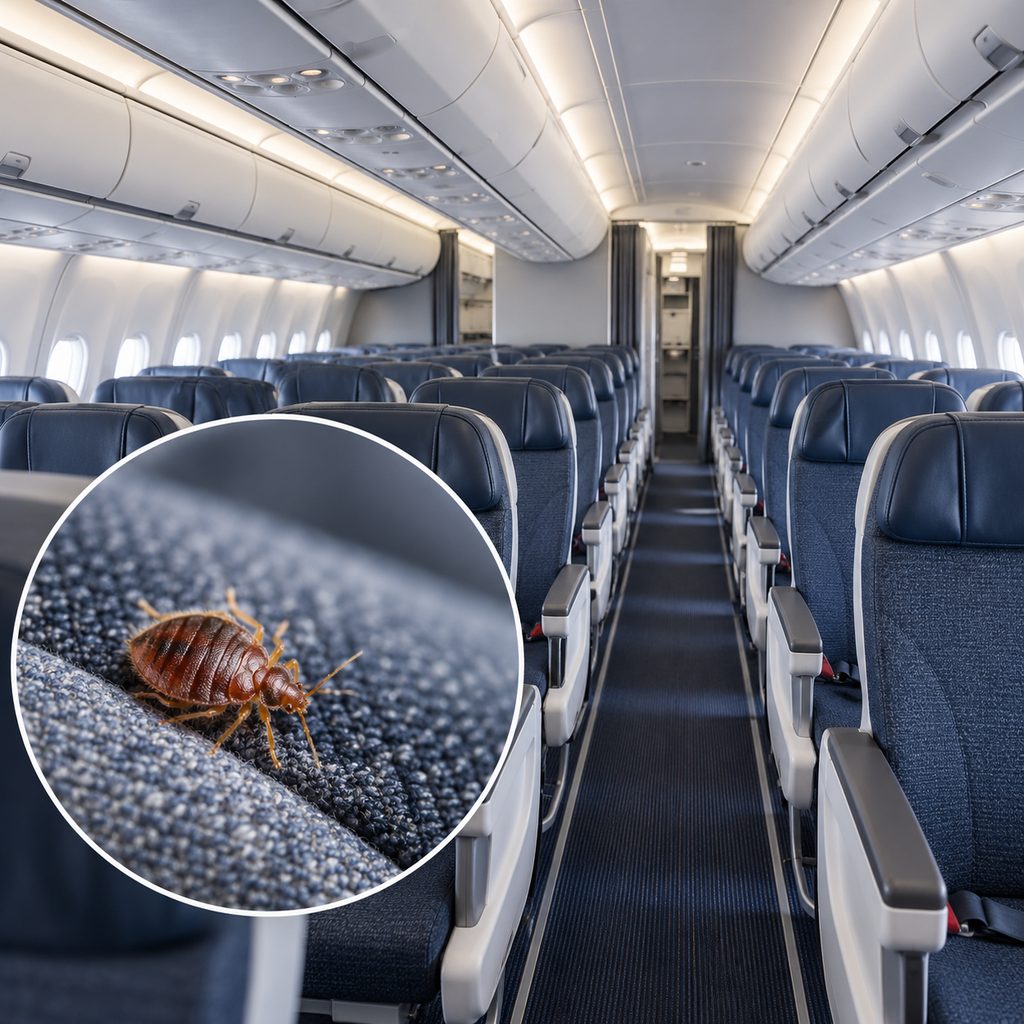
The aircraft was a Boeing 787 Dreamliner, the type used for the carrier’s long non-stop route between Perth and Rome. Because the flight lasts many hours, passengers spend an extended period in close contact with seats, armrests and personal belongings. Reports of insects in such a setting are understandably distressing. Yet the presence of a pest in a cabin does not mean an airline is carrying an infectious disease or that every seat is unsafe. Bed bugs are a difficult nuisance that require targeted treatment; the appropriate response is to identify and control the problem rather than assume a general medical emergency.
Qantas has apologised for the incident and says aircraft are cleaned regularly. The airline’s reported response involved taking the jet out of service for a deep clean and specialist treatment in Rome before returning it to normal operation. Treatment for bed bugs can differ from ordinary cabin tidying because the insects are small, can remain hidden in narrow spaces and are not reliably removed by a standard surface wipe. The decision to ground an aircraft may therefore be inconvenient but can be necessary to allow a thorough response. The available statements do not provide a complete technical record of the treatment process used on this particular jet.
Reporting cites the airline’s general cleaning and disinfection schedule, including periodic deeper treatment. A routine schedule, however, should not be mistaken for a guarantee that an isolated pest will never enter a cabin. Bed bugs can be transported in bags, clothing and furniture; a traveller may encounter them without knowing where the exposure began. That is why the reported source of an infestation needs stronger evidence than the simple fact that the insects appeared during a journey. There is no verified basis here to blame a named passenger, a particular country, airport staff or the cleaning workers responsible for the aircraft.
The reported symptoms are consistent with why the insects attract concern. Bed bugs feed on blood and may leave itchy, irritated marks, although individual reactions vary. University experts quoted by Australian media have described how difficult the insects can be to detect and eliminate. Bite marks alone, however, do not supply a full laboratory diagnosis, and it is not possible from a news summary to establish that every reported skin reaction came from the same source. People with troubling symptoms should seek appropriate medical advice, but the case does not justify sensational claims about a new infectious outbreak aboard aircraft.
News reports say crew members offered antihistamines to some affected passengers and that available supplies were not enough for every request. Those details are reported passenger accounts and should not be presented as a formal finding by aviation or public health investigators. They do help explain why the event was unsettling for customers who had expected an ordinary international journey. Airlines must balance passenger welfare with what is available to cabin crew during flight, but the inspected sources do not provide the full on-board medical inventory or the precise sequence of requests. It would be unfair to assign personal blame to crew members without those details.
The distinction between the outgoing service and the cancelled return flight is important. Bed bugs were reported aboard the aircraft travelling from Perth to Rome; Qantas then cancelled its next Rome-to-Perth service so the aircraft could receive treatment. These are connected stages in one incident, not two separate discoveries requiring two different aircraft. The return cancellation also does not establish that the same individuals who reported bites were booked to fly home immediately. Describing the sequence accurately prevents confusion about where passengers encountered the problem and why other travellers subsequently faced a change of plans.
Some media accounts refer to a small number of economy rows being affected. Qantas has reportedly said the problem was confined to a limited part of the cabin, but public reporting does not provide enough independent inspection material to conclude that every other row was checked and cleared before treatment began. Coverage should avoid both extremes: it should not describe the aircraft as broadly overrun with insects, and it should not minimise the fact that passengers and airline staff considered the problem serious enough to cancel a flight. The appropriate description is a reported cabin infestation requiring specialist action and operational disruption.
The episode may prompt travellers to consider how they look after personal belongings on journeys. Bed bugs can be introduced in many settings, including hotels and shared transport, and they do not imply that a particular traveller is unhygienic. Avoiding stigma is important. If someone suspects insects in their baggage or experiences persistent bites, the useful response is to seek professional identification and relevant medical advice where needed rather than attempt to blame a fellow passenger. For the Qantas incident itself, responsibility for locating and treating the reported insects rested with the operator and its specialist service providers, whose detailed actions have not been publicly documented.
The public interest extends to how an airline communicates a cancellation arising from an unusual problem. Travellers need clear information about the affected service, whether they will be rebooked and whether their accommodation will be arranged. Qantas says it offered those forms of support and apologised. The reviewed reports do not include verified details of compensation owed to particular passengers under every applicable fare condition or legal regime. It would be misleading to promise automatic payments or describe a legal entitlement without inspecting individual tickets, operating circumstances and the relevant rules. The confirmed airline response is accommodation and alternative travel arrangements.
The case also highlights the difference between immediate containment and a completed explanation. Grounding and deep-cleaning an aircraft can address the visible operational problem, but it does not necessarily establish how the insects arrived, where they had been hiding or how long they were present. A commercial airline can reasonably act to treat a pest before those questions are fully answered. Media should not turn an operational precaution into proof that internal cleaning systems systematically failed across the fleet. No public regulator has been identified in the reviewed material as having issued a fleet-wide warning or a finding of negligence about the airline.
For passengers who were inconvenienced, the cancellation is a tangible matter: a long journey was delayed and arrangements had to change through no ordinary planning choice of their own. For those who reported bites, physical discomfort and uncertainty about the cause added to the experience. Those consequences warrant coverage without embellishment. Describing a person’s ordeal in quotation marks when no direct interview has been verified, or creating images of passengers covered in insects, would be irresponsible. The reported problem can be explained plainly through the route, the aircraft, the reported insect discovery, the cancellation and Qantas’s response.
Using imagery responsibly is important in a travel story that could easily become sensational. A verified photograph of a Qantas Boeing 787 illustrates the aircraft type, but it is not itself a photograph of the reported insects. A macro image of a bed bug can help explain the species when clearly identified as an illustration; it should not be presented as an image taken from a specific seat on the flight. No unverified passenger photograph should be used to imply that a named individual caused or suffered a particular event. Maintaining that visual distinction matters just as much as correct language in the article.
Qantas’s Perth–Rome route is a prominent direct link between Australia and Europe, which helps explain why a cancelled return service has attracted national attention. International passengers expect clean cabins and prompt care when unusual issues arise, and an airline has a practical incentive to restore the affected aircraft safely rather than hurry it back into service. At the same time, a single incident cannot support claims about the cleanliness of all long-haul flights or the incidence of bed bugs across every airline. A meaningful assessment of those wider questions would require evidence that has not been provided in the material reviewed.
The confirmed outline is that bed bugs were reported during a Qantas flight from Perth to Rome, the carrier took its Boeing 787 out of service, and the planned return trip was cancelled to allow specialist treatment and cleaning. Qantas says passengers affected by the disruption received accommodation and alternative travel assistance. The precise source and extent of the problem remain uncertain in the public record. For consumers, the central lesson is about accurate information and the management of a legitimate passenger concern, rather than an unsupported conclusion that the airline’s wider operations are unsafe.






