Barnaby Joyce’s warning that a possible Josh Frydenberg political comeback could create problems for Angus Taylor has sharpened debate about the Liberal Party’s direction, its leadership and the economic policies it wants to sell to voters. The warning is a political assessment, not evidence that a leadership challenge has been organised or that the former treasurer has decided to seek a parliamentary seat.
Frydenberg’s renewed intervention in national economic debate has prompted speculation about whether he might return to federal politics. He has not formally declared a candidacy. Joyce, who is associated with One Nation rather than his former Nationals colleagues, has argued that the uncertainty creates difficulty for Taylor’s leadership. That position should be attributed to Joyce, not reported as an inevitable political outcome.
The debate comes with a substantive policy disagreement. Frydenberg has advocated discussion of changes to the goods and services tax as part of a wider program that might permit reductions in other taxes. Taylor has opposed increasing the GST at a time when many Australians are struggling with everyday costs. The difference places household spending and tax reform at the centre of what could otherwise be treated as a contest of political personalities.
Joyce’s view that a comeback could damage Taylor reflects the risk of a prominent former treasurer attracting attention whenever the opposition leader sets out an economic position. A party can benefit from the ideas of experienced figures outside Parliament, but it can also face questions about whose policies or ambitions will ultimately define its message. Those questions are politically significant even without a declared challenge.
Taylor has welcomed contributions to the national debate while rejecting the substance of Frydenberg’s GST reform proposal. That is not the same as agreeing that Frydenberg should return as leader or announcing a contest. The public discussion concerns competing economic ideas and hypothetical future choices, not a confirmed bid for office.
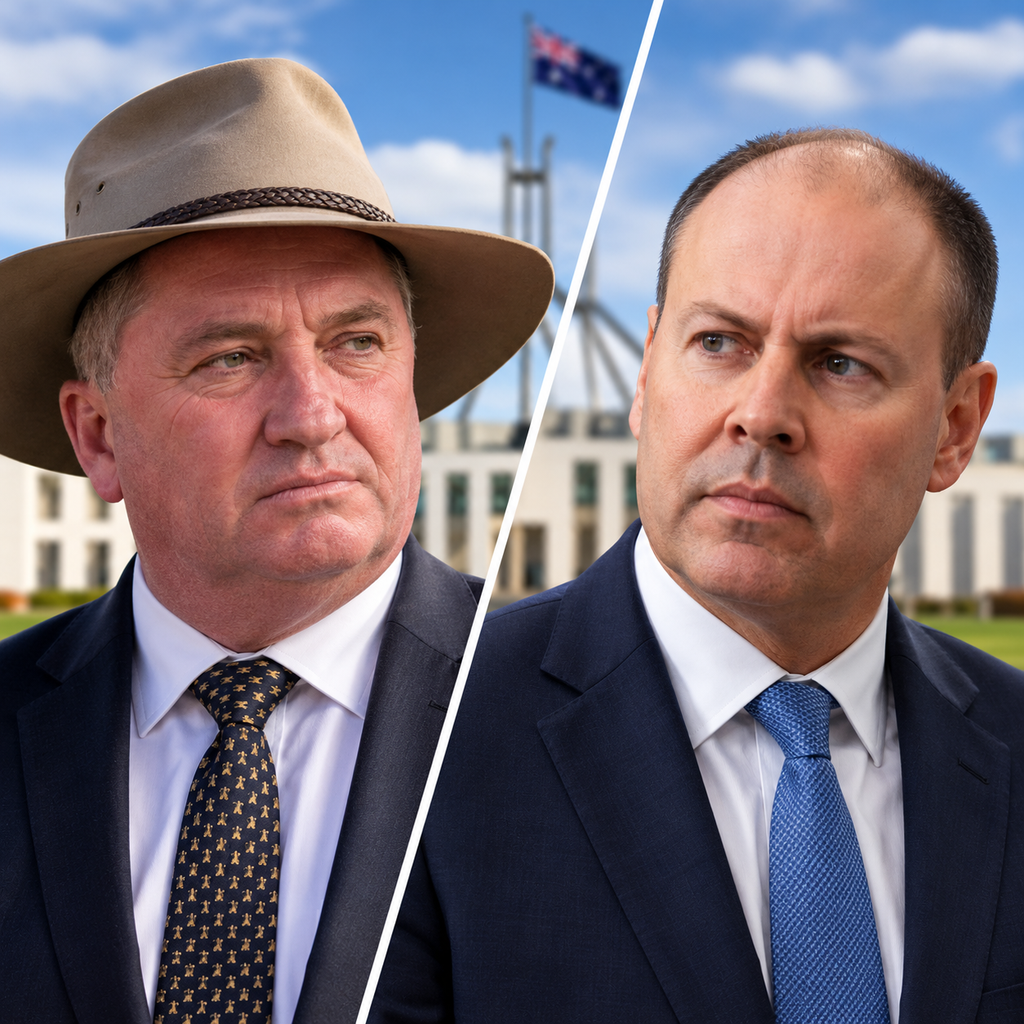
A return to Parliament is a separate decision from giving speeches, publishing political arguments or making appearances. Frydenberg would need to choose whether to seek preselection, contest an election and rebuild a role within the party. Until those decisions are made, accounts of his political future should remain conditional. Speculation about his popularity cannot be presented as evidence that any formal process is under way.
The GST argument has direct implications for households. A consumption tax is paid when taxable goods or services are purchased, while income tax is applied to earnings. Reducing one and increasing the other can change the distribution of the tax burden. The effect on a particular family would depend on its income, spending patterns and any compensation measures included in a complete proposal.
A general call to review the GST does not establish an enacted policy or an agreed rate. Nor does it show precisely which goods and services would be covered. Those details are fundamental to assessing claims about revenue, fairness and the cost of living. A broad promise that income tax could fall would need to be evaluated against the additional consumption tax paid by households.
Low-income households often spend a high proportion of their available income on essentials. That makes the design of consumption taxes and any accompanying payments important questions in a reform debate. Higher-income earners may benefit differently from income tax cuts. Without a fully costed proposal, neither supporters nor critics can confidently state what every household would gain or lose.
For small businesses, changes to the GST could affect pricing, invoices, accounting systems and customers’ willingness to spend. Even where companies collect the tax on behalf of government, they must administer it and explain prices clearly. A serious economic reform plan would therefore need transition rules and estimates of the administrative impact, not only broad claims about growth.
Frydenberg’s argument is that tax reform could help revitalise Australia’s economy and offer a clearer fiscal direction. Supporters of changes to the tax mix often focus on the possible incentive effects of lower income or company taxes. But whether a particular package would encourage investment depends on the rates chosen, the revenue balance and the wider economic environment. It is not a guaranteed consequence of changing one tax.
Taylor has emphasised the difficulty of asking people to pay more consumption tax while household budgets are under pressure. His position also puts him in a different place from those Liberal figures who believe a bolder reform proposal might help the party reconnect with voters. That is a policy disagreement worth describing on its merits rather than as a referendum on either man’s personal ambition.
Joyce’s intervention adds an additional political angle because he has moved away from the Nationals and into One Nation. His perspective is therefore not simply that of a colleague in the federal Coalition offering private advice. He is participating in a broader contest over conservative voters, party identities and the appeal of alternative political movements.
The Coalition’s challenge is to communicate an economic plan that is understandable to families dealing with mortgage repayments, rents, grocery costs and energy expenses. A discussion of broad tax architecture can be valuable, but it will struggle to persuade voters unless the effects are translated into concrete and credible examples. Different approaches from Taylor and Frydenberg may give people a choice of ideas or may create uncertainty about the party’s priorities.
Migration, housing supply and workforce shortages also form part of the surrounding economic debate. Changes to labour supply can affect industries such as construction and aged care, while housing costs influence household disposable income. Those subjects are connected to the pressure politicians face to present coherent budgets, though they should not be used to imply that Frydenberg’s possible comeback has already altered government policy.
Budget responsibility requires looking at both revenue and expenditure. Tax cuts can be appealing, but they either reduce available revenue or must be financed through another tax, lower spending or additional borrowing. A credible reform proposal should show which route it uses. Voters cannot judge economic seriousness from the word ‘reform’ alone.
Political parties may also disagree about the role of indexation in the income tax system. When nominal wages rise because of inflation, workers can move into higher tax burdens even if their purchasing power has not increased proportionately. Taylor has advocated indexing tax thresholds to inflation. That approach raises separate questions about the cost to revenue and the services funded by the budget.
A debate about the GST versus indexed tax thresholds presents different choices. Raising a consumption tax while reducing other taxes would redistribute burdens between types of earnings and spending. Adjusting thresholds could alter income tax collections over time. Neither policy can be properly compared without independent costing and attention to who benefits across different income groups.
The political dimensions are equally significant. Frydenberg remains a recognisable former treasurer with experience in economic portfolios. That can help him attract media attention and supporters who believe the party needs a more ambitious or centrist agenda. But recognition does not automatically produce a parliamentary seat, a party leadership position or an electoral mandate.
Taylor is responsible for presenting the opposition’s current policies and maintaining support within his team. A prominent figure offering alternative ideas can create pressure, particularly when colleagues offer differing reactions. Yet internal disagreement is not inherently disloyalty. Parties routinely debate policy, and the existence of contrasting positions is not proof of a coordinated leadership operation.
Joyce’s warning should therefore be read as one politician’s analysis of potential consequences. His comments may draw attention to real strategic risks, but readers should not be told that Taylor is about to be replaced. Any actual challenge would require political decisions and evidence that are separate from speculation surrounding interviews, books or public remarks.
There is a broader question about how opposition parties renew themselves after electoral setbacks. A former leader or treasurer can become an advocate for ideas while remaining outside Parliament. Returning to electoral politics involves additional responsibilities and exposes policies to more demanding scrutiny. Those are choices for Frydenberg and the party, not outcomes settled by Joyce’s reaction.
For Australian voters, the practical importance lies less in the personalities than in the competing approaches to taxation and spending. They may reasonably ask whether a proposal would change supermarket prices, affect take-home pay or alter the budget available for public services. The same questions apply to Taylor’s preferred policy and Frydenberg’s suggestions, regardless of who eventually leads the party.
Politicians discussing tax reform should also avoid promising that a complicated swap will make everyone better off. Every design has trade-offs, and independent analysis would be needed to assess the distribution of winners and losers. Transparent modelling, transition measures and the treatment of vulnerable households are as important as the political appeal of a simpler slogan.
The leadership conversation may continue because parties often struggle to separate discussions of their direction from speculation about who should carry that direction into an election. Joyce has made the possible return of Frydenberg a challenge for Taylor in political terms. The verified position remains more limited: Frydenberg has participated in policy debate without announcing a candidacy, and Taylor has resisted his GST proposal while welcoming engagement.
That distinction provides the appropriate ending to the story. A prominent former treasurer can influence national discussion from outside Parliament, and another politician can warn about the implications for the opposition leader. Neither development proves a leadership contest has begun. What voters can already examine is the disagreement over taxes, household costs and the fiscal choices that will shape the party’s case for government.






