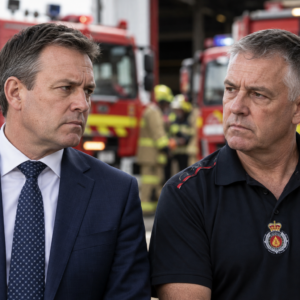
Chris Bowen’s description of Dan Tehan as the “biggest hypocrite in the federal parliament” turned an argument over international climate diplomacy into a confrontation about taxpayer-funded travel, consistency and what government officials must explain when they spend public money overseas. The clash was political, but it also exposed difficult questions about how to compare diplomatic budgets, ministerial journeys and the benefits Australia expects from international engagement.
Tehan, a former trade minister, had criticised the scale of spending associated with Australia’s involvement in the international climate negotiation process. Bowen responded by examining Tehan’s own record as a minister, including travel through Europe, the United States and Asia and visits to the Maldives. The criticism was not simply that Tehan had travelled. It was that he was questioning the legitimacy of international travel undertaken by a minister from a rival party.
“Dan Tehan is the biggest hypocrite in the federal parliament,” Bowen said in a press conference. He argued that his own overseas travel had been for official business and that Tehan should be prepared to discuss why he had visited various countries when serving in government. Bowen did not allege that every trip on Tehan’s itinerary was improper, and that distinction matters to an accurate account of the dispute.
Tehan rejected Bowen’s characterisation. “I’m happy to go toe to toe with Chris Bowen,” he said. He explained that his travel as trade minister included negotiations conducted when the COVID pandemic made commercial flights difficult to obtain. Tehan also said the Royal Australian Air Force determined the flight plan for the government aircraft he used, rather than individual stops being selected for personal convenience.
Those explanations did not settle the argument. They highlighted that two ministers operating in different portfolios, under different travel conditions, may have had different practical options. A trade mission involving successive negotiations cannot necessarily be compared with a climate minister’s international meeting by simply counting overseas destinations or dividing a headline spending figure by the number of travellers.
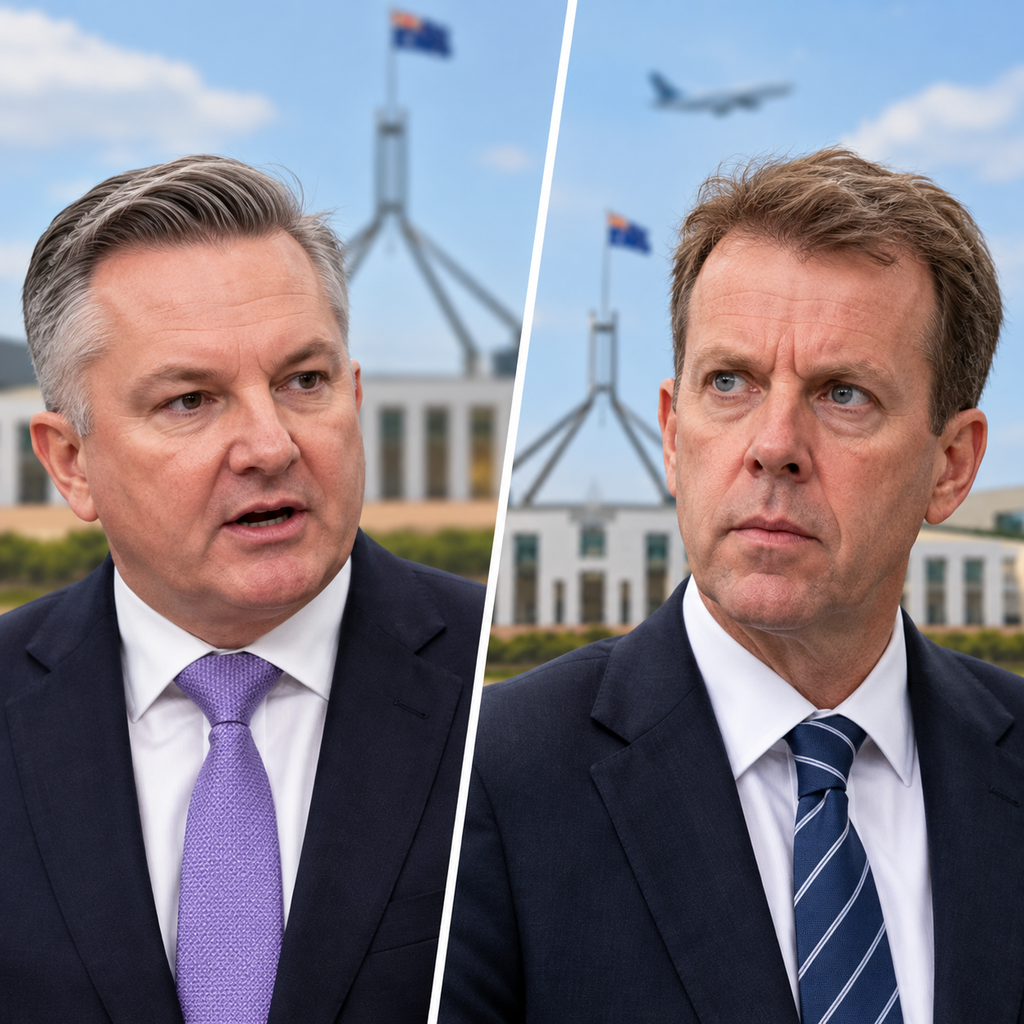
The broad climate spending figures at the centre of Tehan’s criticism also require care. Money allocated to international negotiations can cover staffing, preparatory meetings, event-related work and engagement with Pacific governments. It is not the same category as the airfare or accommodation bill for an individual minister. Treating an overall commitment as Bowen’s personal travel expense would blur an important financial distinction.
That does not make those broader expenses immune from scrutiny. Australians can reasonably ask how much of a diplomatic allocation funds delegates, technical specialists, administration, consultations or conference arrangements. They can also ask whether particular activities are necessary and whether a department can demonstrate that resources were used for their intended purposes. The answer should be itemised enough to permit a fair public comparison.
Bowen’s argument in favour of international climate engagement reflects the government’s view that these negotiations affect Australia’s influence, its Pacific relationships and its approach to energy transition. Governments negotiate because decisions made with foreign partners can have consequences for investment, technology and regional cooperation. Such benefits are sometimes indirect and difficult to reduce to a single dollar figure, but they should still be articulated clearly.
Tehan’s objection turns on cost, priorities and political accountability. International conferences can carry a substantial administrative footprint, and officials may travel long distances to participate. For households struggling with power bills or businesses trying to control operating expenses, asking for an explanation of public expenditure is not unreasonable. A minister who believes a trip is justified should be able to explain its objective without relying exclusively on attacking a critic.
Official travel has more than one cost structure. A commercial airline ticket has a visible fare, while a defence aircraft involves operating arrangements, scheduling and potential security requirements that are not readily comparable with an ordinary passenger booking. An aircraft may make a stop for operational reasons. The location of that stop does not, by itself, establish whether public money was misused.
Tehan’s reference to disrupted commercial flights is relevant for the same reason. Pandemic restrictions changed the range of practical travel choices, especially for officials required to attend trade discussions. Judging decisions taken in those circumstances against the options available to a different minister under normal commercial conditions requires a more careful comparison than a list of countries can provide.
The Maldives attracted attention because the destination can evoke leisure travel. But a place associated with tourism may also appear in an official aircraft itinerary. Determining whether expenditure was appropriate means identifying the trip’s purpose, the travel authority and the operational explanation for each relevant stop. It does not mean presuming personal benefit merely because a destination sounds appealing.
The same standard should apply to climate conferences in major international destinations. The place where an event is held does not prove that every participant needed to attend. Nor does it show that attendance was a holiday. It is the purpose of the meeting, the size of the delegation, the travel choices and the documented outcomes that should frame the debate.
Climate diplomacy is closely connected to Australia’s relationships across the Pacific, where governments have described climate change as a significant concern for economic development and security. Bowen can point to that context when defending negotiations. It remains possible, however, to support engagement with Pacific partners while questioning the price of a particular event or the size of an official delegation.
There is also a domestic financial dimension to the political dispute. Bowen has argued that renewable generation and batteries can improve electricity affordability by making lower-cost daytime electricity available during periods of higher demand. He has separately discussed government settings for default electricity offers. Those domestic policy claims explain the portfolio’s broader economic focus, but they should not be mistaken for proof that a specific overseas trip reduced any customer’s bill.
An Australian household’s electricity charge reflects several components, including generation, network costs, retail offers and consumption. The international travel budget of a federal minister is not an item on a household electricity invoice. The connection between climate negotiations and energy affordability is indirect, requiring evidence about investment, policy changes and actual market outcomes rather than a simple political assertion.
For a small business, public-sector accountability can be compared with ordinary expense management. A company paying for employee travel would typically expect a business purpose, approval under internal policy, receipts and an explanation of the outcome. Diplomatic benefits are sometimes less measurable than a sales contract, but government is still responsible for showing that the travel had a genuine public purpose.
Publicly available figures can also refer to different stages of the spending process. A budget commitment is not necessarily money already paid. An estimate can differ from a final expense, and the same activity can appear in several documents using different classifications. Parliamentarians who compare costs should distinguish those categories rather than selecting whichever number sounds most dramatic.
A useful test would begin with the same questions for each politician. Who authorised the journey? What official meetings or negotiations were involved? Why was physical attendance required? Were practical alternatives considered? How many accompanying officials attended, and what expenses were recorded? Where operational details cannot be released, agencies should still explain the limits on disclosure.
Answering these questions would not eliminate disagreement about international climate policy. The Coalition might continue to argue that Australia’s spending is excessive, while Bowen might insist the diplomatic returns justify it. But the debate would shift towards comparable evidence, allowing voters to identify disputed priorities rather than simply competing political insults.
The episode also illustrates why a minister’s past record can become relevant when criticising a successor or opponent. Former ministers can offer experienced scrutiny, but their own decisions provide a benchmark for the standards they propose. That does not invalidate every criticism they make. It does mean they should be willing to apply a consistent test to themselves and to current officeholders.
Conversely, a serving minister does not dispose of an accountability issue by finding inconsistency in an opponent’s record. Bowen’s accusation may sharpen a debate about fairness, yet it cannot independently establish whether his department’s current commitments are proportionate. Taxpayers are still entitled to a clear breakdown of the purpose and the cost of the government’s approach.
Independent review and parliamentary oversight offer a more reliable route than reducing travel expenditure to a personal feud. Departmental reporting, scrutiny of appropriations and formal questions can distinguish genuine operational expenditure from avoidable excess. They also make it possible to check whether a cost has been counted twice or included in a budget category that does not describe an individual journey.
The exchange was a real two-way confrontation. Bowen directly accused Tehan of hypocrisy; Tehan rejected the criticism and offered an explanation for his own trips. The resulting argument is significant because ministerial travel is a recurring public responsibility, not a practice exclusive to one side of politics. Both men were asking voters to accept different accounts of what constitutes a fair comparison.
Australians need public officials capable of representing national interests overseas, whether the subject is trade, climate, defence or regional partnerships. They also need transparent standards that prevent official travel from becoming a blank cheque. Both objectives can coexist if decisions are properly authorised and the reasons for them are made clear.
Ultimately, Bowen supplied the memorable insult and Tehan supplied the rebuttal. The stronger public-interest question is whether taxpayers can see enough consistent information to judge each trip and each international program on its merits. That requires evidence about purpose, cost and outcome, not an assumption that every expensive trip was unjustified or every official journey was beyond question.