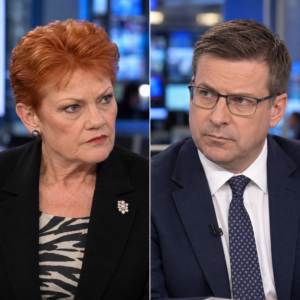
A silent television interview became an unlikely fixture of Australian political memory when journalist Mark Riley questioned opposition leader Tony Abbott about remarks from a visit to troops in Afghanistan. Abbott's prolonged stare was replayed and debated as a moment of discomfort under pressure. When the participants later reflected on the confrontation, their accounts remained sharply opposed. Abbott described the questioning as contemptible and unprofessional. Riley insisted that it had been arranged and was no ambush. Understanding the dispute requires looking beyond the memorable image to the footage, the editorial decisions and the circumstances of a soldier's death.
The original exchange concerned the death of Lance Corporal Jared MacKinney in Afghanistan. Footage from Abbott's visit showed him using the words “shit happens” while speaking about the circumstances of an operational tragedy. In ordinary conversation the expression can suggest blunt recognition of unpredictable danger. Heard without context, it can also sound dismissive. That ambiguity made it a powerful, and sensitive, subject for political questioning. The soldier's death was a real event involving a grieving family; treating the phrase as merely an internet joke would miss the seriousness of the setting.
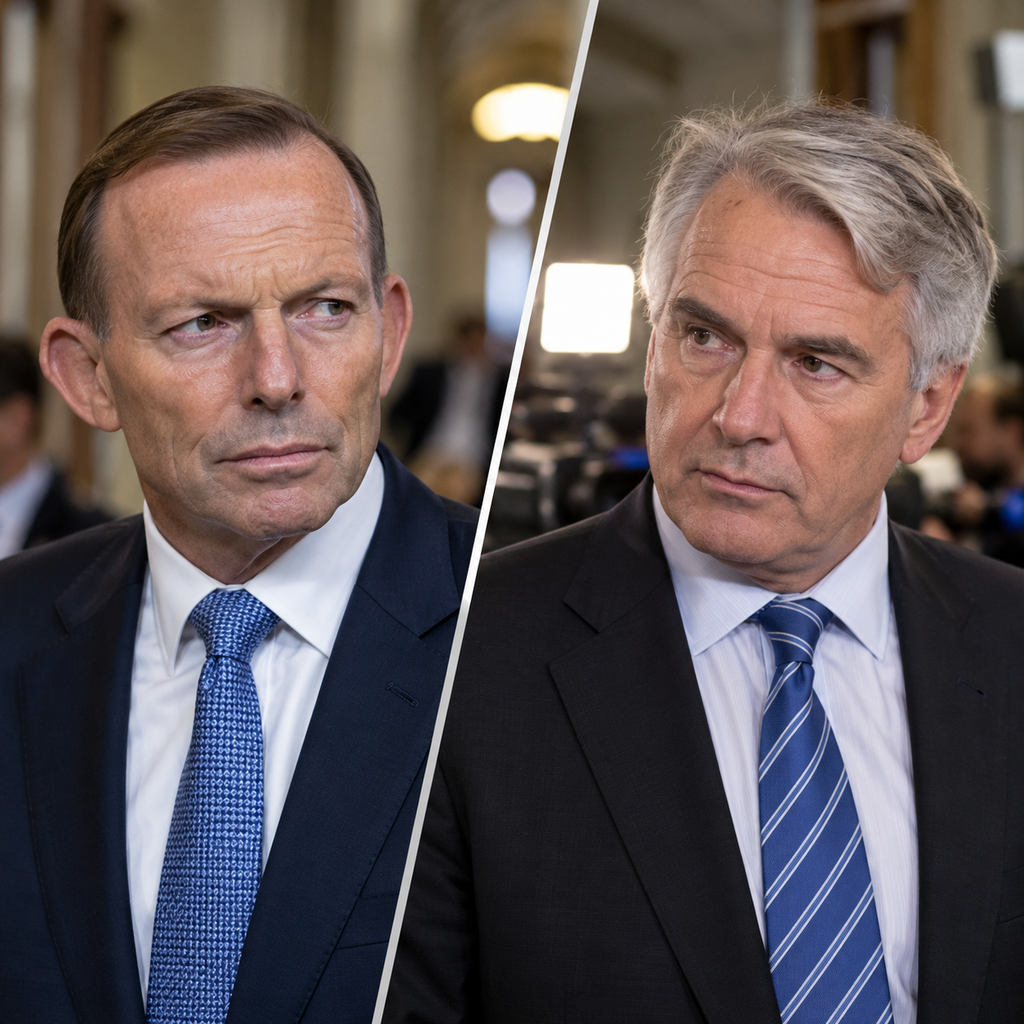
Riley confronted Abbott with questions about the phrase. Abbott did not immediately give an explanatory answer. Instead he stared silently, nodding as the reporter continued. The pause was long enough to become the defining picture of the interview. Viewers could read it as anger, hesitation, disbelief or refusal. Yet silence is not a straightforward statement of motive. The footage shows an unusual reaction; it cannot, on its own, establish what was happening inside the politician's mind.
A documentary revisiting the interview gave Abbott an opportunity to explain his response. He recalled feeling deeply angered by the approach, and spoke of a fleeting impulse to strike the reporter. He did not strike Riley. He said he was trying to choose between an angry confrontation, leaving and remaining silent. Abbott labelled the treatment he received “a contemptible thing to do”, criticising what he considered the use of a soldier's death to engineer a political moment.
Riley's account was different. He rejected the suggestion that he had sprung the question on an unsuspecting politician and said Abbott's staff had been advised of the subject. For Riley, the central issue was whether a prospective national leader could explain a public comment involving Australian military personnel. A politician's dislike of a question does not, in that view, make asking it improper. His description of the encounter as “no ambush” directly challenged Abbott's retrospective account.
The disagreement has an important editorial dimension. A reporter may select a striking clip because it illustrates an issue that deserves questioning, but selection creates a duty to preserve enough context to avoid misleading viewers. The challenge is especially acute when a few words carry emotional weight. An interviewee can rightly object to a misleading impression without thereby establishing that every hard question about those words was unfair. These are different questions: whether the original remark was understood fairly, and whether the subsequent interview was conducted professionally.
The Australian Communications and Media Authority examined complaints concerning Seven's report. The regulator's assessment is relevant because it offers a more structured question than either participant's anger: what impression would an ordinary viewer take from the report as a whole? Contemporary accounts indicate the regulator did not find that the broadcast necessarily portrayed Abbott as cavalier about the soldier's death. That conclusion must not be inflated into a legal finding that every editing decision was ideal or that Riley's account of all events was objectively correct.
ABC's Media Watch also considered the handling of the footage, drawing attention to the significance of its surrounding context. Media commentary and a broadcasting regulator's formal findings serve different roles. Commentary can question judgement and fairness; a regulator applies standards within its remit. Readers should know which sort of assessment is being described. Combining criticism from one source with exoneration or condemnation from another can produce a distorted story if the distinction is omitted.
The politics of defence added another layer. Australian leaders visit deployed personnel to understand operations, acknowledge service and communicate with the public. Their words can be interpreted by families of those killed or injured, as well as by service members and voters. In that environment, casual expressions may be heard very differently by different people. The standard expected of a politician is not to speak only in polished language, but to understand that remarks about casualties require particular care and a willingness to clarify meaning.
Journalists covering military operations face their own constraints. They must explain deaths and combat conditions accurately while respecting grieving families and avoiding disclosure of sensitive details. A report that focuses entirely on a politician's facial expression may crowd out the circumstances of the original event. At the same time, a reporter cannot simply avoid holding a leader accountable because the underlying subject is painful. Responsible coverage can address both the individual loss and the public statement without turning either into a prop.
The famous stare also shows how broadcast pictures can outlive their original context. Short extracts circulate without the preceding exchange, the reporter's explanation or subsequent assessments. A viewer who encounters only a reaction shot might conclude Abbott was unable to answer. Someone who sees only the Afghanistan clip could make a different judgement. A fuller account allows both views to be tested. This is why links between original video, editorial framing and later recollections matter more than social-media repetition of the most arresting seconds.
There is an economic dimension to media accountability, although no responsible account would invent a financial cost for this interview. Commercial news organisations operate under pressure to attract audiences, sell advertising and distinguish their coverage. Dramatic political clips can travel widely, increasing attention and potentially commercial value. Those incentives coexist with professional duties of accuracy and context. They do not prove that Riley asked a particular question solely to increase ratings, nor do they establish that a particular network profited by a measurable amount from Abbott's silence.
For politicians, the incentives can run the other way. A memorable hostile interview may reinforce sympathy among supporters who feel the media are unfair, while alienating viewers who expect direct answers. Avoiding a question may protect a speaker from giving a damaging sound bite but risks creating an even more powerful visual moment. These are general consequences of televised accountability. They help explain why participants still disputed the encounter long after the cameras stopped without requiring any speculation about secret strategies.
A careful account should also be clear about Abbott's later recollection of anger. Saying that he felt an urge to hit Riley is not the same as reporting an assault or a formal threat made to the journalist during the interview. The retrospective comment helps explain his emotional state as he later described it. It does not license fabricated pictures of physical violence. The recorded conduct was silence, a stare and small movements of the head, not a punch.
The dispute illustrates a broader problem with political interviews: whether an interviewer and subject agree on the premise of a question. Riley believed the footage justified seeking an explanation. Abbott believed the premise distorted the meaning of a remark made in a military context. The interviewer sought an answer to the premise; the subject appeared unwilling to validate it. Once that happened, the exchange shifted from information gathering to a confrontation about the legitimacy of the question itself.
Audience judgement depends on context, but context should not be confused with immunity from scrutiny. Abbott was a senior political figure, and questions about his words were plainly of public interest. Riley was entitled to challenge him. Viewers were also entitled to expect that the challenge would reflect the relevant footage fairly. The better test is not whether an interview was tough, but whether its factual basis was sound and whether viewers were given a meaningful opportunity to understand the answer or the refusal to give one.
The incident also offers a reminder about separating a question's legitimacy from the way it is put. A broadcaster could fairly ask a politician to explain a phrase used during a military visit, even if a different reporter might have chosen less provocative language. Conversely, a politician could fairly complain that an edit created an impression he did not intend, even if audiences also expected him to answer. The ethical issue is not solved by identifying a winner in the exchange. It is solved by examining whether the report made relevant facts accessible and treated the people involved with appropriate care.
Military families were an audience for the story even though neither the journalist nor the politician spoke for every family. The death being discussed should not disappear beneath an argument about media tactics. Reporting that recalls the soldier's identity, the combat context and the seriousness of loss helps prevent a replayed television confrontation becoming detached from its original human significance.
The enduring story is therefore not simply a politician standing silent under a camera's gaze. It is a contested account of what constitutes fair questioning when war, grief and political responsibility intersect. Abbott argues he was treated contemptibly; Riley rejects that account and defends his preparation. The footage, media criticism and regulatory assessment each illuminate a different part of the argument. Considering them together allows readers to judge a famous confrontation without mistaking a dramatic image for the whole truth.