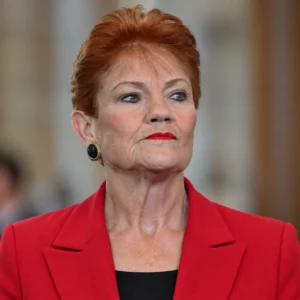
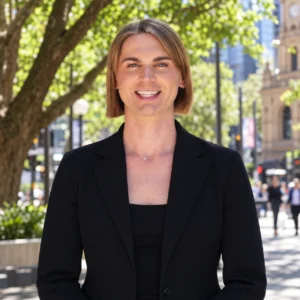
One Nation MP Barnaby Joyce says he has held discussions with “very, very senior” Liberals about a possible confidence-and-supply arrangement after the next federal election, highlighting the increasingly complicated relationship between One Nation and the Coalition as both compete for conservative voters.
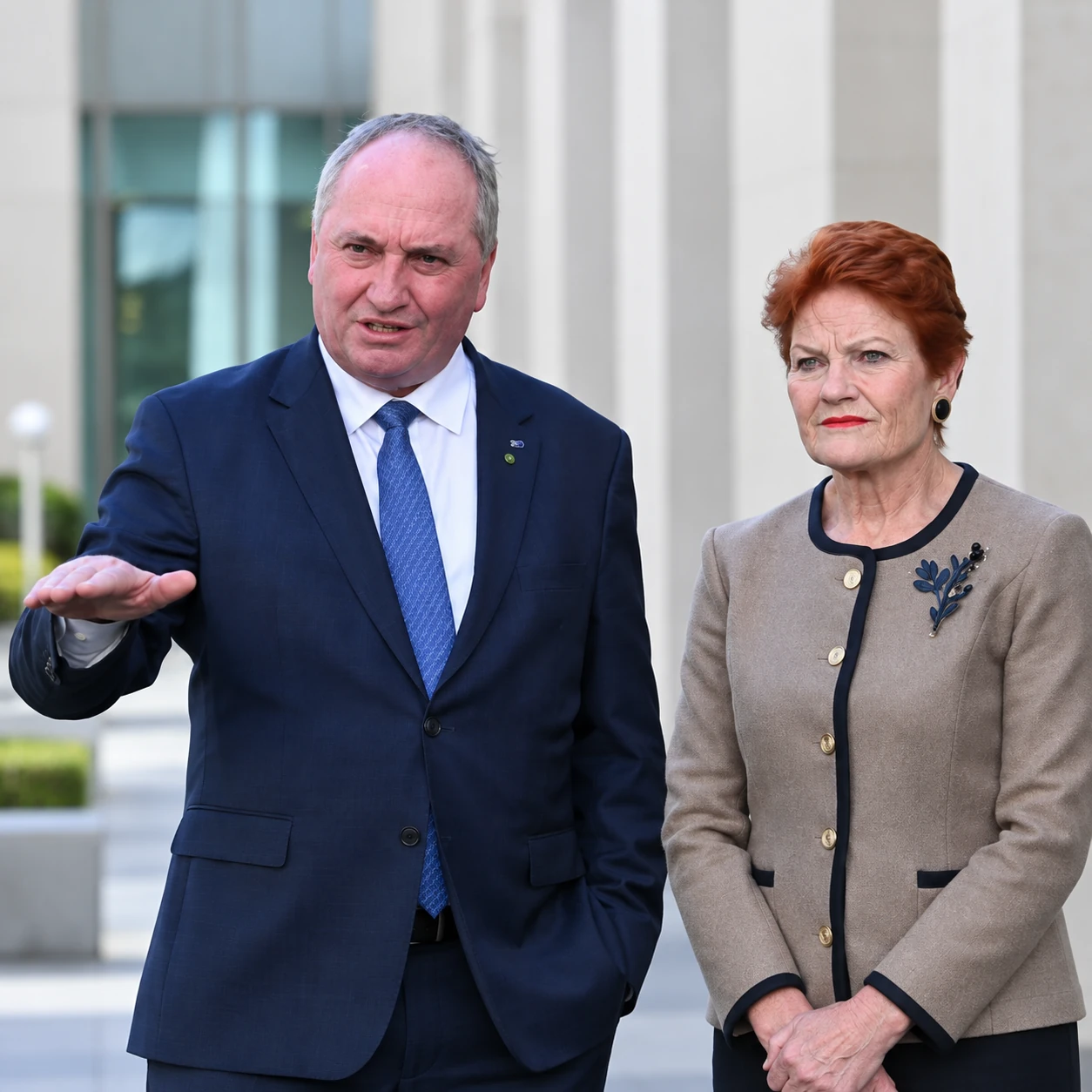
Joyce has not publicly named the Liberal figures involved, and no formal agreement has been announced. His comments therefore establish that he says discussions have occurred, not that the Liberal Party has committed to a deal or that such an arrangement will be needed after the election.
A confidence-and-supply agreement is different from a formal coalition. It usually involves a smaller party or crossbench MPs promising to support a government on motions of confidence and key budget measures in exchange for policy commitments or other negotiated terms.
Such agreements can allow a minority government to survive without the parties merging or sharing all policy positions. Australia has experience with similar arrangements at federal and state level, although the exact terms vary from case to case.
Joyce says One Nation would consider supporting a Coalition minority government if its policy priorities were reflected in government decisions. He has also suggested the principle should operate in reverse if One Nation were to emerge with more parliamentary strength than the Coalition.
That hypothetical should not be confused with a prediction about the election result. No current parliamentary numbers establish that One Nation or the Coalition will be in a position to form minority government after the next election.
The significance of the discussion is political rather than predictive. One Nation has been increasing pressure on the traditional Coalition parties by contesting conservative voters on migration, cost of living, energy policy and cultural issues.
Joyce’s presence inside One Nation adds another layer. The former Nationals leader spent decades in Coalition politics and has relationships across the Liberal and National parties, giving him familiarity with both the formal structures and informal negotiations of the conservative side of parliament.
He says the objective of any cooperation would be to remove Labor from government while preserving One Nation’s ability to claim ownership of policies it wants implemented.
Pauline Hanson has previously indicated she could support a Coalition minority government without entering a traditional coalition agreement. She has argued that One Nation should retain independence rather than accept ministerial positions that could require the party to defend policies it opposes.
That approach reflects a common strategic problem for smaller parties. Entering government can deliver influence but can also blur a party’s identity and make it responsible for unpopular compromises.
A confidence-and-supply deal can provide a middle position. The smaller party can keep separate branding while guaranteeing enough parliamentary stability for a government to function.
For the larger party, the arrangement can also be uncomfortable. Liberals may gain the numbers required to govern but face pressure to adopt One Nation policies or explain why concessions were made.
Migration would almost certainly be one of the hardest areas of negotiation. One Nation is advocating a much sharper reduction in temporary migration than either Labor or the Coalition has yet formally adopted.
The party has proposed cutting the temporary migrant population by more than 750,000 over three years and driving net overseas migration negative during an initial reset. Business groups, universities and some economists have warned of labour shortages and economic disruption.
The Coalition is also promising lower migration but has not embraced all of One Nation’s measures. Any confidence-and-supply negotiation would therefore require more detail than a shared desire to reduce the intake.
Energy policy, taxation, superannuation and cultural issues could create further disagreements. One Nation has advanced proposals that senior economists and Coalition figures have questioned, while the Liberals have their own commitments to business groups and different voter constituencies.
Joyce’s claim comes despite public attempts by some Coalition leaders to keep distance from One Nation. Political parties often compete aggressively during elections and negotiate afterwards if the result produces a hung parliament.
Preferences add another layer. Australian federal elections use preferential voting, so parties can recommend where supporters direct later preferences even while campaigning against one another for first-preference votes.
Recent contests have shown strategic changes in preference decisions as One Nation’s support grows. Those choices can affect close seats but do not amount to a coalition or parliamentary agreement.
A formal confidence-and-supply arrangement would occur after seats are won and would concern who can command a majority in the House of Representatives. The Governor-General appoints as prime minister the person able to maintain the confidence of the lower house.
That constitutional reality is why phrases such as “if One Nation wins government” can be misleading without explaining parliamentary numbers. A party does not form government simply by increasing its vote or winning more seats than before; it needs enough support in the House to command confidence.
If no party wins a majority, negotiations can become decisive. Crossbench MPs or smaller parties may provide the votes needed to keep a government in office while reserving the right to oppose ordinary legislation.
Confidence generally concerns whether the government retains the support of the House. Supply concerns the passage of money needed for government to operate. Losing either can create a constitutional crisis or force a government to resign or seek an election.
That is why agreements covering those votes are valuable. They provide stability while allowing negotiation on other legislation.
Joyce has said any support from One Nation would need to produce visible policy outcomes. That reflects the party’s incentive to show voters that parliamentary cooperation delivers something concrete rather than merely helping another party take office.
Liberal leaders, meanwhile, would need to assess whether the benefits of such support outweighed the political cost of negotiating with One Nation. Some Liberal voters favour One Nation-style migration cuts, while others strongly reject the party’s rhetoric and policy positions.
The Nationals would have their own interests. One Nation competes directly for regional and rural conservative voters, and Joyce’s move from the Nationals has intensified that rivalry.
A three-way arrangement involving Liberals, Nationals and One Nation could therefore be more complicated than a simple bilateral deal. Existing Coalition agreements already allocate responsibilities and cabinet positions between the Liberals and Nationals.
There is also no guarantee all Liberal MPs would support the same arrangement. Party-room dynamics become especially important when negotiations involve contentious policy concessions.
For now, the evidence is limited to Joyce’s public account that discussions with senior Liberals have taken place and the broader willingness expressed by One Nation figures to consider supporting a minority government.
That is politically significant because it shows channels of communication exist despite public competition. It is not evidence that a secret coalition has been finalised or that any particular post-election outcome is likely.
Voters will have more useful information once parties publish detailed policies and clarify their red lines for negotiations. Until then, confidence-and-supply talk remains contingency planning for a parliament whose composition will be decided at a future election.
Any future agreement would also need to be public enough for parliament and voters to understand what was exchanged for confidence and supply. Written agreements are not constitutionally required in every circumstance, but transparency can reduce uncertainty about which votes are guaranteed and which policy concessions have been made.
The discussion nevertheless signals how much Australia’s conservative political landscape has changed. One Nation is no longer being treated only as a protest party on the margins; figures with long experience in Coalition government are now openly discussing how its votes might be used in the formation and survival of a future government.