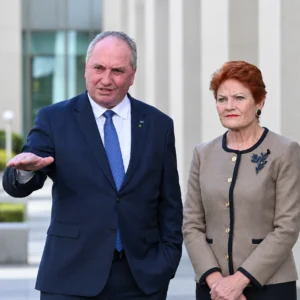
One Nation leader Pauline Hanson has condemned Channel Nine after the network broadcast an interview with Ku Klux Klan figure Thomas Robb, rejecting any suggestion that her party shares the white supremacist organisation’s ideology and accusing the broadcaster of creating an offensive association.
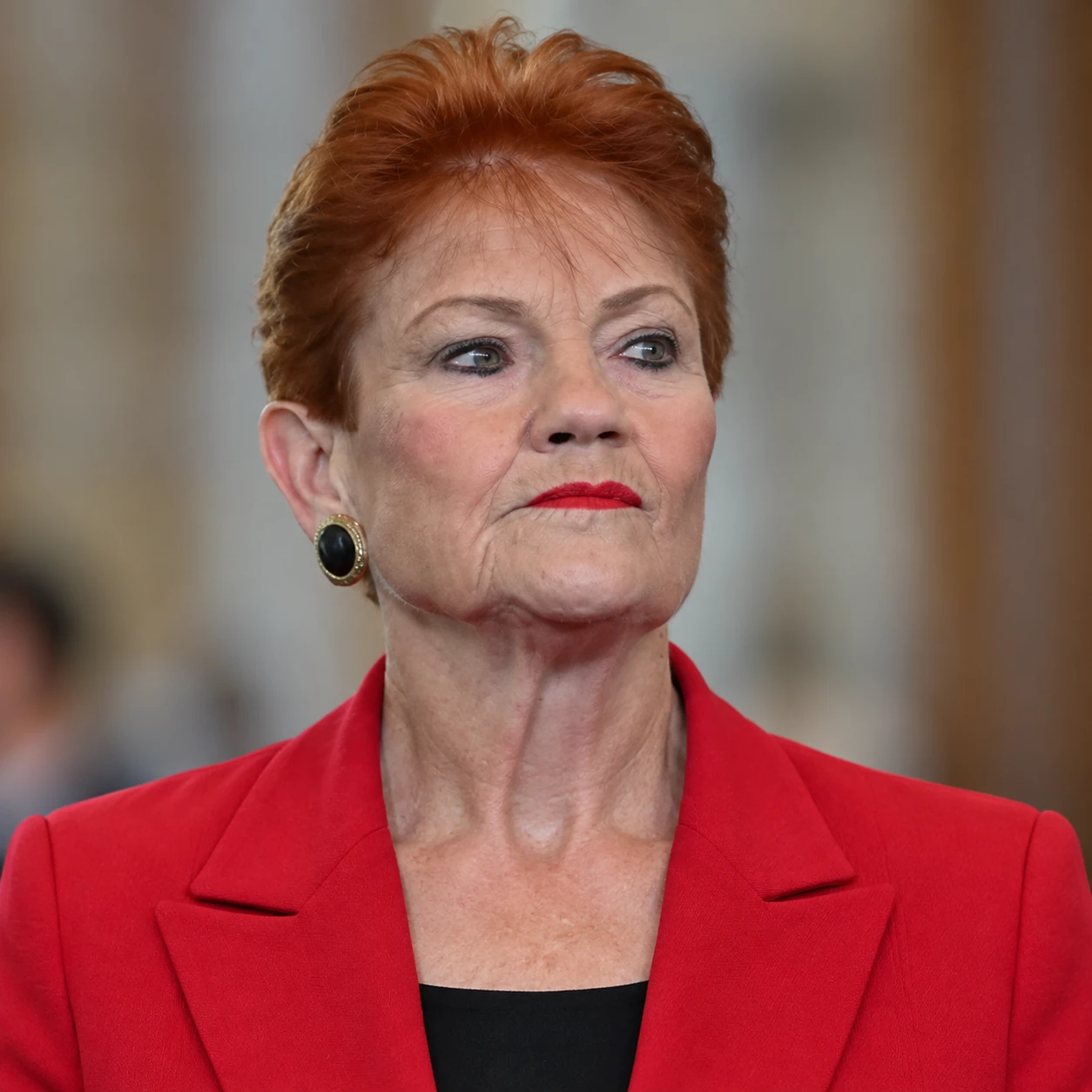
The dispute followed a Nine documentary examining political and racial divisions in the United States. During the program, Robb was asked about Hanson and One Nation and responded positively to aspects of the party’s stance on immigration.
Hanson reacted angrily, saying the comparison was “absurd and offensive” and arguing that Nine should be ashamed of giving a Klan leader a platform to comment on Australian politics. She said One Nation does not support the KKK’s ideology.
Nine has defended the editorial decision, saying the documentary examined a wide range of political views and did not endorse Robb’s statements. The network’s defence is that reporting the views of an extremist figure does not amount to adopting those views.
The controversy raises two separate questions that should not be collapsed into one. The first is whether a broadcaster was justified in asking a KKK figure about Australian politics. The second is whether One Nation itself has any organisational or ideological link to the Klan.
The fact that Robb praised Hanson does not establish such a link. Political movements have no control over every individual or organisation that chooses to express support for them. An endorsement from an extremist can create a reputational problem without proving coordination or shared membership.
That does not prevent journalists from examining similarities in rhetoric or policy themes. Immigration, race, national identity and multiculturalism are legitimate subjects for comparison when political actors make them central to public debate. But comparisons require precision.
The KKK is a white supremacist organisation with a history of racial violence and intimidation in the United States. One Nation is a registered Australian political party contesting elections within the democratic system. Whatever criticisms are made of One Nation’s policies, those institutional facts are not interchangeable.
Hanson has spent decades making immigration, national identity and multiculturalism central to her politics. Her comments have repeatedly attracted accusations of racism from political opponents and community groups, while she argues that she is defending social cohesion, national sovereignty and what she describes as the concerns of ordinary Australians.
That history explains why Nine’s inclusion of Robb was politically potent. The network was not introducing immigration as a new issue for Hanson; it was placing her long-running political themes beside the views of an extremist American figure who said he saw common ground.
For Hanson, the editorial framing was the problem. She argued that a broadcaster can report on extremism without using an extremist’s praise to imply an association with an Australian political party.
Supporters of Nine’s approach would argue that political leaders are not entitled to control who journalists interview or what uncomfortable comparisons are put before viewers. If an extremist group sees mainstream political developments as encouraging, that can itself be newsworthy.
The challenge is how to present that information without misleading the audience. A responsible report should make clear whether there is evidence of direct contact, shared organisation, financial support or coordinated activity. If none exists, the audience should not be left to infer that it does.
The debate also illustrates a wider problem in political journalism: extremist voices can gain a much larger audience when mainstream media uses them to explain or dramatise domestic politics. A KKK leader who might otherwise attract little Australian attention can suddenly become part of a national news cycle.
Editors therefore have to weigh the value of hearing an extremist’s views against the risk of amplifying propaganda. There is no universal rule that such people should never be interviewed. Context, challenge and editorial purpose matter.
Hanson’s criticism of Nine also has a strategic political dimension. One Nation has been attempting to broaden its electoral appeal beyond its traditional base, while maintaining hardline positions on migration and national identity. Association with an American white supremacist group could undermine that effort among voters who support lower migration but reject racial extremism.
The party has recently increased its focus on detailed policy proposals, including plans to sharply reduce temporary migration. Its leaders have argued that the policies should be debated on housing, infrastructure and economic grounds rather than dismissed through labels.
Opponents respond that language used by One Nation figures can encourage racial division even when policies are formally written without racial criteria. Those arguments are political assessments and should be supported by specific statements and proposals rather than guilt by association.
This is where the Nine controversy becomes more than a media spat. It demonstrates how debates over migration can move quickly from numbers and visa categories to questions about identity, belonging and race.
Australia has a formally non-discriminatory migration system, and modern immigration policy is generally framed around skills, family connections, humanitarian obligations, education and temporary work. Political rhetoric around who should come to Australia can nevertheless carry cultural implications.
Hanson has repeatedly argued that high migration is placing pressure on housing and services and that Australia should dramatically reduce the intake. Those positions can be assessed through economic modelling, visa data and implementation detail without assuming they are identical to the KKK’s racial ideology.
Equally, journalists are entitled to ask what attracts extremist approval and whether particular forms of rhetoric are being normalised. The important distinction is between asking that question and asserting an organisational link that has not been demonstrated.
Barnaby Joyce, now associated with One Nation, has also attacked the report and described it as poor journalism. His response reinforces the party’s effort to frame the controversy as an editorial failure rather than a problem created by its own platform.
Nine’s defence places emphasis on the documentary’s broader context. Programs about political extremism often include figures whose views are offensive precisely because those views are part of the subject being investigated.
The strongest editorial standard is transparency. Viewers should know why a person was interviewed, what question was asked, whether the remarks were solicited or volunteered, and what evidence does or does not connect the person to the Australian political actors being discussed.
That approach allows the audience to evaluate the material without the broadcaster deciding the political conclusion for them.
The dispute will probably reinforce existing views of both Hanson and Nine. Supporters of One Nation are likely to see the segment as an attempt to smear the party. Critics may see Robb’s praise as further evidence that anti-immigration rhetoric can resonate with extremists.
Neither reaction resolves the factual issue. Robb expressed support for elements of Hanson’s politics. Hanson repudiated the KKK and rejected any association. Nine says it reported the comments as part of a broader documentary and did not endorse them.
The controversy also comes as One Nation’s growing electoral support has increased scrutiny of who associates with the party and why. External praise can be politically inconvenient, but democratic parties are properly assessed by their own candidates, policies, conduct and formal relationships rather than by every unsolicited endorsement they receive.
If evidence of direct links were to emerge, that would be a separate factual matter. In the material publicly reported around this dispute, the issue is Robb’s favourable commentary and Nine’s decision to broadcast it, not a demonstrated organisational partnership between the KKK and One Nation.
Those are the facts around which the political argument now sits. The more useful public debate is whether the comparison was editorially justified and whether Australia’s increasingly heated migration debate can be scrutinised without replacing evidence with association.