A widening gap between Commonwealth funding rates available to Ben Roberts-Smith’s defence and the rates government agencies can pay their own barristers has triggered fresh questions over whether Australia’s most consequential war crimes prosecution is being resourced fairly on both sides.
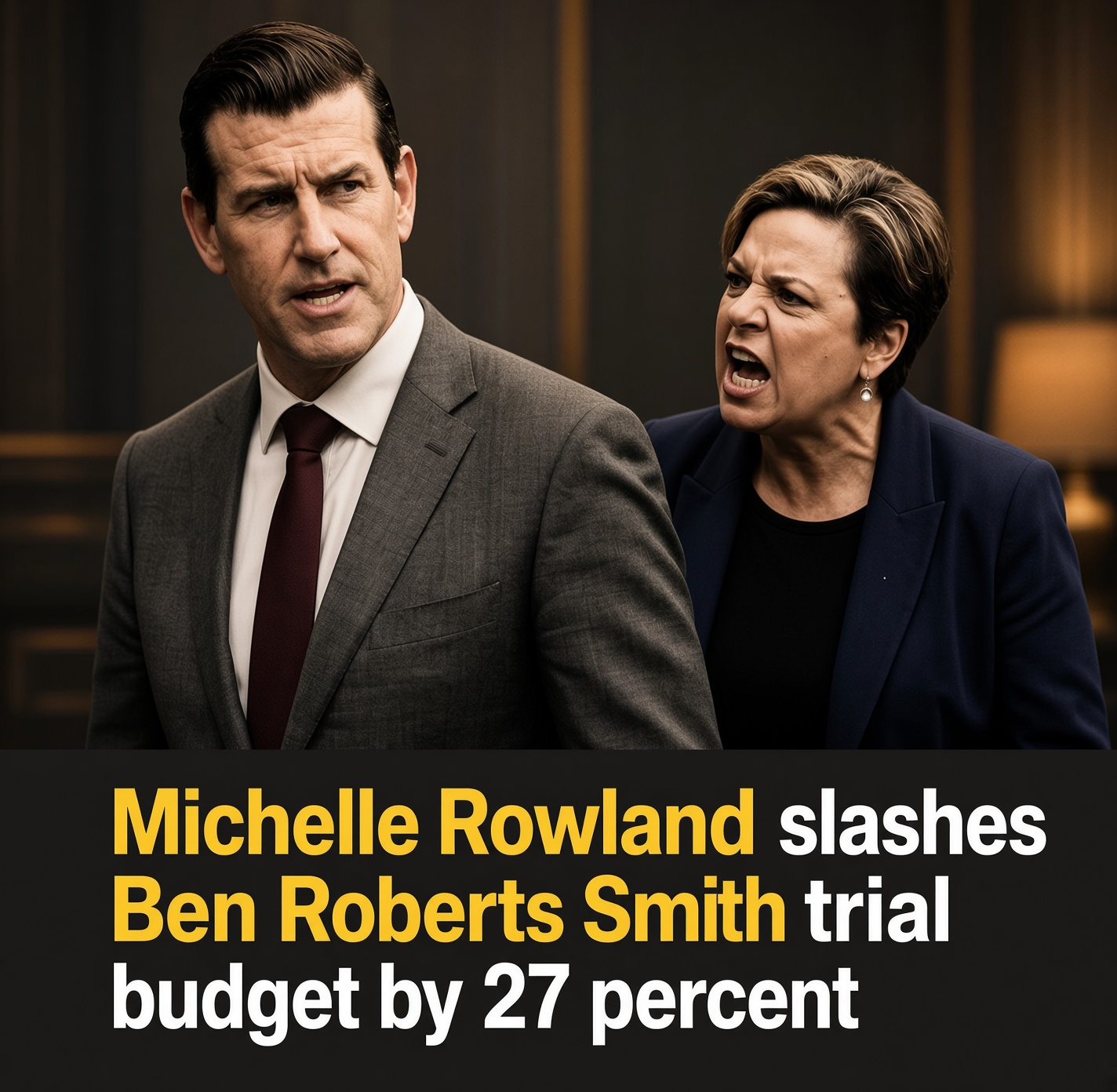
The controversy centres on the Afghanistan Inquiry Legal Assistance Scheme, a Commonwealth program created in 2021 to help current and former Australian Defence Force members obtain representation when drawn into investigations and criminal proceedings arising from the Afghanistan Inquiry.
Under the scheme’s publicly available cost schedule, senior counsel can be funded at a maximum of $3,650 a day including GST, while junior counsel is capped at $2,300.
Those rates were set when Scott Morrison’s Coalition government was in office and the cost schedule is still dated September 30, 2021.
The Albanese government has retained the scheme, which is now administered through the Attorney-General’s Department, but the published defence rates have not been increased to match a separate rise in the thresholds governing what Commonwealth agencies can pay barristers they engage themselves.
That difference has become politically and legally sensitive because Roberts-Smith is now facing five charges of the war crime of murder over alleged incidents during his service with the Special Air Service Regiment in Afghanistan between 2009 and 2012.
He denies the allegations and is entitled to the presumption of innocence. The criminal charges have not been determined by a court.
Under Legal Services Directions that took effect on March 2 this year, Commonwealth entities can negotiate a daily rate of up to $5,000 including GST for senior counsel and $3,300 for junior counsel without seeking special approval from the Office of Legal Services Coordination.
The Directions were made by Attorney-General Michelle Rowland in December 2025.
For senior counsel, that $5,000 Commonwealth threshold is about 37 per cent higher than the $3,650 maximum funded under the Afghanistan assistance scheme. For junior counsel, the $3,300 Commonwealth threshold is about 43 per cent above the $2,300 defence rate.
Looked at from the opposite direction, the AILAS senior-counsel cap is 27 per cent below the current Commonwealth threshold and the junior-counsel cap is about 30 per cent lower.
That discrepancy is now drawing criticism from veterans and legal advocates who argue that an accused former soldier facing one of the most complex criminal cases in modern Australian history should not have access to materially lower government-funded rates than those available to the Commonwealth.
RSL NSW president Brigadier Vince Williams and former special forces officer Heston Russell are among those who have raised concerns about the funding arrangements, while military lawyer and academic Dr Glenn Kolomeitz has argued that adequate defence resources are fundamental to confidence in the justice process.
But one distinction is important.
The $5,000 and $3,300 figures are not published salaries for the prosecutors handling Roberts-Smith’s case, nor do they prove that individual prosecution barristers are actually being paid those amounts.
They are Commonwealth-wide thresholds governing the engagement of counsel.
Government entities can negotiate below them, while rates above the thresholds can also be approved in particular circumstances. The Attorney-General personally becomes the decision-maker for requests exceeding $10,000 a day.
The earlier Legal Services Directions, which remained in force until March this year, set much lower approval thresholds of $3,500 for senior counsel and $2,300 for junior counsel, although higher rates could still be approved.
The 2026 reform therefore increased the amount Commonwealth entities can agree to pay without obtaining additional approval. It did not specifically create a new pay scale for the lawyers prosecuting Roberts-Smith.
The defence scheme operates differently.
Its cost schedule sets specific maximum payments across legal roles and also imposes a six-hour daily cap on professional fees.
Alongside counsel rates, the schedule allows $3,300 a day including GST for a solicitor at partner, special counsel or consultant level; $2,772 for a senior associate; $2,332 for a junior lawyer with more than two years’ experience; and $1,782 for a lawyer with less than two years’ experience.
Paralegal or articled clerk work is funded at $132 an hour including GST, while administrative work is listed at $25 an hour before GST, or $27.50 including GST.
The administrative rate has produced another striking line of criticism because Australia’s national minimum wage rose to $26.44 an hour from July 1.
It has been claimed that the Commonwealth is therefore funding defence administrative staff below the legal minimum wage.
That comparison needs care.
The $25 figure is not an employee wage set by government. It is the GST-exclusive amount the Commonwealth will reimburse a legal provider for specified administrative work under the scheme.
A law firm remains subject to employment law and any applicable awards when paying its staff. The reimbursement schedule does not authorise an employer to pay somebody below a legally applicable minimum wage.
The stronger criticism is therefore not that the scheme changes employment law, but that a reimbursement rate first published in 2021 has become increasingly detached from contemporary labour and legal-service costs.
That question matters more as Roberts-Smith’s criminal proceedings become increasingly complicated.
On April 7, the Australian Federal Police and Office of the Special Investigator arrested and charged him with five offences of war crime murder under the Commonwealth Criminal Code.
The prosecution alleges he intentionally caused, ordered, aided or was otherwise criminally responsible for the deaths of five Afghan nationals who were not taking an active part in hostilities.
The offences carry a maximum penalty of life imprisonment.
The prosecution is formally brought in the name of the Attorney-General under a special provision of the Criminal Code governing war crimes prosecutions.
Proceedings have already demonstrated the extraordinary national-security complexity surrounding the case.
On September 1, a court made more than 200 orders under the National Security Information Act governing the handling of classified evidence, identities and documents.
Roberts-Smith is to receive access to sensitive material subject to strict conditions around storage, copying and disclosure.
Some prosecution witnesses are expected to include former soldiers whose identities are protected and who may themselves have received immunity in exchange for evidence.
The prosecution brief is extensive and the case is not expected to reach a NSW Supreme Court trial before 2029.
Against that background, critics of the funding structure argue the issue is not whether Roberts-Smith is popular, whether the allegations against him are serious or what happened in his earlier civil litigation.
The question is whether the Commonwealth should provide sufficient resources for an accused person to test the prosecution case properly when the government itself has access to the AFP, the Office of the Special Investigator, the Commonwealth Director of Public Prosecutions and substantial public funding.
The earlier defamation proceedings do not resolve that question.
In 2023, the Federal Court dismissed Roberts-Smith’s defamation case against Nine newspapers after finding, on the civil balance-of-probabilities standard, that several serious imputations concerning killings in Afghanistan had been proved substantially true.
The Full Federal Court later upheld the central findings.
The criminal proceeding is legally separate.
Prosecutors must prove each criminal charge beyond reasonable doubt, a substantially higher standard, and Roberts-Smith is not required to disprove the civil judgment in order to retain the presumption of innocence in the criminal case.
The funding debate has also been fuelled by the enormous cost of Australia’s wider Afghanistan war crimes investigation.
Claims circulating online and in political commentary have put the figure at about $318 million for 53 investigations and have pointed to the absence of any convictions as evidence that taxpayers are financing an unsuccessful campaign against veterans.
The 53-investigation figure is grounded in official OSI reporting, but the financial claim has previously been found to be misleading.
AAP FactCheck reported in May that government budget documents had allocated $320.5 million to the Office of the Special Investigator from its establishment through the 2025–26 financial year.
However, the OSI told AAP that it had actually spent about $231 million between January 2021 and March 2026.
The money was not spent solely investigating Roberts-Smith. It supported dozens of investigations into allegations involving Australian personnel in Afghanistan.
By April, 39 matters had been closed after investigators concluded there was insufficient evidence to support a war crimes charge, while other investigations remained active.
Two former Australian soldiers have now been charged through the OSI-AFP process.
One is Roberts-Smith. The other former special forces soldier was charged in 2023 with one count of war crime murder and is listed for trial in the NSW Supreme Court in 2027.
Neither case has yet resulted in a conviction, but neither has reached a final criminal judgment.
Describing the investigative program simply as hundreds of millions of dollars spent for “zero convictions” therefore leaves out a crucial part of the timeline.
Investigations of alleged battlefield killings involving classified material, overseas evidence, former military personnel and events more than a decade old are inherently lengthy, and the two prosecutions presently before the courts remain unresolved.
The government is continuing to fund that work.
The 2026–27 Budget provided another $50.4 million for the Office of the Special Investigator to continue investigating and supporting prosecutions arising from alleged Afghanistan war crimes.
It also allocated $37.3 million over two years to strengthen the Commonwealth Director of Public Prosecutions’ capacity to conduct criminal prosecutions.
That additional CDPP funding is not identified in the Budget as money exclusively for the Roberts-Smith case, so it cannot accurately be described as a direct $37.3 million increase for his prosecutors alone.
The broader political criticism nevertheless remains potent.
A Commonwealth-created defence scheme still relies on rates published five years ago, while the government has modernised the framework under which its own agencies engage barristers and has provided substantial new funding to investigative and prosecutorial bodies.
That does not establish that Labor or the Coalition “rigged” the justice system against Roberts-Smith.
The Coalition established AILAS precisely to provide legal assistance to current and former ADF members affected by the Afghanistan Inquiry, while Labor has continued to operate the scheme.
But it does create a legitimate policy question about whether the funding schedule has kept pace with the scale and complexity of the prosecutions it was designed to support.
The government does not have to guarantee identical spending on each side of a criminal case.
It does, however, have a strong interest in ensuring that any eventual verdict is reached through a process the public, veterans and the accused can regard as fair.
For a prosecution this serious, confidence in that process will depend not only on the strength of the evidence but on whether both sides have a realistic ability to put their case before the court.






