Retired Australian Major-General Roger Noble has delivered one of the strongest public arguments yet that responsibility for alleged war crimes cannot stop with frontline soldiers, insisting senior commanders must also be held accountable for the culture, oversight and decisions made throughout the chain of command.
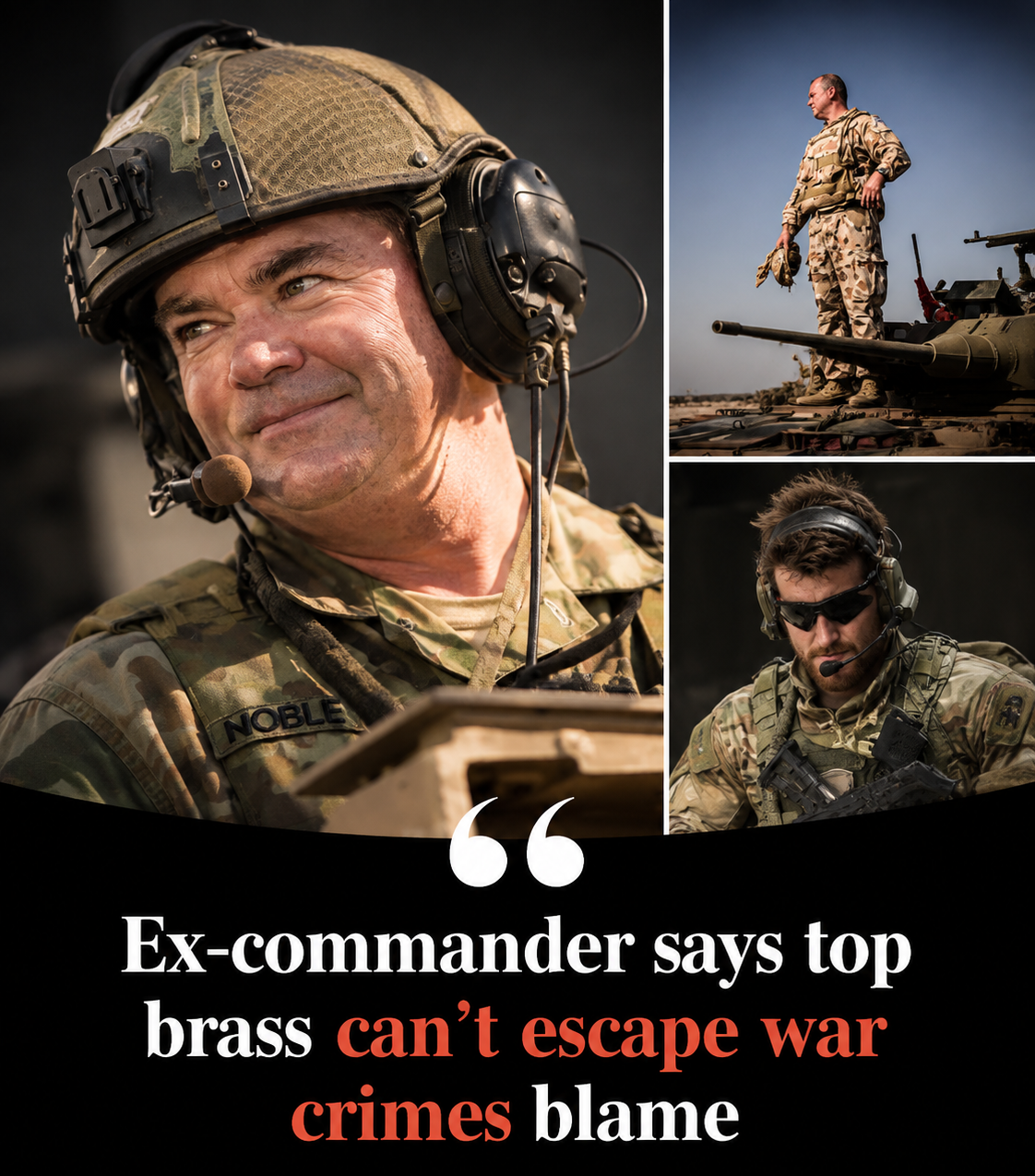
Speaking as he launches his new book My Long War: Leadership and Lessons from a Quarter Century of Coalition Warfare, Noble reflected on more than two decades of operational service across Iraq, Afghanistan, East Timor and other overseas deployments, saying military leaders cannot distance themselves from the consequences of actions carried out under their command.
“I was a strike authority in Iraq, so I gave lots of orders to shoot people,” Noble said, acknowledging the immense burden that accompanies command decisions during armed conflict. He noted that despite extensive planning and intelligence, mistakes sometimes resulted in civilian deaths, even when operations complied with the legal framework governing armed conflict.
According to Noble, the laws of armed conflict are not optional constraints placed on soldiers but are fundamental to maintaining the distinction between professional armed forces and indiscriminate violence.
Without those rules, he argues, organised military operations would descend into barbarity. During operations in Afghanistan, one of his responsibilities involved minimising civilian casualties while balancing the risks faced by Australian troops on the ground.
Noble recalled one particularly devastating incident involving an air strike on a Taliban compound where women and children sheltering beneath the building were killed. Although the attack was considered lawful under the rules governing armed conflict because coalition forces were responding to an immediate threat, he said commanders still examined how similar tragedies could be prevented in the future.
Those reviews resulted in tighter tactical directives governing the circumstances under which air strikes could be authorised, even though stricter rules also increased risks for soldiers engaged in close combat.
His comments come as Australia continues to grapple with the legacy of alleged war crimes committed during the Afghanistan conflict, an issue that has generated years of criminal investigations, military reviews and intense public debate.
Noble has questioned conclusions that effectively insulated senior leadership from responsibility following the Brereton Inquiry, arguing commanders should also examine whether they exercised sufficient oversight, established the right culture and intervened appropriately when warning signs emerged.
Rather than assuming Australian personnel are incapable of committing atrocities, Noble believes military organisations should begin from the opposite premise—that every force operating in extreme conditions must actively guard against ethical failure.
“The next war we get into, we’ve got to assume the worst,” he argued, stressing that commanders should continually reinforce discipline, education and accountability throughout deployments.
The concept he describes is closely aligned with the long-established doctrine of command responsibility in international humanitarian law.
Under Article 28 of the Rome Statute of the International Criminal Court, military commanders may bear criminal responsibility where forces under their effective control commit war crimes and commanders knew—or should have known—about the conduct yet failed to prevent it or ensure proper investigation.
The principle does not mean commanders are automatically liable for every unlawful act committed by subordinates. Instead, it focuses on whether leaders exercised appropriate control, supervision and disciplinary authority over those under their command.
International humanitarian law has long recognised that responsibility can extend beyond the individual who physically commits an offence, particularly where leadership failures contribute to unlawful conduct.
Noble also highlighted the extraordinary complexity faced by soldiers operating in close combat, where distinguishing between combatants and non-combatants is not always straightforward.
He said decisions often have to be made within seconds based on incomplete information, making comprehensive investigations essential whenever allegations arise.
That distinction, he suggested, is crucial for maintaining both justice and confidence in military institutions. Soldiers deserve fair assessments based on evidence rather than assumptions, while communities expect credible investigations into serious allegations.
Australia’s response to alleged misconduct in Afghanistan has evolved significantly over recent years through criminal investigations conducted by the Office of the Special Investigator alongside Australian Federal Police inquiries.
Several matters remain before the courts, while others continue under investigation. Because some proceedings remain active, individual allegations continue to be tested through Australia’s judicial system.
Noble said the prolonged legal processes have been difficult for everyone involved, including accused personnel, victims, veterans and serving members of the Australian Defence Force.
Nevertheless, he believes accountability remains essential for preserving the integrity of Australia’s military profession.
He also emphasised that professional armed forces distinguish themselves from irregular or unlawful groups precisely because they accept legal and moral constraints, even during the most violent conflicts.
Military historians have frequently noted that the law of armed conflict seeks to balance military necessity with humanitarian protection. While it recognises that civilian casualties may sometimes occur lawfully during attacks against legitimate military objectives, deliberate attacks on civilians, prisoners or protected persons remain prohibited under international law.
The doctrine has developed over decades through international treaties, military manuals and judicial decisions following conflicts ranging from the Second World War to more recent international tribunals.
Modern military training across many democratic nations places heavy emphasis on lawful orders, proportionality, distinction between civilians and combatants, and commanders’ obligations to investigate suspected breaches.
Noble believes maintaining those standards is not merely about legal compliance but about preserving the values that define professional armed forces.
His reflections also offer a broader examination of military leadership, arguing that commanders must accept responsibility not only for battlefield success but also for organisational culture, ethical conduct and the wellbeing of those they lead.
Drawing on experiences accumulated across more than 25 years of coalition operations, Noble argues leadership is ultimately measured by the willingness to accept responsibility when things go wrong, not simply by operational achievements when missions succeed.
As Australia continues confronting difficult questions arising from its longest military campaign, Noble’s intervention adds another influential voice to the debate over where responsibility begins and ends in modern warfare.
Rather than viewing accountability as a threat to military effectiveness, he argues that transparent leadership and adherence to the laws of war are essential for maintaining public trust, protecting the reputation of the Australian Defence Force and ensuring future generations of soldiers continue to operate within clearly defined legal and ethical boundaries.