One Nation leader Pauline Hanson has reignited debate over media access and political accountability after barring journalists from the ABC, The Guardian and The Age from a major Melbourne press conference where the party unveiled candidates for Victoria’s upcoming state election.
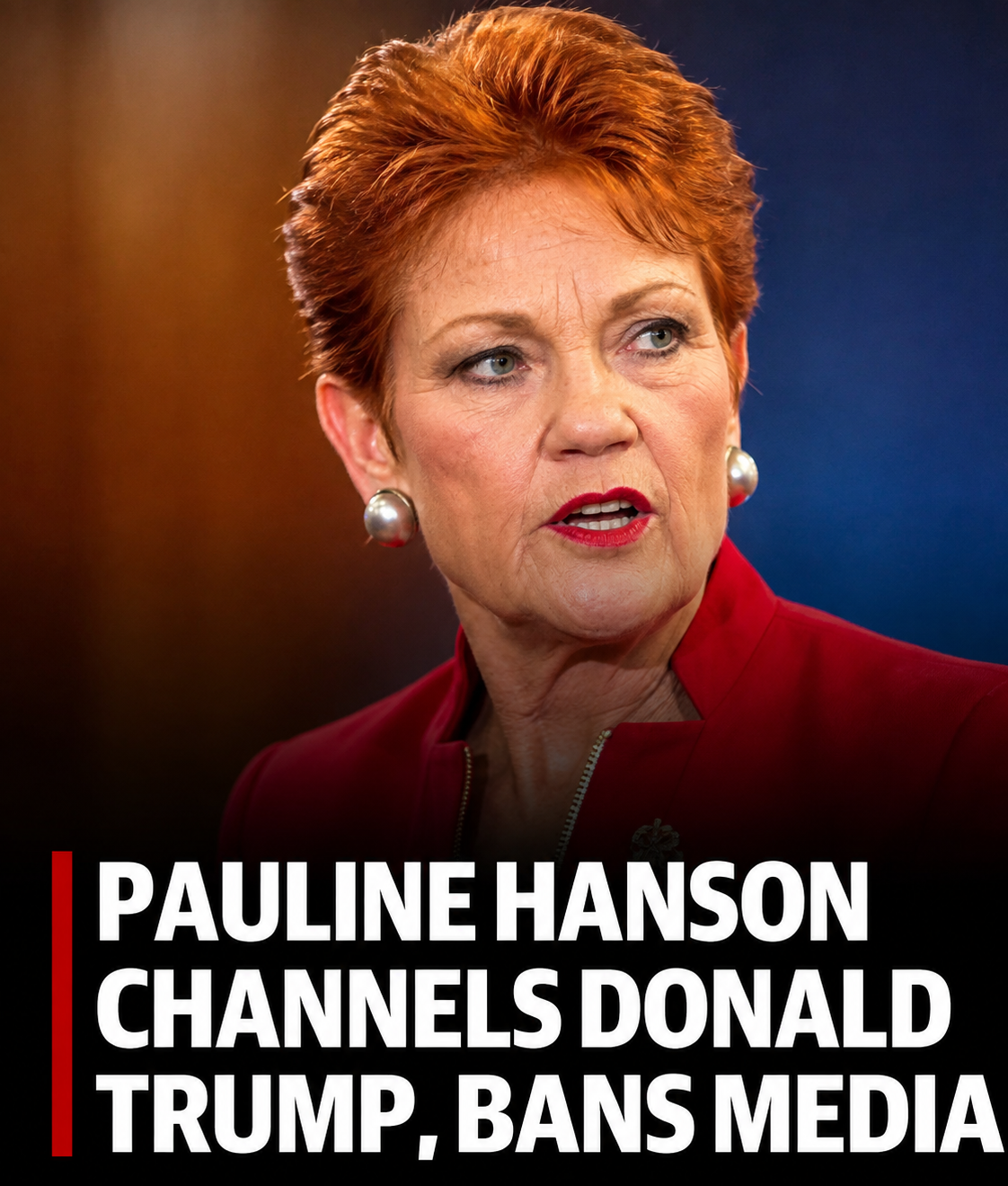
The event, held on Monday, was intended to introduce One Nation’s first group of Victorian candidates ahead of the November election. Instead, much of the attention centred on Hanson’s decision to deny access to three of Australia’s largest media organisations, a move she defended as a response to what she believes has been years of unfair reporting.
Before reporters entered the venue, One Nation staff screened attending journalists. Representatives from the ABC, The Guardian and The Age were not admitted to the press conference, while other media organisations were allowed inside. Hanson instead welcomed outlets she said had reported more fairly on her party.
Explaining the decision, Hanson said she had reached the point where she would no longer tolerate what she regarded as inaccurate or politically motivated reporting.
“I am not putting up with their rubbish. I am not putting up with their spin, lies, or whatever else. I want truth and honesty. You get that from me, and I expect the same from the media,” Hanson said during the Melbourne event.
The exclusion of the three outlets quickly overshadowed One Nation’s campaign announcement, prompting comparisons with former United States President Donald Trump, who frequently criticised mainstream media organisations and restricted access to journalists he accused of producing “fake news”. Several commentators noted similarities in Hanson’s approach, although the Australian political and media landscape differs significantly from that of the United States.
The press conference was organised to introduce One Nation’s Victorian election team as the party seeks to expand its parliamentary presence at the November state election.
Among those presented were Victorian One Nation president Warren Pickering, who will contest the lower house seat of Pakenham after initially being expected to stand for the Legislative Council, along with incumbent Northern Victoria MP Rikkie-Lee Tyrrell and several new upper house candidates representing metropolitan and regional electorates.
Hanson said One Nation intended to contest seats across Victoria and argued growing dissatisfaction with both Labor and the Liberal Party was creating an opportunity for the party to increase its support.
While only broad policy themes were discussed during the event, Hanson indicated the party would campaign heavily on issues including crime, cost-of-living pressures, government spending, education and integrity in public administration. Detailed policy announcements are expected later in the campaign.
The decision to restrict media access immediately generated criticism from journalists and political observers, who argued that press conferences exist to allow accredited reporters to question political leaders on behalf of the public.
Critics contend that excluding selected media organisations reduces opportunities for scrutiny and risks limiting public access to challenging questions during an election campaign.
Supporters of Hanson, however, defended the move as an exercise of political discretion.
They argued that no political party is legally required to invite every media outlet to every event and that politicians should be free to decline engagement with organisations they believe have repeatedly reported unfairly or inaccurately.
Some supporters also argued that voters increasingly obtain political information through social media, independent online publications and direct communications from political parties rather than relying solely on traditional news organisations.
The latest confrontation follows several earlier disputes between Hanson and sections of the Australian media.
Earlier this year, Hanson criticised The Guardian during a National Press Club appearance and indicated that some journalists would no longer be welcome at future events. ABC reporters have also previously been prevented from attending certain One Nation campaign activities, reflecting a broader deterioration in the relationship between the party and several major news organisations.
For One Nation, the Victorian campaign represents an important electoral opportunity.
The party has sought to build on improving polling by strengthening its organisational structure, recently appointing former Morrison government adviser Chris Taylor as Pauline Hanson’s chief of staff while promoting long-time strategist James Ashby to Party Director with responsibility for national campaign operations.
Those appointments form part of a broader strategy aimed at expanding the party’s presence in state and federal politics over the coming years.
The Victorian election itself is expected to be one of Australia’s most closely watched state contests.
Labor is seeking another term in office, while the Liberal-National Coalition is attempting to regain government after more than a decade in opposition. At the same time, One Nation hopes to increase its influence by attracting voters dissatisfied with the major parties, particularly on issues such as immigration, public spending and cost-of-living pressures.
Political analysts note that Australia’s electoral system allows smaller parties to influence parliamentary outcomes even when they win relatively few seats, particularly in the Legislative Council where proportional representation creates greater opportunities for minor parties.
That makes One Nation’s campaign organisation and candidate selection especially significant as the election approaches.
The dispute over media access also reflects a broader international trend in which political leaders increasingly challenge traditional media institutions.
Across many democracies, politicians have sought to communicate directly with voters through digital platforms while criticising established news organisations for perceived bias. Supporters argue this approach bypasses editorial filtering, while critics warn it can reduce transparency and weaken the role of independent journalism in holding political leaders to account.
In Australia, there is generally no legal requirement compelling political parties to admit every accredited journalist to privately organised campaign events. Nevertheless, expectations surrounding openness and accountability remain an important part of democratic political culture, ensuring disputes over media access often attract considerable public attention.
Whether voters view Hanson’s decision as a justified stand against perceived media bias or an unnecessary restriction on journalistic scrutiny is likely to remain a matter of political opinion.
What is clear is that the controversy has ensured One Nation’s Victorian campaign launch attracted national attention—not only for the candidates unveiled, but also for the renewed debate over the relationship between politicians, the media and the public’s right to ask difficult questions during an election campaign.






