A discussion about a SpaceX rocket stage expected to collide with the Moon has developed into a broader public debate after an Australian astronomer described the lunar surface as part of “Indigenous sky country” during a live ABC News interview.
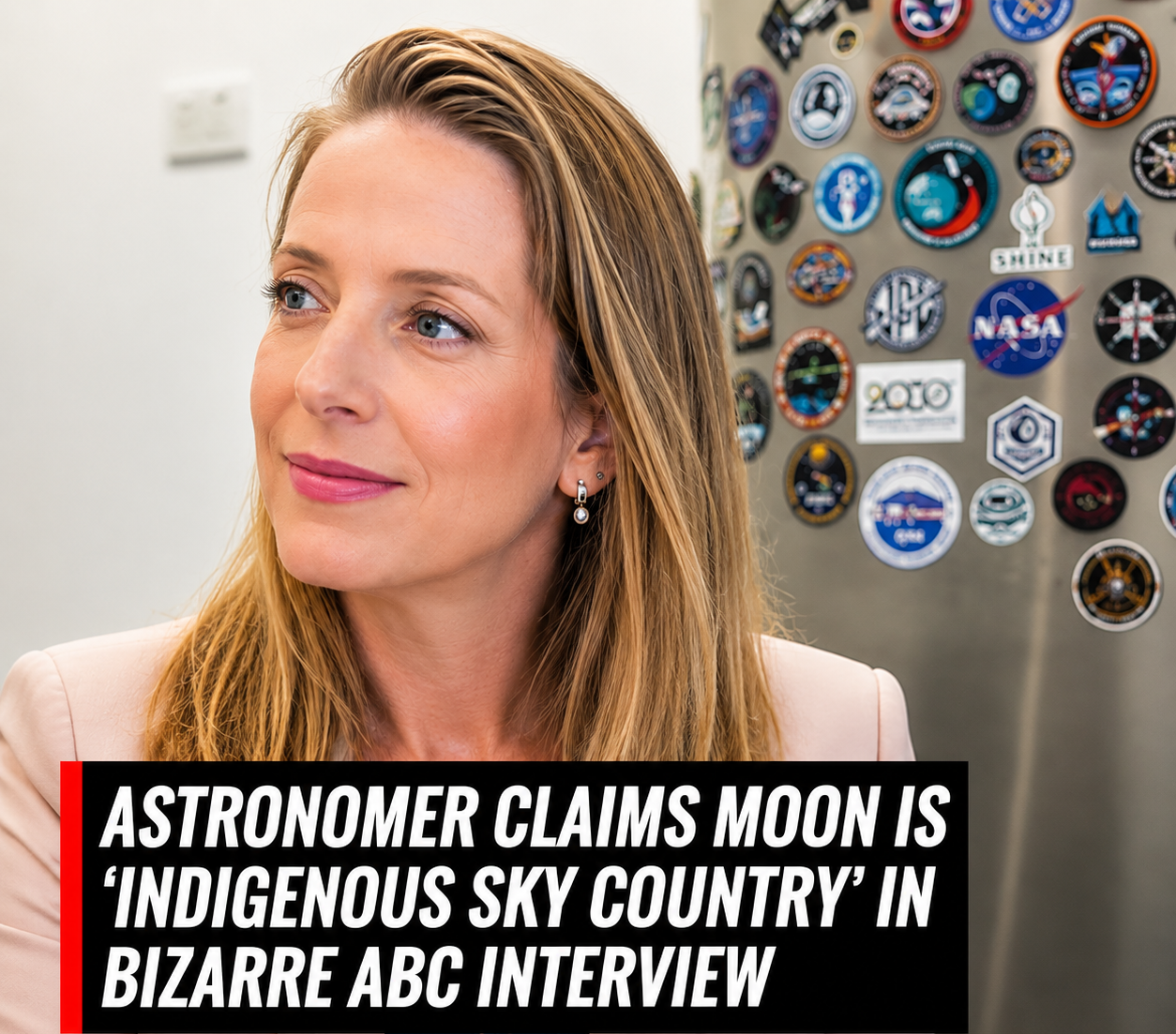
Dr Rebecca Allen, Co-Director of the Space Technology and Industry Institute at Swinburne University of Technology, made the remarks while answering questions about a Falcon 9 upper stage that is expected to strike the Moon this week after years in space.
The interview originally focused on whether Australians should be concerned about the planned impact and what it meant for the growing issue of space debris. Instead, Dr Allen broadened her answer to include the Moon’s cultural significance for Indigenous Australians as well as wider questions surrounding responsible space exploration.
Asked whether the impact itself should worry the public, Dr Allen said the Moon had long fascinated humanity and was deeply connected to Indigenous sky country and traditional storytelling.
“The Moon is something that has fascinated us and is deeply rooted to Indigenous sky country and storytelling, and so we want to respect the fact that this is not just something for us to go and explore, as amazing as that is,” she said during the ABC interview.
She continued by arguing that responsible space exploration is becoming an increasingly important topic internationally as governments and private companies expand lunar missions.
According to Dr Allen, discussions about global space regulation, environmental responsibility and Australia’s growing role in the space industry should occur alongside technological innovation and commercial development.
She said exploration should continue, but “in the right way”, describing the issue as a significant global conversation for the future of space activities.
The comments quickly circulated online, where they generated sharply divided reactions.
Supporters argued Dr Allen was highlighting an often-overlooked cultural dimension of astronomy by recognising that many Aboriginal and Torres Strait Islander communities have long-standing traditions linking the night sky to law, history and storytelling.
For thousands of years, Indigenous Australians have interpreted the movements of the Moon, planets and stars through complex knowledge systems that remain an important part of cultural identity and oral tradition.
Researchers have increasingly documented how these traditions contribute to understanding navigation, seasonal changes and ecological knowledge alongside their spiritual and cultural significance.
In recent years, several Australian universities and research organisations have expanded collaborations examining Indigenous astronomy as part of broader efforts to incorporate traditional knowledge into scientific education and public engagement.
One example is a federally funded research project exploring how Aboriginal and Torres Strait Islander perspectives could inform Australia’s emerging space policy through concepts including “sky country”.
Critics, however, questioned whether those cultural issues were relevant to a discussion about an uncontrolled rocket stage impacting the Moon.
Some commentators argued the interview should have focused primarily on the scientific aspects of the collision, including the expected impact, space debris and the implications for future lunar exploration.
The exchange subsequently became the subject of commentary across social media and several Australian news outlets, with debate extending well beyond the original scientific topic.
The object at the centre of the discussion is a spent Falcon 9 upper stage that has remained in a highly elliptical orbit following an earlier mission.
Astronomers have predicted it will collide with the lunar surface at approximately 8,700 kilometres per hour, producing an impact crater estimated to be about 27 metres across and roughly five metres deep.
Although dramatic in human terms, researchers say the impact is relatively minor compared with the countless natural meteorite strikes that have shaped the Moon’s surface over billions of years.
Scientists also note that the Moon has no atmosphere capable of slowing incoming objects, meaning impacts occur regularly and leave permanent marks on the lunar landscape.
The expected collision has attracted international scientific interest because it provides a rare opportunity to observe an artificial impact under known conditions.
Professional and amateur astronomers have been encouraged to attempt observations of the event, which may provide valuable information about ejecta, crater formation and impact dynamics that could assist future lunar exploration and scientific research.
For Australia’s growing space sector, the discussion arrives during a period of expanding investment in research, advanced manufacturing and international collaboration.
Universities, government agencies and private companies are increasingly participating in projects connected to satellite technology, robotics and future lunar missions, while policymakers continue to consider Australia’s long-term contribution to international space exploration.
Questions about environmental responsibility beyond Earth have likewise become more prominent as the number of commercial launches continues to increase worldwide.
International agreements governing activities in outer space were largely developed decades before the emergence of today’s commercial space industry, prompting renewed debate over how future lunar activity should be managed.
Issues including orbital debris, resource extraction, heritage preservation and the protection of scientifically important sites are now regularly discussed by governments, researchers and international organisations.
Dr Allen’s comments reflected that broader conversation by suggesting that cultural values should be considered alongside scientific and commercial objectives.
Whether those perspectives should form part of mainstream reporting on space exploration remains a matter of public debate.
The discussion also illustrates how modern space exploration increasingly intersects with questions extending beyond engineering and astronomy.
As nations and private companies prepare for a new era of sustained lunar activity, conversations now encompass science, international law, environmental stewardship, economics and cultural heritage.
While opinions differ on how those issues should be balanced, the ABC interview has highlighted the growing intersection between Australia’s expanding space ambitions and wider debates about the values that should guide humanity’s exploration beyond Earth.






