Commonwealth prosecutors have secured a significant legal victory after the New South Wales Court of Criminal Appeal overturned a lower court ruling that had excluded a controversial video of two former Sydney nurses allegedly threatening Israeli patients from their upcoming criminal trial.
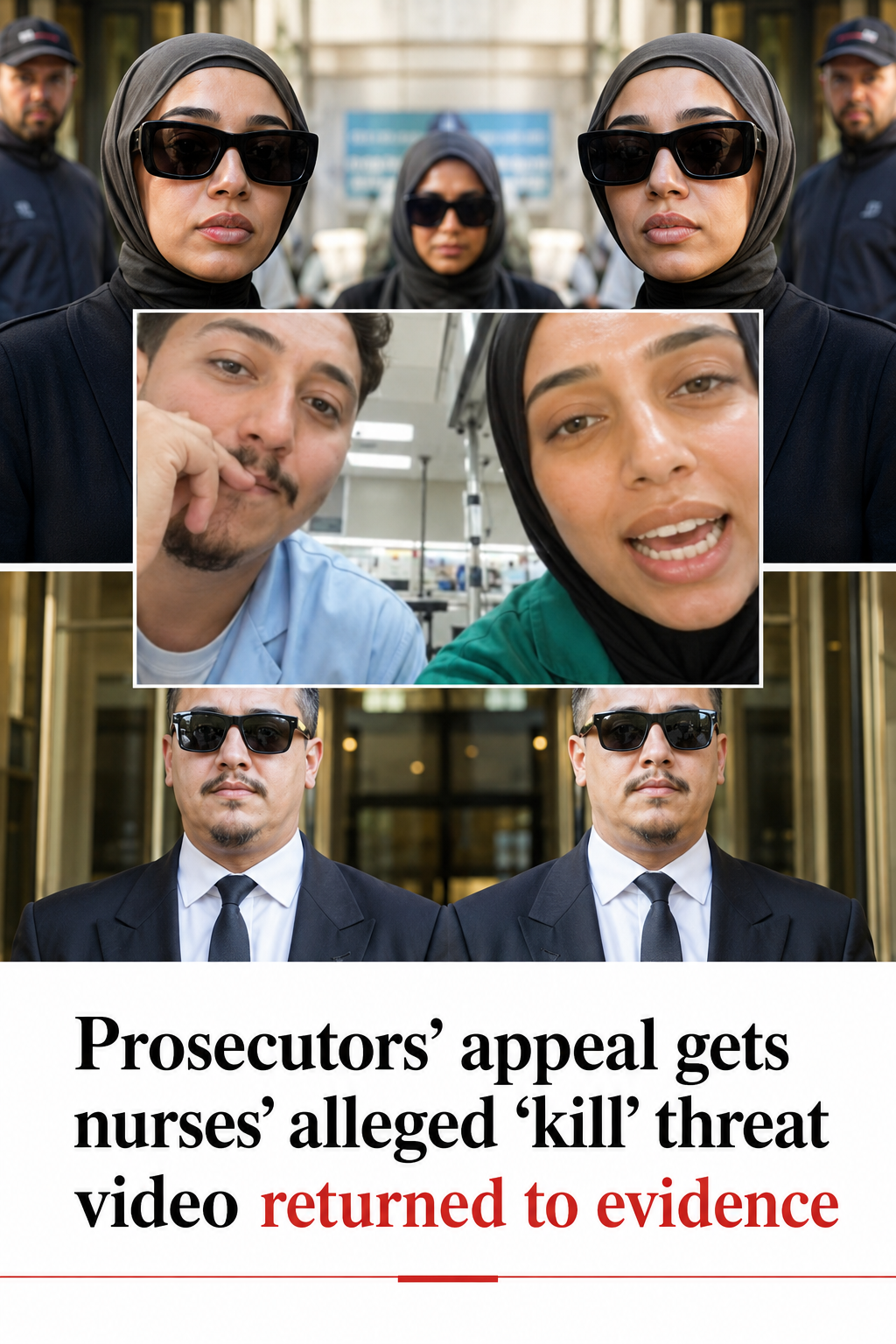
The decision means jurors will now be able to view the viral footage that sparked international outrage earlier this year, reversing a ruling that prosecutors warned would have substantially weakened their case against the two former Bankstown Hospital nurses.
The defendants, Sarah Abu Lebdeh and Ahmad Rashad Nadir, have both pleaded not guilty to Commonwealth offences alleging they used a carriage service to menace, harass or offend. Ms Abu Lebdeh also denies an additional charge alleging she threatened violence against a group. Their trial is scheduled to commence on 31 August.
The case centres on a video conversation recorded during an online chat with Israeli content creator Max Ilinsky, also known as Max Veifer or Ilinski. During the exchange, the two nurses allegedly made statements about refusing to treat Israeli patients, with Ms Abu Lebdeh allegedly saying she would kill Israelis rather than provide medical care, while Mr Nadir allegedly claimed he had already sent Israeli patients to “hell”. The footage spread rapidly online and prompted widespread public condemnation.
The recording quickly became the prosecution’s most significant piece of evidence.
However, in June, NSW District Court Judge Michael McHugh ruled that the video should not be admitted at trial. Defence lawyers successfully argued that the conversation constituted a private communication under New South Wales law and had been recorded without the participants’ consent, making the footage improperly obtained. Under Australia’s Evidence Act, unlawfully obtained evidence is generally excluded unless the public interest in admitting it outweighs the undesirability of using evidence obtained in that manner.
Following that ruling, the Commonwealth Director of Public Prosecutions appealed, arguing the exclusion of the video would leave the jury without the most direct evidence of what was allegedly said during the conversation.
During the appeal hearing, prosecutors emphasised that the person making the recording was located in Israel, where the recording was lawful under local law. They argued that excluding the footage would significantly undermine the prosecution’s ability to present a complete and fair case to the jury.
Lawyers representing the two former nurses maintained that New South Wales privacy law should apply because part of the conversation occurred within the state. They argued the recording had been made without permission and therefore should remain inadmissible regardless of where the person operating the recording device was physically located.
On Friday, the Court of Criminal Appeal unanimously allowed the prosecution’s appeal.
Justices Anthony Payne, James Emmett and Natalie Adams overturned the earlier ruling, clearing the way for both the video and the testimony of Mr Ilinsky to be presented during the criminal trial. The court has not yet published detailed reasons explaining its decision, although the practical consequence is that the prosecution will again be able to rely on the recording as a central part of its case.
The ruling represents a major procedural victory for prosecutors but does not determine whether either defendant is guilty.
Under Australia’s criminal justice system, the appeal concerned only whether the evidence could be admitted before a jury. Questions about the truth of the allegations and whether the prosecution can prove the offences beyond reasonable doubt remain matters for the trial itself. Both defendants continue to deny the charges.
The case attracted national and international attention when the video first emerged.
The footage generated widespread condemnation from political leaders, medical organisations and Jewish community representatives. Prime Minister Anthony Albanese described the alleged remarks as abhorrent, while NSW Premier Chris Minns and NSW Health Minister Ryan Park also strongly criticised the comments. NSW Health subsequently confirmed there was no evidence that any patients had suffered adverse clinical outcomes as a result of the alleged conduct, but both nurses were removed from their positions.
Separate regulatory action also followed.
Both former nurses have been prohibited from working with participants in the National Disability Insurance Scheme (NDIS) for two years, while their professional registrations have been subject to regulatory action pending the outcome of legal proceedings. Those administrative measures are independent of the criminal prosecution currently before the courts.
The appeal also highlights the increasingly complex legal issues surrounding digital communications that cross international borders.
As online conversations routinely involve participants located in different countries, Australian courts are increasingly required to consider how domestic surveillance and privacy laws interact with evidence gathered overseas. In this case, one of the central legal questions was whether the legality of the recording should be assessed according to New South Wales law, Israeli law or a combination of both.
Although the Court of Criminal Appeal has resolved the admissibility issue for this prosecution, legal experts note that future cases involving cross-border recordings may continue to raise complex jurisdictional questions depending on their particular facts and the legislation involved.
For prosecutors, the decision substantially strengthens the case they will present to the jury. During the appeal hearing, counsel argued that without the recording the prosecution would have been forced to rely largely on witness testimony, making it significantly more difficult for jurors to evaluate exactly what was said during the online conversation.
For the defence, however, the reinstatement of the video simply means the allegations will now be tested before a jury rather than being excluded on a procedural basis. Defence counsel will retain the opportunity during trial to challenge the context, interpretation and reliability of the recording, as well as the prosecution’s characterisation of the defendants’ statements.
The trial, beginning later this month, is expected to be closely watched given the public attention surrounding the case and the broader issues it raises concerning hate-related allegations, digital evidence and the admissibility of recordings made across international jurisdictions. Ultimately, the jury—not the appeal court—will decide whether the prosecution has proved the charges beyond reasonable doubt after considering all of the evidence presented in court.