Victoria has entered a new political era after Ben Carroll was elected Premier following Jacinta Allan’s resignation, ending weeks of mounting speculation over the future of the state’s Labor government just months before Victorians head to the polls.
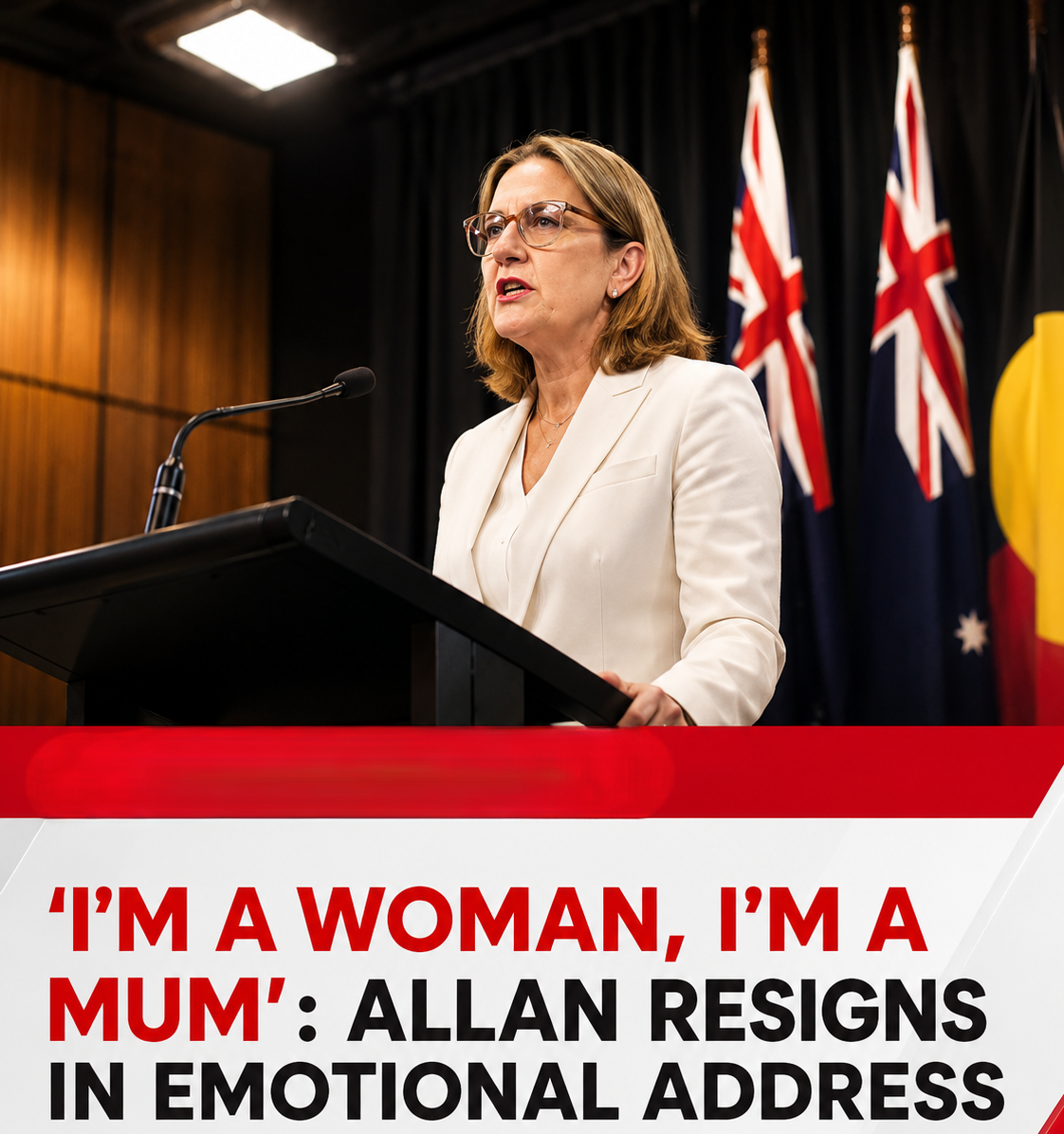
Allan announced on Tuesday morning that she would step down as Premier before a scheduled Labor caucus ballot, despite having previously vowed to contest any leadership challenge. Her decision cleared the way for Deputy Premier and Education Minister Ben Carroll to assume the leadership unopposed, avoiding what would have been a divisive internal contest only months before the November state election.
Carroll was formally endorsed by the Victorian Labor caucus shortly before midday and later sworn in as the state’s 50th Premier, completing one of the most significant political transitions in Victoria since Daniel Andrews resigned in 2023.
Speaking after securing the leadership, Carroll became visibly emotional while thanking colleagues, family and supporters.
“You all know I’m a bit of a crier,” he said with a smile, acknowledging his reputation for showing emotion during significant moments before promising to repay the confidence placed in him through hard work and strong leadership.
His emotional address contrasted with the intensity of the political events that unfolded only hours earlier.
At a press conference held before the caucus meeting, Jacinta Allan confirmed she would resign rather than force a leadership ballot. Although she insisted she believed she could have survived the challenge, Allan said avoiding a prolonged internal fight was ultimately in the best interests of the Labor Party and the state.
“I could have won,” Allan told reporters, but said she did not want to expose Labor to further division as it prepared for a difficult election campaign. She also publicly endorsed Carroll as her successor and pledged her “unqualified support” for the incoming Premier.
Allan’s resignation ends a premiership that began in September 2023 when she succeeded Daniel Andrews following his surprise departure after almost nine years as Premier.
Her government oversaw major infrastructure projects, housing reforms and the opening of the Metro Tunnel, but also faced mounting political pressure over Victoria’s growing debt, the Construction, Forestry and Maritime Employees Union (CFMEU) controversy, cost-of-living concerns and declining public approval ratings.
In recent months, internal dissatisfaction within Labor had intensified as opinion polling suggested the government faced an increasingly difficult path to retaining office after more than a decade in power.
Senior party figures reportedly concluded that changing leaders before the election offered the best opportunity to reset the government’s image and reconnect with voters seeking a fresh direction.
Carroll, who has represented the Melbourne electorate of Niddrie since 2012, has built a reputation as one of Labor’s strongest political communicators.
During his parliamentary career he has held portfolios including Public Transport, Industry and Innovation, Education, Medical Research and WorkSafe before becoming Deputy Premier under Allan in 2023. His experience across economic, transport and education portfolios is expected to shape the priorities of his administration.
In his first address as Premier, Carroll sought to reassure Victorians that the leadership change represented more than simply a change of personnel.
He promised a “new direction” for Victoria while stressing that his government would remain committed to Labor’s core values. At the same time, he signalled that his leadership would place greater emphasis on rebuilding trust in government, strengthening economic management and restoring confidence among both businesses and households.
One of Carroll’s first major announcements was his intention to establish a royal commission into alleged misconduct in Victoria’s construction sector, arguing that public confidence in major infrastructure projects must be restored.
The proposed inquiry is expected to examine allegations involving the CFMEU and governance across the state’s large infrastructure program, an issue that has generated sustained political controversy over recent years.
Political observers say the announcement reflects Carroll’s desire to quickly distinguish his administration from that of his predecessor.
Rather than presenting himself as a continuation of either Daniel Andrews or Jacinta Allan, Carroll has repeatedly emphasised that his government will chart its own course.
“I’m not Jacinta Allan. I’m not Dan Andrews,” he said as he outlined his vision for the next stage of Labor government in Victoria.
The leadership transition also comes at a critical political moment.
Victoria is scheduled to hold a state election on 28 November 2026, with Labor seeking a fourth consecutive term after more than 12 years in office. Recent polling has suggested the government faces its toughest electoral test in more than a decade, with cost-of-living pressures, housing affordability, public debt and confidence in government dominating voter concerns.
The Coalition, led by Liberal leader Jess Wilson, has argued that Labor’s lengthy period in office has resulted in economic mismanagement and declining public services, while promising a change in direction if elected.
At the same time, minor parties such as One Nation are seeking to capitalise on voter dissatisfaction, creating the possibility of a more fragmented parliamentary landscape after the election.
Carroll’s immediate challenge will be to convince voters that Labor has genuinely renewed itself rather than simply replacing one leader with another.
That task has already begun with a significant reshaping of the ministry. Several senior ministers closely associated with Allan have announced they will leave cabinet or retire before the election, providing Carroll with an opportunity to promote a new generation of ministers and present a refreshed front bench.
Beyond personnel changes, Carroll is also expected to place greater emphasis on economic credibility as Victoria continues grappling with historically high levels of state debt, ongoing infrastructure commitments and pressure on household budgets.
Business leaders have welcomed indications that the new Premier intends to strengthen engagement with the private sector while maintaining investment in essential public services, although they have stressed that voters will ultimately judge the government on its ability to deliver practical results rather than symbolic changes.
For Jacinta Allan, the decision to step aside brings to a close nearly three years as Premier and more than two decades in senior Victorian politics.
For Ben Carroll, meanwhile, the emotional speech that began with the words, “You all know I’m a bit of a crier,” marked the beginning of what may become the defining chapter of his political career.
Whether his promise of a “new direction” succeeds in restoring public confidence will become one of the central questions of the Victorian election campaign, with Labor hoping a change at the top can help secure another term in government against an increasingly determined Opposition.






