Victoria has recorded the highest unemployment rate of any Australian state, intensifying criticism of the former Allan Government’s economic management and adding further pressure on the state’s new leadership as it prepares for the November election.
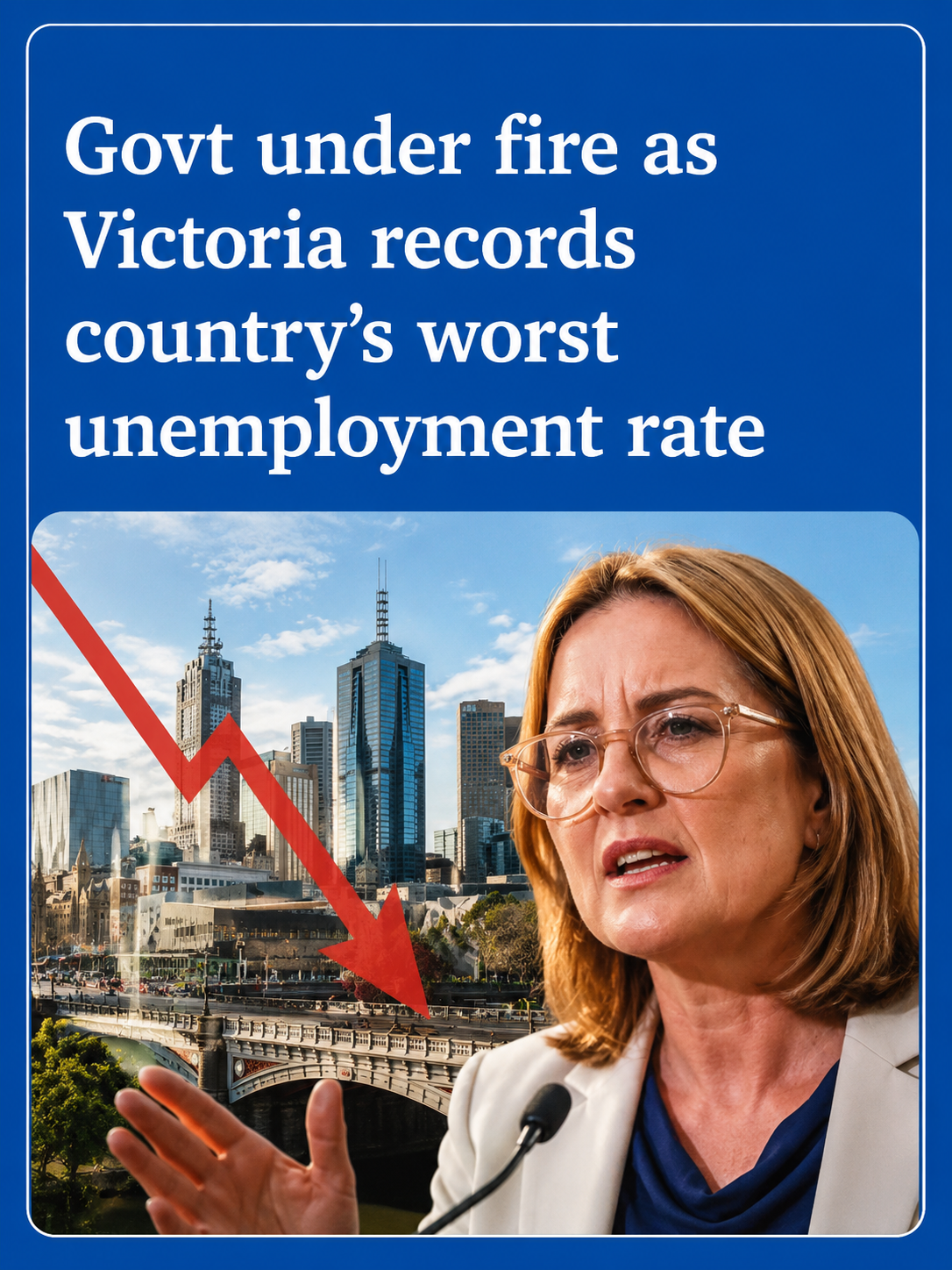
The latest labour market figures showed Victoria’s unemployment rate climbing to around 5.1 per cent, making it the weakest-performing state in the country at a time when businesses are already grappling with rising operating costs and slowing private investment.
The figures immediately triggered criticism from employer organisations, which argued that years of higher taxes, increased regulation and declining business confidence had damaged the state’s ability to create private-sector jobs.
Several business leaders claimed Victoria had become one of the most difficult places in Australia to invest, arguing companies were increasingly choosing to expand elsewhere.
Business groups said employers had been “strangled by high taxes and endless regulation”, pointing to payroll taxes, land taxes, new workplace requirements and growing compliance costs as factors reducing business confidence.
They argued that while many companies wanted to employ more staff, persistent increases in operating costs had forced businesses to delay investment or reduce hiring plans.
The unemployment figures arrive during one of the most significant political transitions in recent Victorian history.
Only days earlier, Jacinta Allan resigned as premier after losing the confidence of many within the Labor caucus, with Ben Carroll replacing her as Victoria’s 50th premier.
Carroll has promised to reset the government’s relationship with business while maintaining Labor’s commitment to public investment and infrastructure.
The latest employment data has inevitably become part of the broader political debate over Labor’s economic record.
Opposition MPs argue the figures demonstrate that Victoria’s economy has steadily lost competitiveness after years of rising government debt, higher taxation and regulatory expansion.
They contend that businesses have increasingly shifted investment to Queensland, Western Australia and New South Wales, where operating conditions are viewed as more favourable.
Employer organisations have also pointed to a series of recent policy decisions that they believe weakened confidence.
These include new workplace regulations, tax increases designed to improve the state’s fiscal position and uncertainty surrounding major infrastructure spending.
Many business representatives argue that individually each measure may appear manageable, but together they have created an environment where expansion has become more difficult for employers.
The Allan Government consistently rejected those criticisms while in office.
Labor maintained that Victoria continued to attract strong population growth, significant infrastructure investment and record levels of employment compared with the period before the COVID-19 pandemic.
The government also argued that international economic conditions, higher interest rates and weaker consumer spending had affected every Australian state rather than Victoria alone.
Economists caution that unemployment statistics should be interpreted alongside broader labour market indicators.
Although Victoria currently has the nation’s highest unemployment rate, employment participation remains historically high and the state’s large population growth has increased the number of people actively seeking work.
That means unemployment can rise even while total employment continues to grow if the labour force expands more rapidly than job creation.
Nevertheless, the symbolic significance of leading the nation in unemployment has become politically damaging.
Victoria has traditionally promoted itself as Australia’s manufacturing, financial and professional services capital.
Business leaders now warn that maintaining that reputation will require renewed efforts to improve investment confidence and reduce barriers to growth.
The employment figures also come against the backdrop of wider concerns about Victoria’s fiscal position.
The state is carrying one of Australia’s largest debt burdens following years of major infrastructure investment, with debt forecasts expected to approach $200 billion before the end of the decade.
Credit rating agencies and economists have repeatedly called for stronger fiscal discipline while balancing continued investment in essential public services.
Business organisations argue that improving employment outcomes requires more than government spending alone.
They say stronger private-sector investment, simplified regulation, lower business costs and greater certainty around future policy settings are essential if employers are to expand their workforce with confidence.
Some have also urged the new government to review industrial relations reforms that they believe reduce workplace flexibility.
For Premier Ben Carroll, the unemployment figures represent one of the first major economic challenges confronting his new administration.
Since taking office, Carroll has pledged to rebuild confidence among investors and businesses while maintaining Labor’s focus on infrastructure, housing and public services.
He has also indicated that future government spending decisions will place greater emphasis on value for money and long-term economic sustainability.
The Opposition has seized on the latest labour market data as evidence that broader policy change is required before the state election.
It argues Victoria needs lower taxes, fewer regulatory burdens and stronger support for small and medium-sized businesses to encourage hiring and restore economic momentum.
Labor, meanwhile, maintains that employment growth remains resilient despite global economic uncertainty and says the new government will continue pursuing policies designed to support investment and productivity.
With only months remaining before Victorians head to the polls, employment is expected to become one of the defining issues of the election campaign.
Cost-of-living pressures, business confidence, government debt and job creation are already shaping the political debate, and the latest unemployment figures provide both major parties with powerful arguments about the direction of the state’s economy.
Whether Victoria’s labour market improves over the coming months may prove crucial not only for thousands of job seekers, but also for the electoral fortunes of the newly installed Carroll Government as it attempts to convince voters that a change in leadership can deliver a change in economic performance.






