Australia’s record-breaking Commonwealth Games swimming campaign has delivered more than medals and national pride, with billionaire mining executive Gina Rinehart rewarding the Dolphins with more than A$1.27 million in performance bonuses following one of the most dominant displays in the nation’s sporting history.
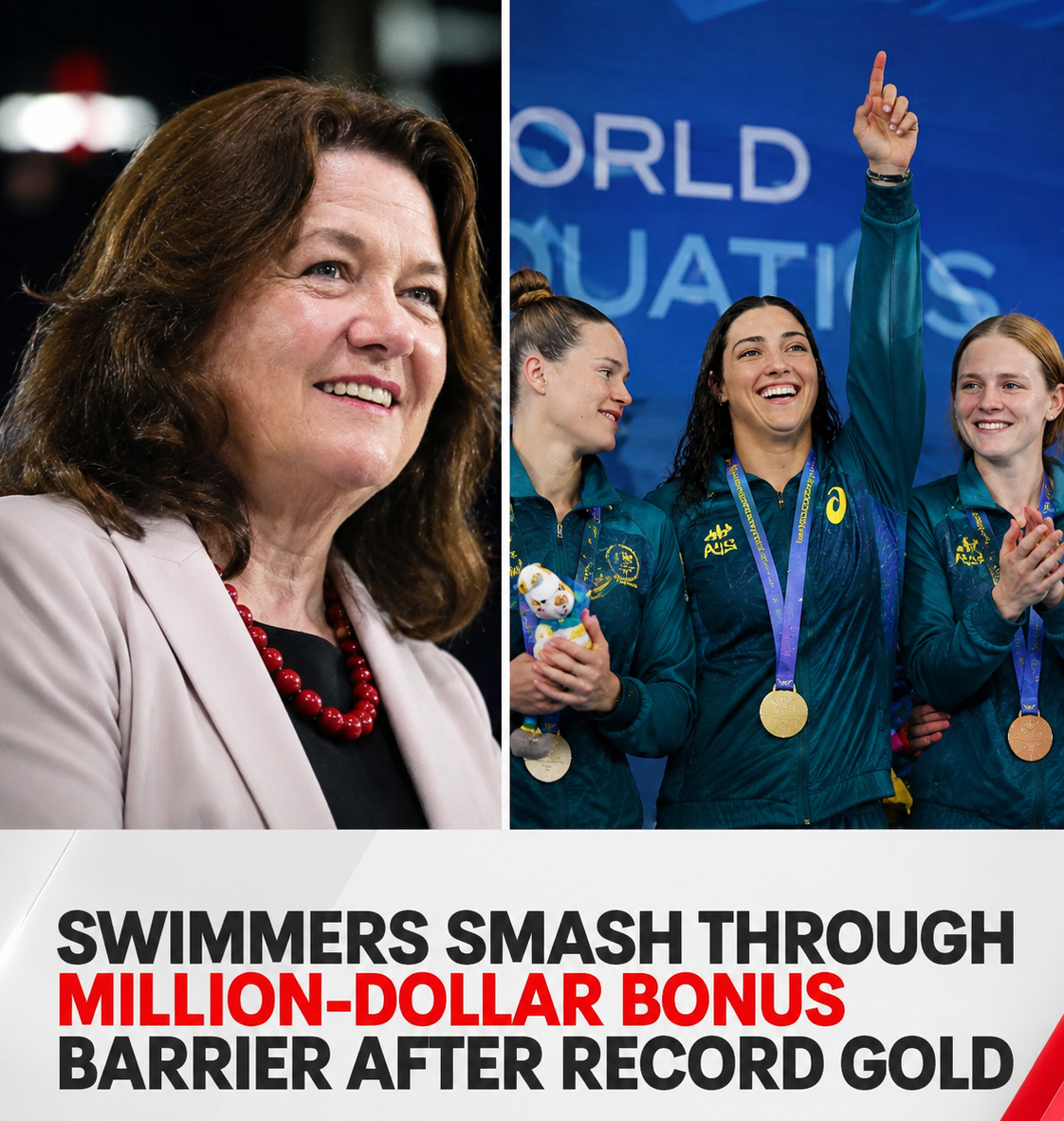
Before the final day of competition in Glasgow, Australia’s swimmers had already earned bonuses exceeding the A$1 million mark through an incentive program funded by Hancock Prospecting executive chair Gina Rinehart.
Following the final races, the total payout climbed to an extraordinary A$1,272,500, reflecting the team’s unprecedented medal haul throughout the Games.
The Dolphins finished the swimming program with an astonishing 75 medals, including a record 37 gold medals, comfortably surpassing Australia’s previous Commonwealth Games swimming record and underlining the nation’s continued dominance in the pool.
The achievement also reinforced Australia’s position as one of the world’s leading swimming nations heading towards the 2027 World Championships and the Los Angeles 2028 Olympic Games.
Under the bonus structure announced before the Games, Australian swimmers became eligible for substantial financial rewards based on individual performances.
The incentive program awarded:
- A$20,000 for each individual gold medal.
- A$15,000 for each individual silver medal.
- A$10,000 for each individual bronze medal.
- Between A$2,500 and A$5,000 for relay medals, depending on the medal colour.
- An additional A$30,000 for any swimmer who established a new world record.
The initiative represented one of the largest privately funded athlete bonus programs ever offered to an Australian Commonwealth Games swimming team.
Following the team’s historic performance, Rinehart released a statement congratulating the athletes, coaches and support staff.
She praised the swimmers for inspiring Australians through their commitment, discipline and determination, describing their achievements as a source of enormous national pride.
“Congratulations to all our remarkable swimmers and their coaches. Your dedication, hard work and extraordinary performances have inspired Australians everywhere,” Rinehart said in a statement released through Hancock Prospecting.
The billionaire also acknowledged the many years of preparation required to reach elite international competition.
She said success in swimming is built upon countless hours of training, personal sacrifice and the commitment of families, coaches and support teams whose work often goes unseen.
Australia’s medal tally reflected the extraordinary depth now emerging across the national swimming program.
Established champions were joined by a new generation of swimmers who seized their opportunities in Glasgow, ensuring Australia’s success extended well beyond a handful of headline names.
Among the standout performers were multiple individual gold medallists who contributed significantly to both the team’s medal tally and the growing bonus pool.
The Dolphins also completed a clean sweep of relay events, further boosting both Australia’s medal count and the financial rewards available through the incentive program.
For many swimmers, the bonus payments represent meaningful financial support in a sport where prize money is often limited outside the Olympic Games and World Championships.
Unlike professional sports such as tennis or golf, elite swimming offers relatively modest earning opportunities, meaning sponsorship support frequently plays a vital role in helping athletes fund years of training.
Rinehart and Hancock Prospecting have become major supporters of Australian swimming over the past decade.
The company has provided financial backing to Swimming Australia, Swimming Queensland and numerous elite development programs, contributing millions of dollars toward athlete preparation, coaching and high-performance initiatives.
The latest bonus program was announced before the Commonwealth Games began, with organisers emphasising that the incentives were intended to recognise excellence rather than create additional pressure on athletes.
Rinehart said at the time that outstanding performances deserved tangible recognition because elite athletes dedicate years of their lives to representing Australia.
“These athletes bring pride to Australia and deserve to know their achievements are valued,” she said when launching the initiative.
The program nevertheless generated public discussion during the Games.
Media reports suggested Swimming Australia had advised athletes not to publicly thank Rinehart during official interviews to avoid creating conflicts with governing body sponsorship arrangements and broadcast obligations.
Several swimmers later confirmed they appreciated the financial support while also acknowledging the complex sponsorship environment surrounding major international competitions.
Olympic champion Kyle Chalmers publicly praised the initiative, describing the bonuses as an important acknowledgment of athletes’ achievements in a sport where financial rewards are comparatively limited.
He said the additional funding would make a meaningful difference for many swimmers as they continue preparing for future international competition.
Australia’s Glasgow campaign also demonstrated the remarkable strength of the country’s emerging talent pipeline.
Several younger swimmers announced themselves on the international stage, while experienced campaigners continued to deliver gold medals despite the absence of some established stars through injury, illness or retirement.
The team exceeded expectations by breaking Australia’s previous Commonwealth Games swimming gold medal record of 28, set at the 2018 Gold Coast Games.
Swimming Australia officials said the results reflected years of investment in coaching, sports science, athlete welfare and junior development programs.
The organisation believes the performances provide a strong foundation for the next Olympic cycle, with several emerging swimmers expected to become key members of Australia’s team for Los Angeles in 2028.
Sports economists note that private incentive schemes have become increasingly common as national sporting organisations seek additional ways to reward elite performance beyond government funding and traditional sponsorship.
While such programs can generate debate, supporters argue they help athletes remain financially secure during demanding training periods when outside employment opportunities are limited.
For Australia’s swimmers, the Glasgow campaign delivered success on every front.
They rewrote the Commonwealth Games record books, confirmed Australia’s dominance in the pool and secured more than A$1.27 million in additional rewards through one of the largest athlete bonus programs ever offered to an Australian swimming team.
As celebrations continue, attention is already turning toward the next major international challenges.
With established champions still performing at the highest level and a new generation emerging rapidly, Australia’s Dolphins appear well positioned to remain among the world’s strongest swimming nations for years to come.






