Victoria’s dramatic leadership change has not only reshaped the state’s political landscape but also triggered a substantial shift in the salaries and retirement entitlements of its two most senior political figures.
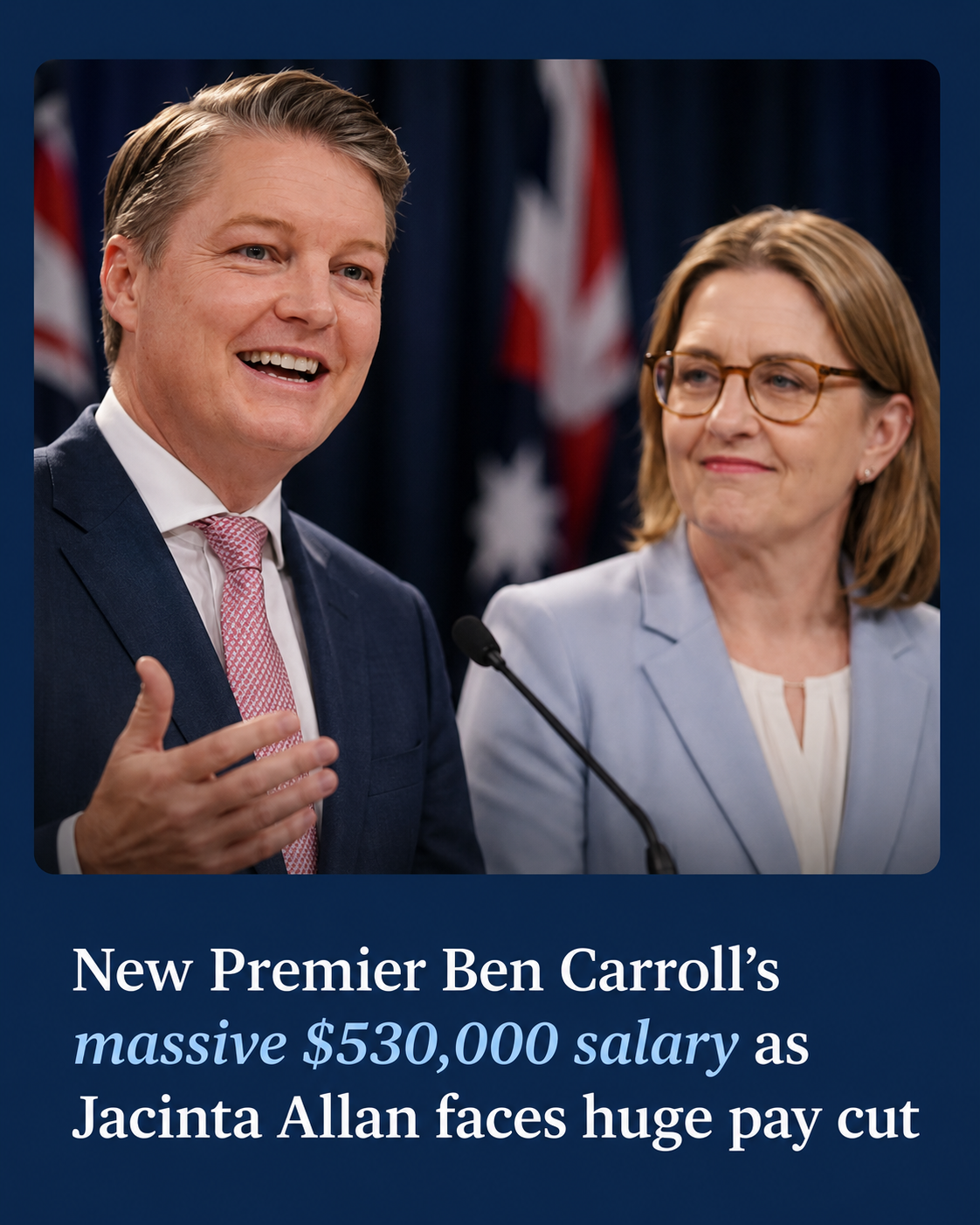
Following his election as Victoria’s 50th Premier, Ben Carroll will receive an annual remuneration package worth approximately A$530,926, including salary, allowances and expense payments determined by the Victorian Independent Remuneration Tribunal.
The promotion represents a significant increase from his previous remuneration as Deputy Premier and Education Minister, equating to an increase of almost A$1,540 per week.
For Jacinta Allan, however, the political transition has had the opposite financial effect.
Having stepped down as premier ahead of a leadership ballot, Allan is expected to return to the backbench if she remains in Parliament, reducing her annual parliamentary income to approximately A$219,391.
That represents a reduction of more than A$310,000 a year compared with her remuneration as premier.
Despite the sharp reduction in parliamentary salary, Allan’s long political career means she remains eligible for one of Victoria’s most generous legacy parliamentary pension schemes.
Because she was first elected to Parliament in 1999, before major reforms introduced in 2004, Allan falls within the group of MPs whose retirement benefits continue to be governed by the older defined-benefit parliamentary pension system.
That scheme was closed to newly elected MPs more than two decades ago but continues to apply to eligible members who entered Parliament before the reforms.
Media estimates suggest Allan could receive an annual parliamentary pension worth between approximately A$240,000 and A$270,000 should she retire from politics, although the final amount would depend on her completed parliamentary service and ministerial history.
Some estimates place the potential entitlement even higher depending on the calculation methodology used under the scheme’s benefit formula.
The pension arrangements differ markedly from those applying to MPs elected after 2004.
Following reforms introduced by the Victorian Government, newer parliamentarians participate in accumulation-style superannuation arrangements broadly comparable to those available across the wider workforce rather than receiving guaranteed lifetime defined-benefit pensions.
As a result, only a relatively small number of long-serving MPs remain covered by the older scheme.
Among those still eligible are several senior Victorian politicians who entered Parliament before the reforms took effect.
The existence of two entirely different retirement systems has periodically generated debate over fairness and taxpayer costs, particularly as members covered by the legacy arrangements begin retiring from public life.
The salary changes also follow a recent decision by the Victorian Independent Remuneration Tribunal to approve a 3.5 per cent increase in parliamentary pay.
The adjustment lifted the premier’s remuneration above A$530,000 annually, making the Victorian premier one of Australia’s highest-paid state leaders, although still below the remuneration received by Prime Minister Anthony Albanese.
The tribunal is an independent statutory body responsible for determining the salaries and allowances of Victorian MPs.
Its decisions are intended to operate independently of government, removing the need for politicians to vote on their own remuneration.
Nevertheless, salary increases awarded during periods of economic pressure frequently attract political attention.
This year’s adjustment drew criticism from some unions and community groups, who argued parliamentary pay had increased more quickly than wage growth experienced by many public-sector employees.
Supporters of the tribunal’s approach respond that independent remuneration mechanisms help protect parliamentary salaries from political interference while ensuring compensation remains broadly competitive with senior public-sector leadership positions.
The financial consequences of the leadership transition come as Carroll begins what is expected to be one of the most challenging premierships in recent Victorian history.
Immediately after being sworn in, the new premier pledged to chart a different course from both Daniel Andrews and Jacinta Allan.
He announced plans for a royal commission into alleged corruption in the construction sector, proposed expanded powers for Victoria’s anti-corruption watchdog and promised a stronger focus on economic management and rebuilding business confidence.
Carroll has also indicated he wants to resolve ongoing disputes with public school teachers, strengthen the state’s fiscal position and restore public confidence ahead of Victoria’s election later this year.
Political analysts believe he has only a limited period to demonstrate that Labor’s leadership change represents more than a change of personalities.
For Allan, the financial discussion is only one aspect of a much broader political transition.
After serving continuously in the Victorian Parliament since 1999, she leaves the premiership following months of declining opinion polling, internal party unrest and sustained political pressure surrounding the government’s handling of issues including major infrastructure governance and public confidence.
Although she stepped aside before the caucus vote, Allan publicly endorsed Carroll and urged colleagues to unite behind the new leadership rather than engage in a prolonged internal contest.
The contrast between Carroll’s substantial salary increase and Allan’s sharp reduction has also reignited broader discussion about parliamentary remuneration.
Supporters of defined-benefit parliamentary pensions argue they reflect commitments made decades ago under employment conditions that applied at the time members entered Parliament.
Critics, however, contend such arrangements no longer reflect community expectations and create significant disparities between long-serving politicians and both newer MPs and the wider workforce.
Because the scheme has been closed to new entrants since 2004, its long-term cost to taxpayers is expected to decline gradually as eligible members eventually retire from public life.
Even so, each high-profile retirement inevitably renews public debate over whether historical parliamentary pension arrangements remain appropriate by modern standards.
For Carroll, attention is likely to focus less on his higher salary than on whether his government can deliver the political and economic reset he has promised.
For Allan, the discussion highlights how rapidly political fortunes can change.
Within days, she has gone from leading Victoria as premier to facing a substantial reduction in parliamentary income—while remaining one of the last beneficiaries of a pension system that disappeared for future generations of Victorian politicians more than twenty years ago.






