The dramatic leadership upheaval that brought Jacinta Allan’s premiership to an abrupt end has reignited debate over Victoria’s political direction, with broadcaster Michael McLaren arguing the state’s recent experience offers an important lesson for governments across Australia.
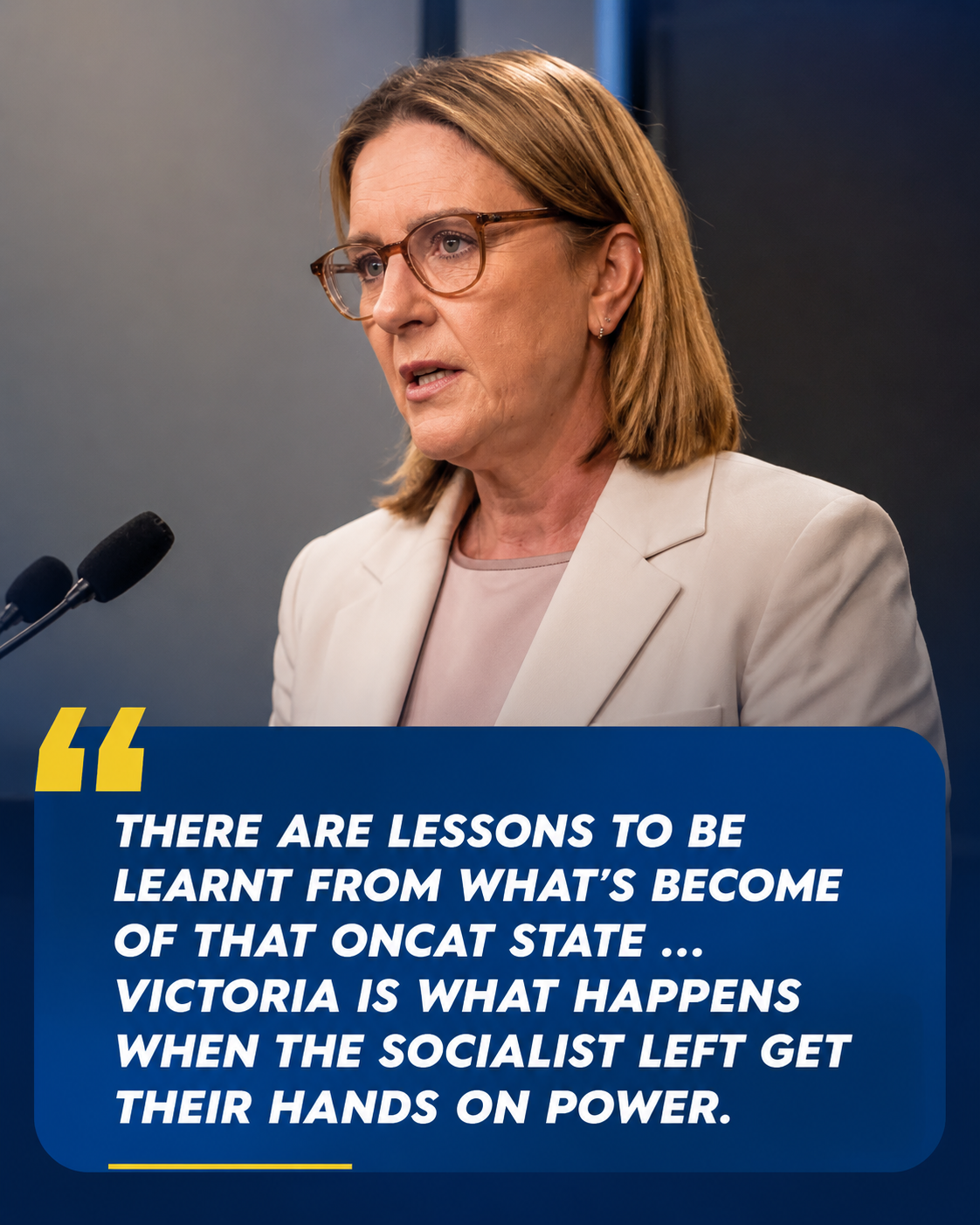
Speaking on Sydney radio station 2GB, McLaren said the extraordinary events surrounding Allan’s resignation and Ben Carroll’s elevation to premier reflected deeper problems that had developed over recent years under successive Victorian Labor governments.
“What a mess,” McLaren said, describing the past 48 hours in Victorian politics as a reminder to the rest of the country of “what not to do”.
His comments followed one of the most turbulent leadership transitions in modern Victorian political history.
After initially declaring she would contest a leadership challenge, Jacinta Allan announced she would step aside as premier, saying a prolonged internal contest only months before the state election would damage Labor’s prospects. Deputy Premier Ben Carroll was subsequently elected unopposed as Victoria’s 50th Premier.
For McLaren, however, the leadership change represented only the latest chapter in a broader story.
He argued Victoria’s political difficulties were the product of years of policy decisions rather than the actions of a single premier.
Looking back over the past six years, McLaren criticised the state’s handling of the COVID-19 pandemic, its economic management and the performance of major infrastructure projects.
He said Victoria had experienced prolonged lockdowns, increasing concerns about crime and growing pressure on the state’s finances.
“The Big Build fiasco is probably the very sour cherry on top of the stale and mouldy cake that is Victoria’s economy,” McLaren said.
The Victorian Government’s “Big Build” program has been one of the largest infrastructure agendas ever undertaken by an Australian state.
It includes projects such as the Metro Tunnel, the West Gate Tunnel, level crossing removals, road upgrades and the proposed Suburban Rail Loop.
Supporters argue the investments are modernising Melbourne’s transport network and preparing the state for long-term population growth.
Critics, however, have questioned escalating costs, project delays and governance arrangements surrounding some developments.
In recent months, allegations concerning misconduct within sections of the construction industry have intensified political pressure on the Labor government.
Following his appointment as premier, Ben Carroll announced plans for a royal commission into aspects of the construction sector and promised stronger integrity measures, describing the inquiry as part of a broader effort to restore public confidence.
McLaren also suggested Victoria’s economic challenges extended beyond infrastructure spending.
He argued that governments should avoid policies which, in his view, discourage private investment or weaken business confidence.
Although his remarks reflected his own political commentary rather than an official assessment, they echoed concerns frequently raised by sections of the business community regarding state debt, taxation and regulatory settings.
Victoria’s financial position has become a major issue ahead of the November state election.
The state carries Australia’s largest level of public debt, largely driven by infrastructure investment and pandemic-era spending.
The government has argued those investments are essential to supporting future economic growth, while opposition parties contend stronger fiscal discipline is required to improve the state’s long-term finances.
Crime has emerged as another significant political issue.
Recent polling has consistently identified community safety as one of voters’ leading concerns, prompting both major parties to outline tougher law-and-order policies before the election.
The new premier has already pledged additional measures aimed at strengthening policing and restoring public confidence in community safety.
McLaren’s commentary also touched on what he sees as the broader political culture that has shaped Victoria during Labor’s extended period in office.
Using a series of colourful metaphors, he argued the state had become an example of what can happen when governments become disconnected from business and economic realities.
His remarks were clearly presented as opinion rather than factual findings and formed part of a wider political discussion following the leadership spill.
The change from Allan to Carroll has prompted renewed debate over whether Labor can successfully reset its agenda before voters return to the polls.
Carroll has sought to distance himself from both Allan and former premier Daniel Andrews, emphasising fiscal responsibility, stronger engagement with business, integrity reforms and a renewed focus on public safety.
Political observers have described his election as marking a shift in influence from Labor’s Socialist Left faction to the party’s Right for the first time since the Bracks–Brumby era, although analysts caution that any meaningful policy changes will ultimately be judged by voters rather than rhetoric alone.
Supporters of the former government reject suggestions that Victoria’s recent challenges can be reduced to a simple political narrative.
They argue the state navigated an unprecedented global pandemic, delivered major infrastructure projects and continued investing in health, education and transport despite difficult economic conditions.
They also note that many of the financial pressures confronting Victoria—including inflation, labour shortages and higher construction costs—have affected governments across Australia.
Critics, by contrast, maintain those explanations do not fully account for the state’s debt levels, project overruns or declining public confidence.
Those competing interpretations are likely to dominate political debate throughout the election campaign.
For the Coalition, the leadership change offers an opportunity to argue Labor’s problems extend beyond individual leaders.
For Labor, Carroll’s appointment is intended to demonstrate that the government has recognised voters’ concerns and is prepared to change course before the election.
McLaren’s commentary reflects one perspective within that broader national conversation.
Whether voters ultimately agree that Victoria serves as a cautionary example—or conclude the leadership change has provided Labor with a genuine fresh start—will become clear when Victorians cast their ballots later this year.
Until then, the events surrounding Jacinta Allan’s departure and Ben Carroll’s arrival are likely to remain central to discussions about the future direction of Victoria and the political lessons other Australian governments may choose to draw from the state’s recent experience.






