Victoria’s dramatic Labor leadership change has entered another contentious chapter, with newly appointed Deputy Premier Gabrielle Williams and several government MPs facing a wave of online criticism after publicly praising former Premier Jacinta Allan less than a day after helping remove her from office.
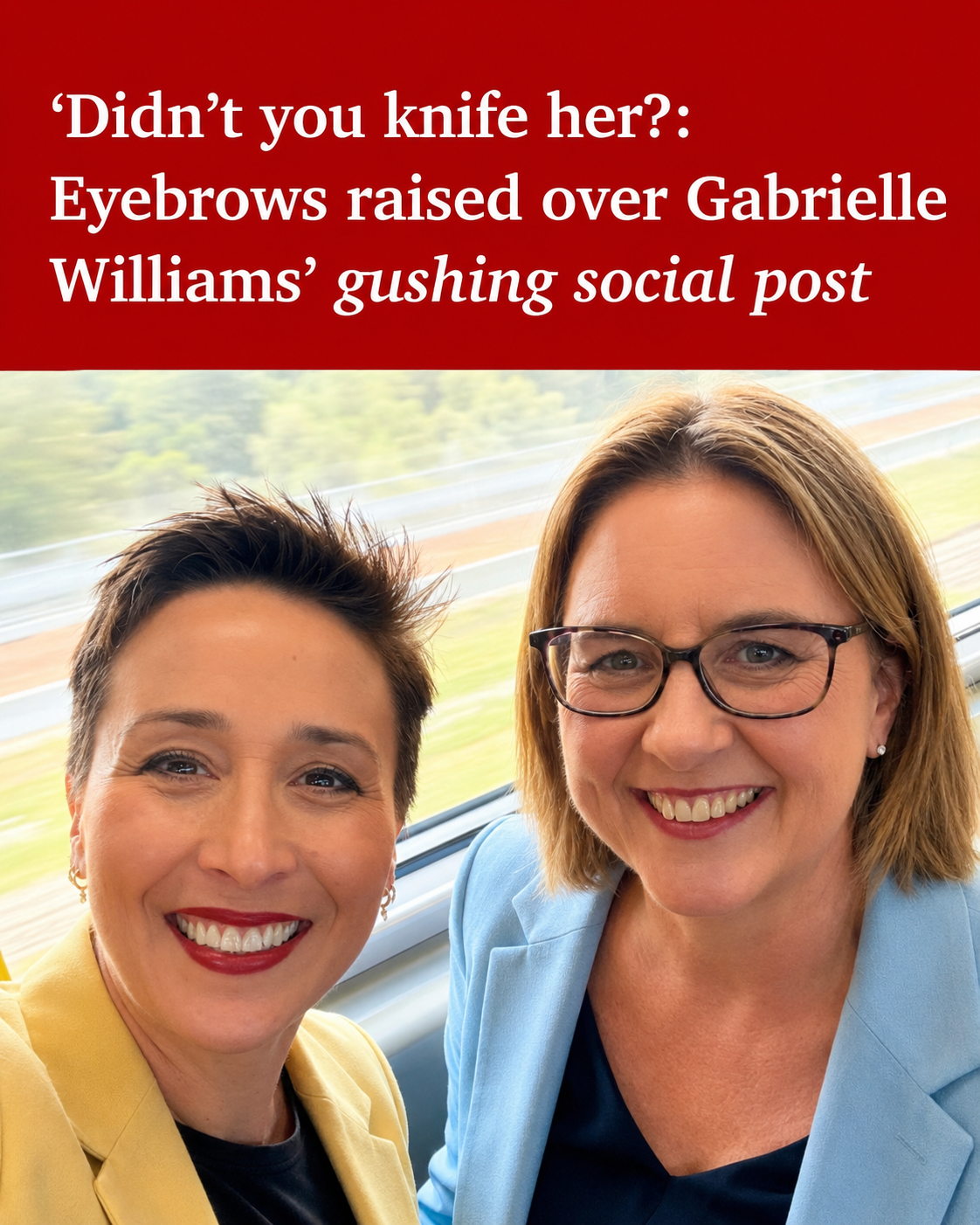
The social media tributes appeared almost immediately after Labor’s internal leadership upheaval, prompting many commentators to accuse senior MPs of hypocrisy and highlighting the brutal realities of party politics.
Williams, who was sworn in as Victoria’s Deputy Premier following Ben Carroll’s successful leadership challenge, had been among the senior MPs who met Allan before the caucus vote to tell her she had lost the confidence of colleagues and should step aside.
Despite playing a central role in the transition, Williams published a heartfelt tribute on social media the following day, thanking Allan for her years of public service.
Her post featured a photograph of the pair smiling together in matching Labor-red jackets and praised Allan’s leadership, work ethic and nearly three decades of parliamentary service.
“Three years as premier and 27 years serving in the Victorian parliament, Jacinta Allan has been a role model to many with an unparalleled work ethic and passion for her job. Thank you, Jacinta,” the post read.
The reaction online was swift.
Social media users flooded the comments section with criticism, with some asking, “Didn’t you knife her?” while others posted rat emojis—symbols commonly associated in Australian politics with accusations of betrayal.
The backlash was not directed solely at Williams.
Several Labor MPs who had supported the leadership transition also published public messages thanking Allan for her contribution to Victoria, attracting similar accusations that they were attempting to rewrite events that had unfolded only hours earlier.
The criticism reflects just how rapidly events unfolded inside Victorian Labor.
After weeks of mounting pressure over declining public support and growing concern within caucus about the government’s electoral prospects, Allan was informed by senior colleagues that she no longer commanded majority backing within the parliamentary party.
Although she initially indicated she was prepared to contest a leadership ballot, Allan ultimately resigned before the caucus vote proceeded, clearing the way for Ben Carroll to become Victoria’s 50th Premier.
Carroll was elected unopposed after Allan stepped aside, while Williams was elevated to Deputy Premier as part of the new leadership team.
The leadership spill marked one of the most dramatic changes inside Victorian Labor since Daniel Andrews retired in 2023 and Allan succeeded him as premier.
Political observers note that leadership challenges are rarely personal in public, even when they are fiercely contested behind closed doors.
It is common for outgoing leaders to receive warm public tributes from colleagues regardless of the circumstances surrounding their departure.
However, the timing of this week’s posts attracted unusual attention because they appeared so soon after the MPs involved had privately urged Allan to relinquish the leadership.
Spring Street sources told several media outlets that the contrasting public and private messages illustrated the often unforgiving nature of internal party politics, where personal relationships frequently collide with electoral calculations.
Allan’s resignation came amid mounting concern within Labor that the government faced a difficult path to the November state election.
Recent polling had shown declining support for the government, while controversy surrounding major infrastructure projects, integrity issues and cost-of-living pressures had placed increasing pressure on the premier’s leadership.
Senior MPs ultimately concluded that replacing the leader offered Labor its best opportunity to reset before voters head to the polls later this year.
Since taking office, Premier Ben Carroll has attempted to distance his administration from both the Allan and Andrews eras.
He has promised a royal commission into governance surrounding Victoria’s major infrastructure program, pledged greater transparency and repeatedly argued that his government represents a fresh start rather than a continuation of previous leadership.
While Carroll has focused on outlining his priorities, the political fallout from the spill has continued.
In the days following the leadership change, two senior ministers regarded as close allies of Allan—Lily D’Ambrosio and Harriet Shing—announced they would resign from Parliament, further underscoring the scale of the transition underway inside Victorian Labor.
The departures have left Carroll with the challenge of rebuilding cabinet while simultaneously preparing Labor for what is expected to be one of the party’s toughest election contests in more than a decade.
For Williams, the controversy surrounding her social media tribute demonstrates how every public gesture is now being scrutinised through the lens of the leadership spill.
Supporters argue it is entirely possible to believe a leadership change was necessary while still acknowledging Allan’s years of public service and dedication.
Critics, however, contend that the praise rang hollow given the speed with which those same colleagues had withdrawn their confidence in her leadership.
Neither Williams nor Allan has publicly responded to the criticism directed at the social media posts.
Allan has instead focused her public remarks on thanking Victorians for the opportunity to serve as premier and expressing support for the incoming government, while Carroll has urged Labor MPs to unite behind the new leadership ahead of the election campaign.
The episode serves as another reminder of the unique pressures of parliamentary leadership.
In Westminster-style political systems such as Australia’s, party leaders often depend not only on public support but also on maintaining the confidence of their own parliamentary colleagues.
When that confidence disappears, leadership changes can occur with extraordinary speed, leaving little time for carefully managed transitions or public explanations.
The reaction to Williams’ tribute also highlights the increasingly influential role social media plays in modern politics.
Posts intended as respectful acknowledgements can quickly become flashpoints, particularly when they appear inconsistent with recent political actions.
As Victoria’s new Labor leadership seeks to reset its political fortunes, the controversy surrounding these tributes illustrates that the emotional aftermath of Jacinta Allan’s departure is far from over.






