Victoria has entered a new political era after Premier Jacinta Allan announced her resignation just months before the state election, bringing to an end a dramatic leadership crisis that had threatened to divide the Victorian Labor Party at one of the most critical moments in its twelve years in government.
Allan’s decision came after almost 48 hours of intense internal negotiations, growing speculation about her political future and mounting pressure from Labor MPs concerned about the government’s electoral prospects ahead of the November poll.
Rather than force a leadership ballot against Deputy Premier Ben Carroll, Allan chose to stand aside voluntarily, saying the interests of the Labor Party and the state outweighed her own political future. 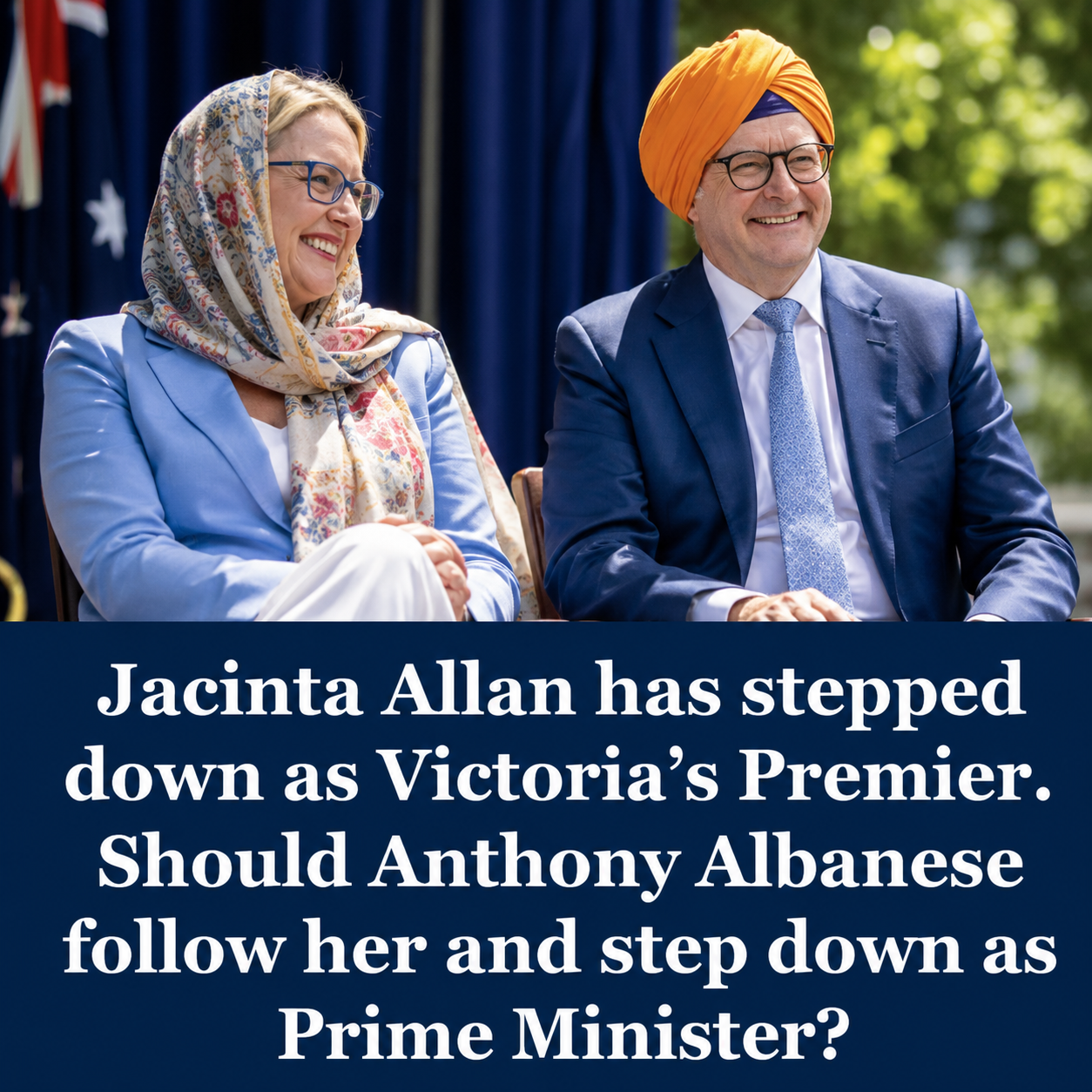
Ending a turbulent 48 hours
The political drama began when reports emerged that Allan had lost the confidence of a significant number of Labor MPs.
Initially, she made clear she intended to fight for the leadership.
Deputy Premier Ben Carroll subsequently confirmed he would challenge for the position, setting the stage for an unprecedented leadership contest only months before Victorians return to the polls.
However, after further discussions with colleagues, Allan announced she would withdraw before the caucus vote took place.
“I have made the difficult decision to step aside as leader of the Victorian state parliamentary Labor Party, and as Premier of Victoria,” she said.
She added that although she believed she could have won a ballot, a prolonged contest would consume valuable time and resources that should instead be devoted to governing and preparing for the election.
Backing Ben Carroll
Importantly, Allan immediately offered Ben Carroll what she described as her “unqualified support“, effectively ensuring the leadership transition would occur without a prolonged internal battle.
That endorsement removed much of the uncertainty surrounding Labor’s immediate future and allowed Carroll to emerge as the uncontested choice of the parliamentary caucus.
Within hours, Labor MPs formally elected Carroll as leader, making him Victoria’s 50th Premier.
The smooth transition contrasted sharply with the increasingly public speculation that had dominated Victorian politics throughout the previous two days.
Anthony Albanese pays tribute
Prime Minister Anthony Albanese was among the first senior Labor figures to publicly acknowledge Allan’s resignation.
Describing her as “a very decent human being“, Albanese praised her decades of public service and highlighted her contribution across several important ministerial portfolios.
“She’s someone who can be proud of her achievements over a long period of time, and I wish her well for her future,” the Prime Minister said.
His comments reflected broader recognition within Labor that, despite the difficult circumstances surrounding her departure, Allan had spent more than 25 years serving Victoria through numerous senior ministerial positions before becoming Premier in 2023.
A career spanning more than two decades
Jacinta Allan entered the Victorian Parliament in 1999 as the Member for Bendigo East, becoming the youngest woman elected to the state’s Parliament at the time.
Over the following decades she built one of Labor’s longest ministerial careers, overseeing portfolios including regional development, transport infrastructure and major projects.
She became Deputy Premier in 2022 before succeeding Daniel Andrews as Premier following his resignation in September 2023.
Throughout that period, Allan became closely associated with many of Victoria’s largest infrastructure projects, including the Metro Tunnel, North East Link, Level Crossing Removal Project and the Suburban Rail Loop.
Growing pressure inside Labor
Despite those achievements, Allan’s premiership increasingly came under pressure during 2026.
Opinion polling consistently suggested Labor faced a far more competitive election than anticipated, while Allan’s personal approval ratings also weakened.
At the same time, Victoria continued confronting record levels of state debt, cost-of-living pressures, housing affordability concerns and ongoing debate surrounding the cost of major infrastructure projects.
Labor MPs reportedly became increasingly concerned that the government required a fresh political direction before the election campaign officially began.
The Big Build controversy
Another issue weighing heavily on Allan’s leadership involved allegations concerning Victoria’s construction sector and the state’s massive Big Build infrastructure program.
Throughout her premiership, Allan resisted calls from opponents for a Royal Commission into alleged corruption involving elements of the construction industry.
Following his election as Premier, Ben Carroll immediately announced that establishing such a Royal Commission would become his first major action in office.
He also committed to appointing a Special Prosecutor and strengthening the powers available to integrity agencies investigating alleged misconduct.
Those announcements were widely interpreted as an attempt to demonstrate a clear break from aspects of the previous government’s approach.
Carroll promises a fresh start
After being elected leader, Carroll made it clear he intended to position himself differently from both Allan and former Premier Daniel Andrews.
During his first media conference he declared:
“I am not Daniel Andrews. I am not Jacinta Allan.”
He said his government would focus on rebuilding confidence in Victoria’s economy, supporting businesses, addressing the state’s growing debt burden and resolving long-running industrial disputes, including negotiations involving public school teachers.
Carroll also indicated his government would review aspects of the Suburban Rail Loop while considering broader reforms aimed at strengthening Victoria’s economic competitiveness.
Preparing for the November election
The timing of Allan’s resignation reflects Labor’s determination to avoid entering the state election campaign divided over leadership.
Victoria is scheduled to hold its next state election on 28 November 2026, with all 88 Legislative Assembly seats and 40 Legislative Council seats to be contested.
Labor is seeking a fourth consecutive term in government after first winning office under Daniel Andrews in 2014.
However, opinion polls suggest the contest is likely to be considerably closer than previous elections, with the Liberal-National Coalition and One Nation both attempting to capitalise on voter dissatisfaction over economic issues and government performance.
Mixed reactions to Allan’s legacy
Allan’s departure has prompted differing assessments of her time as Premier.
Supporters credit her with overseeing major infrastructure investments, expanding transport projects and maintaining continuity following Daniel Andrews’ resignation.
Critics argue her government struggled to regain public confidence amid concerns about debt, housing affordability, crime and governance.
Political analysts note that her premiership coincided with an exceptionally challenging period marked by slowing economic growth, higher borrowing costs and increasing pressure on state finances.
A pivotal moment for Victorian Labor
For the Labor Party, the leadership transition represents more than a change of Premier.
It is an attempt to reset the government’s political narrative before facing voters in one of the most important elections in recent Victorian history.
Ben Carroll now inherits both the achievements and the challenges accumulated during more than a decade of Labor government.
His ability to convince voters that he represents genuine renewal while preserving Labor’s record on infrastructure, health and education may ultimately determine whether the party secures another term in office.
For Jacinta Allan, the decision to resign rather than fight a potentially divisive leadership contest closes a political chapter that began more than a quarter of a century ago. While debate over her legacy will undoubtedly continue, her final act as Premier ensured the Labor Party entered the election campaign united behind a new leader rather than consumed by an internal battle. Whether that decision proves sufficient to revive Labor’s electoral fortunes will become clear when Victorians cast their ballots later this year.






