Former Victorian Premier Jacinta Allan’s political legacy has received a strong public defence from Melbourne Lord Mayor Nicholas Reece, who says history should remember her not only for the difficult circumstances surrounding her departure from office but also for an extraordinary record of delivering major infrastructure projects across the state.
Speaking on Melbourne radio station 3AW, Reece described Allan as a “giant of Victorian politics“, arguing that few ministers in Australian political history could point to a comparable list of major projects completed during a single parliamentary career.
His comments come only days after Allan announced her resignation as Premier following an internal Labor leadership challenge, ending almost three years as Victoria’s leader and more than a quarter of a century in the Victorian Parliament. 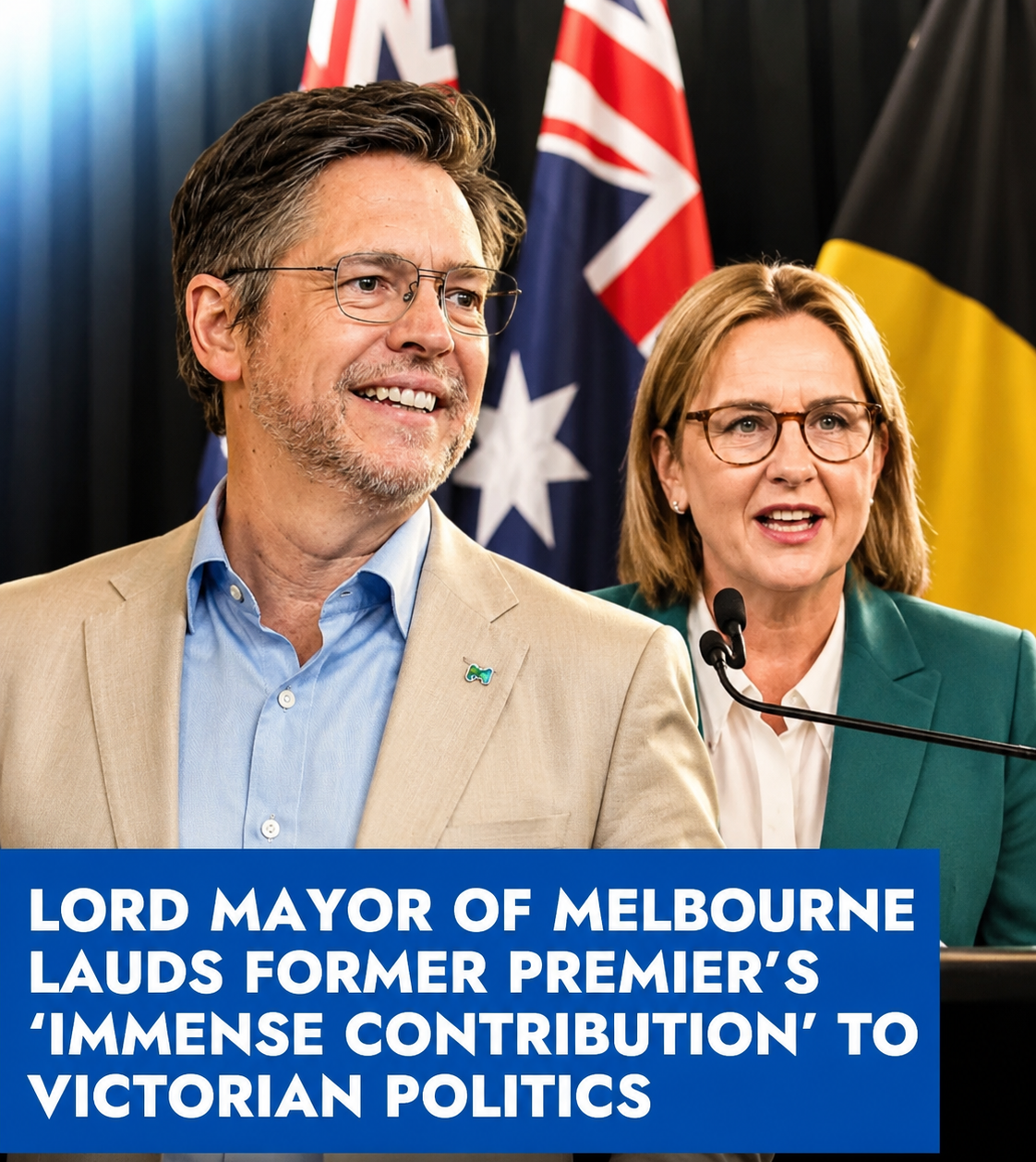
“Most ministers would dream of one”
During his interview with 3AW’s Tom Elliott, Reece acknowledged that Allan’s resignation had occurred during an exceptionally difficult political period for the Victorian Labor Government.
However, he argued that political setbacks should not overshadow the breadth of her achievements throughout her ministerial career.
“Most ministers would dream of having one of those in their career,” Reece said.
“She’s got at least half a dozen.”
The Lord Mayor suggested that Allan’s contribution to Victoria extended well beyond her relatively short period as Premier and reflected decades of involvement in major government projects that reshaped the state.
More than 25 years in Parliament
Jacinta Allan entered the Victorian Parliament in 1999 after winning the regional seat of Bendigo East at just 25 years of age, becoming the youngest woman ever elected to the Victorian Parliament at the time.
Over the following decades she held numerous senior ministerial portfolios, including education, regional development, transport infrastructure and major projects before becoming Deputy Premier in 2022 and Premier following Daniel Andrews’ resignation in 2023.
Few Victorian politicians have spent as much of their parliamentary careers overseeing major infrastructure investment.
Her responsibilities expanded steadily through successive Labor governments, placing her at the centre of many of Victoria’s largest public works.
Projects that shaped Victoria
Supporters frequently point to Allan’s involvement in a series of large-scale infrastructure initiatives.
Throughout her years as Minister for Transport Infrastructure and later Premier, she became closely associated with projects including:
- Melbourne Metro Tunnel.
- Level Crossing Removal Project.
- West Gate Tunnel.
- North East Link.
- Suburban Rail Loop.
- Regional rail and road upgrades.
These projects collectively represent many billions of dollars in public investment and are among the largest infrastructure programs undertaken by any Australian state government.
Reece argued that, regardless of political disagreements surrounding individual projects, the sheer scale of Allan’s contribution places her among Victoria’s most influential ministers.
A premiership overshadowed by political pressure
Despite those achievements, Allan’s period as Premier proved politically difficult.
After succeeding Daniel Andrews in September 2023, she inherited significant challenges including rising state debt, housing affordability pressures, growing concern about crime, cost-of-living issues and increasing scrutiny of major infrastructure spending.
Opinion polling deteriorated throughout her premiership, while internal dissatisfaction within the Victorian Labor Party intensified as the November 2026 election approached.
Faced with an impending leadership challenge from Deputy Premier Ben Carroll, Allan ultimately announced she would step aside, saying it was the right decision for both the Labor Party and Victoria.
Ben Carroll promises a new direction
Following Allan’s resignation, Labor MPs unanimously elected Ben Carroll as Victoria’s new Premier.
In his first public remarks, Carroll attempted to distinguish himself from both Allan and Daniel Andrews, declaring:
“I am not Daniel Andrews. I am not Jacinta Allan.”
He subsequently announced a broad policy reset including a Royal Commission into the construction sector, reviews of major infrastructure projects, a renewed focus on Victoria’s finances and stronger engagement with business.
Those reforms have been widely interpreted as an effort to reassure voters that Labor recognises growing public concern over debt, governance and infrastructure costs.
A different perspective on Allan’s legacy
While much recent political commentary has focused on Labor’s electoral difficulties, Reece argued that history often judges leaders differently from contemporary political debate.
He suggested Allan’s decades of public service should not be viewed solely through the circumstances of her resignation.
According to Reece, governments frequently spend years planning and delivering major infrastructure, meaning ministers responsible for those projects leave lasting impacts that extend well beyond election cycles.
His comments contrast with criticism from political opponents, who argue Allan’s legacy is inseparable from escalating state debt, project cost overruns and declining public confidence during Labor’s final years in office.
A divided assessment
As with many long-serving political leaders, Allan’s record continues to divide opinion.
Supporters credit her with helping deliver one of the most ambitious infrastructure programs in Victoria’s history while championing reforms in women’s health, regional development and transport.
Critics point instead to record state debt, construction cost blowouts, governance controversies and declining electoral support that ultimately culminated in her resignation.
Those contrasting interpretations are likely to remain central to assessments of Labor’s twelve years in government.
History’s verdict still to come
Political legacies are rarely settled immediately after a leader leaves office.
Many historians argue that governments are often reassessed years later as completed projects begin operating and the long-term economic and social impacts become clearer.
That is particularly true for infrastructure programs, where benefits—and costs—may continue emerging decades after construction finishes.
Whether Jacinta Allan is ultimately remembered primarily for Victoria’s Big Build, for the political difficulties that marked the end of her premiership, or for both, remains an open question.
For Nicholas Reece, however, there is little doubt that Allan deserves recognition as one of Victoria’s most consequential political figures. His assessment reflects a view that, despite the turbulent circumstances surrounding her departure, her role in shaping modern Victoria through decades of public service will ensure she occupies a significant place in the state’s political history. Others will continue to debate whether those achievements outweigh the financial and political challenges that ultimately ended her leadership, making Allan’s legacy one of the defining conversations in Victorian politics as the state moves toward the November election.






