One Nation leader Pauline Hanson has unveiled one of the most far-reaching Indigenous policy proposals in Australian politics, promising to abolish the National Indigenous Australians Agency (NIAA), end what she describes as race-based government programs and redirect billions of dollars in annual funding into consolidated government revenue.
Delivering her first National Press Club address in June 2026, Hanson argued that Australia should move away from policies targeted on the basis of race and instead provide assistance according to individual need, regardless of a person’s cultural or ethnic background.
The proposal forms part of a broader One Nation platform that also opposes the Voice to Parliament, treaty processes, further Native Title expansion and additional transfers of public land based on Indigenous status. 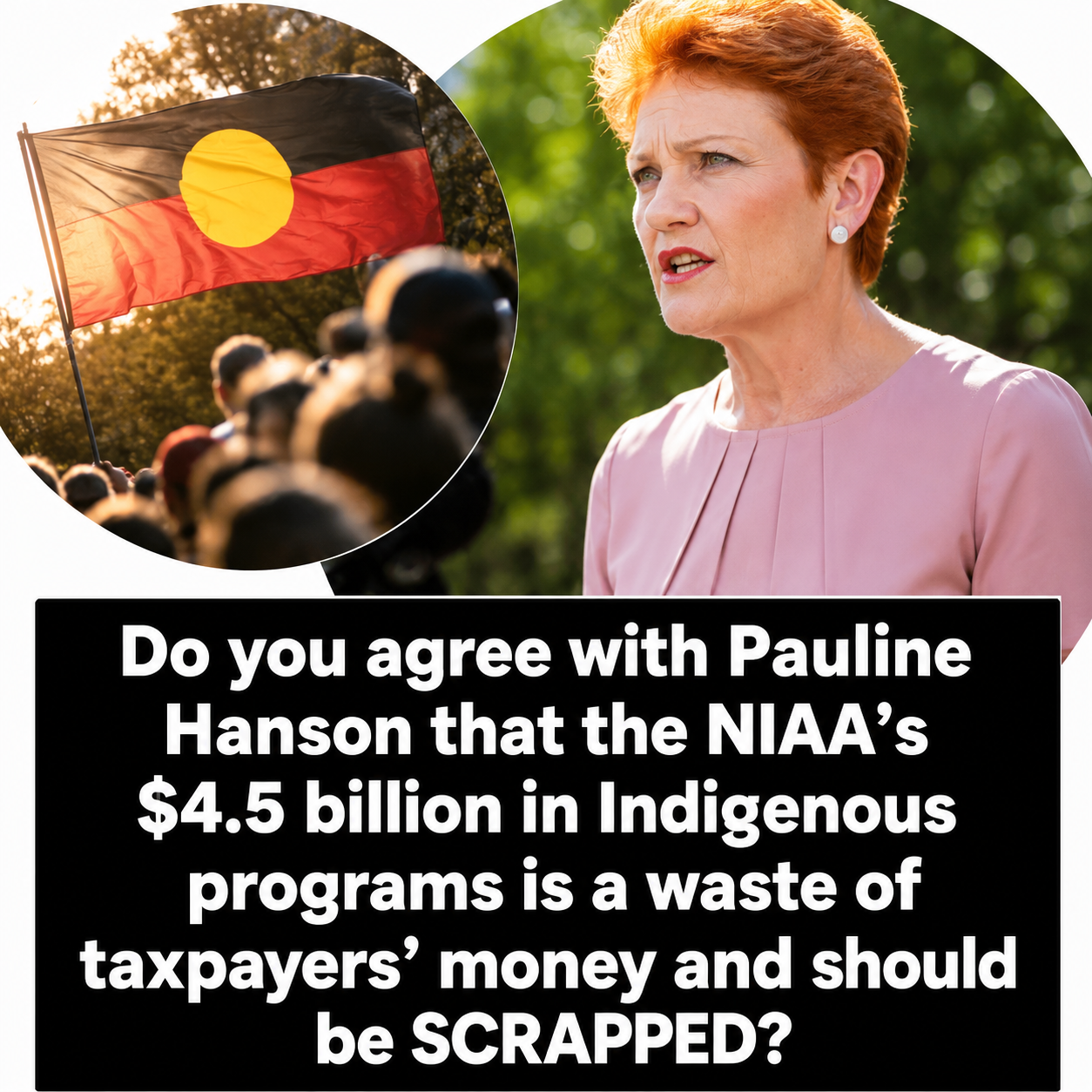
According to Hanson, the National Indigenous Australians Agency currently administers approximately A$4.5 billion each year.
She pledged that, under a One Nation government, the agency would be abolished and its funding returned to the Commonwealth budget before future spending decisions were made through normal government processes.
“All Australians should be treated equally,” Hanson argued, saying government assistance should depend upon personal circumstances rather than ancestry or race.
What is the NIAA?
The National Indigenous Australians Agency was established by the Commonwealth Government in 2019 to coordinate federal policies and programs affecting Aboriginal and Torres Strait Islander Australians.
The agency works across multiple areas including education, employment, housing, health, economic development, community safety and regional development.
It also plays a central role in implementing the National Agreement on Closing the Gap, which aims to reduce longstanding disparities between Indigenous and non-Indigenous Australians across numerous social and economic indicators.
The agency administers billions of dollars in grants, service delivery and policy initiatives each year on behalf of the Commonwealth Government.
Ending race-based programs
Beyond abolishing the NIAA itself, Hanson said One Nation would dismantle what the party describes as race-based government programs.
Her proposal argues that assistance should instead be directed toward Australians experiencing disadvantage irrespective of their ethnic background.
During her National Press Club address, Hanson also reaffirmed the party’s opposition to:
- The Voice to Parliament.
- Treaty negotiations.
- Further Native Title expansion.
- Government programs based primarily on Indigenous identity.
She said One Nation believes public policy should operate according to equal treatment under the law rather than different arrangements for different groups.
Claims about Indigenous spending
During the same speech, Hanson argued that government spending on Indigenous affairs extends well beyond the NIAA budget.
She claimed that more than A$30 billion is spent annually on Indigenous-related programs while questioning whether sufficient accountability exists regarding how that funding is allocated.
Hanson used those figures to argue for a comprehensive review of Indigenous expenditure across the Commonwealth.
However, she did not provide detailed sourcing during the address for the broader spending estimate, and expenditure on Indigenous Australians is spread across numerous Commonwealth and state government departments rather than being administered solely through the NIAA.
Part of a broader One Nation platform
The Indigenous policy announcement sits alongside several other major proposals Hanson presented during her National Press Club appearance.
Among them were commitments to reduce immigration, increase support for domestic energy production, withdraw from net zero commitments, reduce the size of government and reform public broadcasting.
Hanson also proposed significant changes affecting the ABC and SBS, arguing both organisations require substantial restructuring to improve efficiency and impartiality.
Taken together, the proposals represent One Nation’s most comprehensive policy platform ahead of the next federal election.
Supporters say assistance should be needs-based
Supporters of One Nation’s proposal argue governments should not distinguish between Australians on the basis of race when allocating public resources.
They contend that assistance should instead target measurable disadvantage, regardless of whether recipients are Indigenous or non-Indigenous.
According to this view, a needs-based model would produce fairer outcomes while simplifying government administration and improving accountability for taxpayer-funded programs.
Supporters also argue that consolidating Indigenous programs into mainstream government services could reduce duplication across agencies.
Critics warn programs address longstanding disadvantage
Critics strongly disagree.
Indigenous organisations, legal experts and many policy specialists argue targeted programs exist because Aboriginal and Torres Strait Islander Australians continue to experience measurable disadvantage across health, education, employment, housing and life expectancy.
They argue Closing the Gap targets, Indigenous health services and culturally specific programs were developed in response to evidence showing that universal services alone have not eliminated longstanding disparities.
Many also contend that abolishing the NIAA could complicate national coordination of Indigenous policy rather than improve it.
The constitutional debate continues
Hanson’s latest proposal also reflects continuing political divisions following the defeat of the Voice referendum.
While Australians voted against constitutional recognition through the proposed Voice, governments have continued pursuing Indigenous policy through existing institutions and administrative arrangements.
One Nation argues that result demonstrated public opposition to race-based constitutional or governmental structures.
Others maintain the referendum outcome did not constitute opposition to all Indigenous-specific policies and that governments still have responsibilities to address disadvantage affecting First Nations communities.
Would Parliament support the proposal?
Even if One Nation significantly increased its parliamentary representation, implementing the proposal would require legislation and support from both houses of Parliament.
Neither Labor nor the Coalition has indicated support for abolishing the National Indigenous Australians Agency.
Successive governments from both major parties have instead maintained targeted Indigenous policy frameworks, although they have differed over how those programs should be delivered and evaluated.
As a result, Hanson’s proposal currently represents a distinctive policy position rather than one likely to receive immediate bipartisan backing.
A debate likely to continue
The announcement has again placed Indigenous affairs at the centre of Australia’s political conversation.
For One Nation, abolishing the NIAA symbolises a broader shift toward what the party describes as equal treatment for all Australians under a single system of government support.
For opponents, the proposal risks dismantling institutions specifically created to address entrenched social and economic inequalities affecting Aboriginal and Torres Strait Islander peoples.
The differing perspectives reflect fundamentally different approaches to public policy.
One Nation argues equality is best achieved through race-neutral government programs focused solely on individual need. Critics argue equality sometimes requires targeted measures designed to address historical and ongoing disadvantage experienced by particular communities.
With Indigenous policy expected to remain a significant issue at the next federal election, Hanson’s proposal ensures debate over the future of the National Indigenous Australians Agency, targeted funding and the broader direction of reconciliation policy will continue well beyond the National Press Club stage where the plan was first unveiled.






