Australia’s eSafety Commissioner Julie Inman Grant has declined to condemn the ABC over its controversial broadcast depicting graphic violence against mining billionaire Gina Rinehart, saying responsibility for television broadcasting standards lies with a different regulator rather than her office.
Her comments have added another chapter to the growing controversy surrounding the ABC’s Race Around The World program, which has already prompted political criticism, complaints from Hancock Prospecting and a formal review by the ABC’s internal Ombudsman.
Speaking at a media conference, Inman Grant was asked whether she believed the segment—which depicted graphic violence directed at Rinehart—was appropriate.
Rather than expressing a personal opinion on the content, the eSafety Commissioner said the issue was outside the responsibilities of her office.
Instead, she referred questions to the Australian Communications and Media Authority (ACMA), Australia’s statutory regulator for television and radio broadcasting.
“That would be a matter for the Australian Communications and Media Authority, who is the broadcasting regulator,” she said. 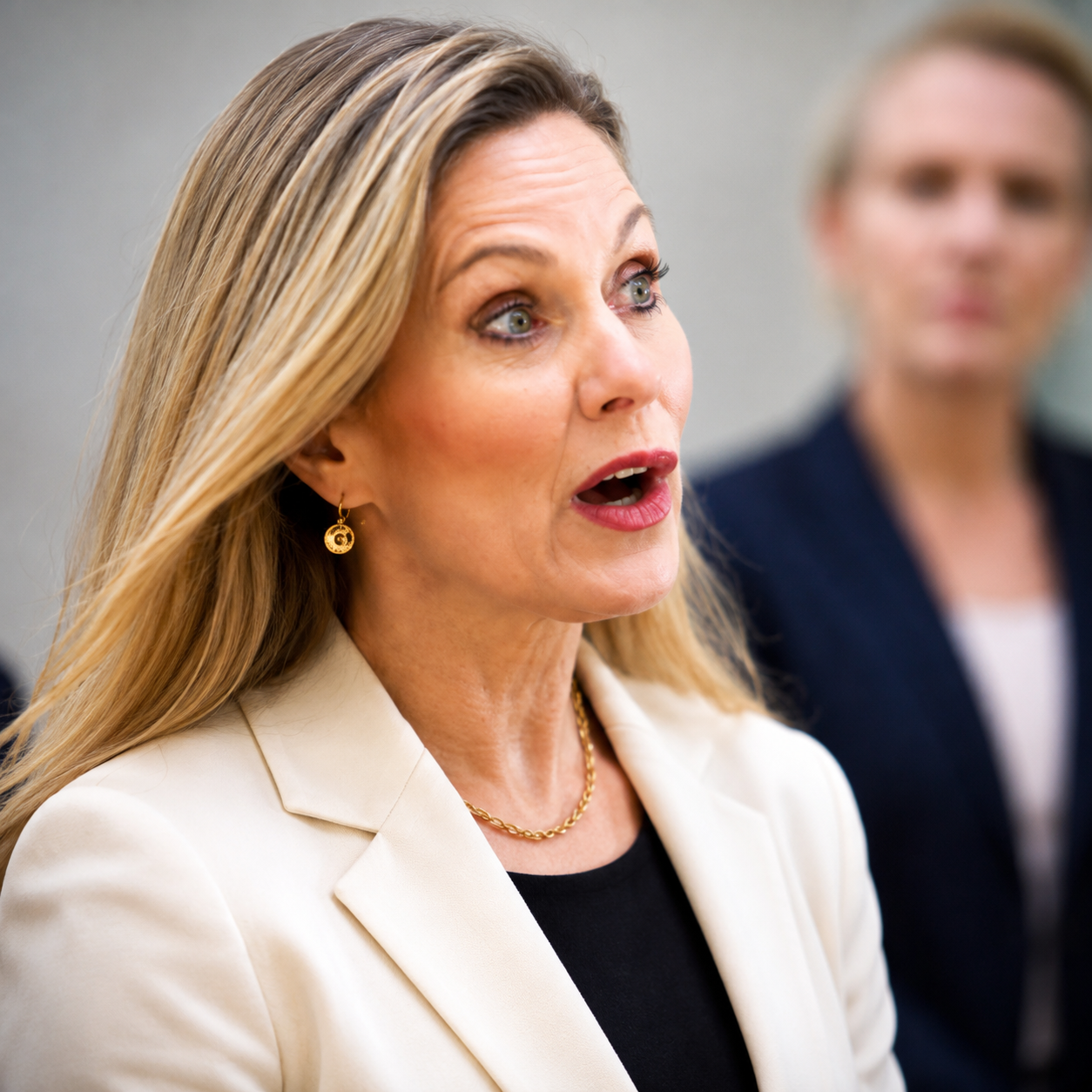
Why the response has attracted attention
Inman Grant’s refusal to directly criticise the ABC has itself become part of the political debate.
Critics argue that, although ACMA regulates television broadcasters, the ABC also published the same material on its digital platforms, areas where the eSafety Commissioner possesses significant powers under Australia’s Online Safety Act in certain circumstances.
Others note that the Commissioner’s office regularly comments on online harms, cyber abuse and digital safety, making her decision not to express a view on the ABC segment notable.
Supporters of Inman Grant, however, argue that she was correctly distinguishing between her statutory responsibilities and those of another independent regulator.
Australia’s regulatory framework deliberately separates responsibilities between agencies, with ACMA overseeing broadcasting standards while the eSafety Commissioner primarily focuses on online safety issues established under federal legislation.
Questions over consistency
The controversy intensified because Inman Grant has previously spoken publicly about broader issues relating to online behaviour and public discourse.
One example frequently cited by critics was a speech delivered in 2024 in which she discussed misinformation and online harms, including comments regarding former United States President Donald Trump.
During that speech, she described Trump as a significant spreader of misinformation and criticised the willingness of major technology companies to allow public figures greater latitude than ordinary users under platform rules.
Those comments were made as part of broader discussion surrounding online misinformation, platform accountability and digital safety rather than through a formal regulatory investigation.
Critics now argue that Inman Grant was willing to express strong personal views on those issues but declined to do so regarding the ABC broadcast.
Her office has not suggested that the two situations are comparable, maintaining instead that broadcasting regulation falls within ACMA’s jurisdiction.
The ABC controversy continues
The latest dispute stems from a four-minute segment broadcast as part of the ABC’s Race Around The World series.
The film, created by contestant Kate McGuinness, concluded with graphic and violent imagery directed at Gina Rinehart.
After the program aired, Hancock Prospecting condemned the material, describing it as unacceptable and calling for a public apology together with an investigation into how it passed the broadcaster’s editorial approval processes.
The ABC initially defended the segment, describing it as satirical and “editorially justifiable” within the context of the program. That response generated further criticism from politicians, industry groups and commentators who argued the broadcaster had failed to recognise the seriousness of depicting graphic violence against an identifiable individual.
ABC later referred the matter to its Ombudsman
Following several days of mounting public pressure, the ABC altered its approach.
The broadcaster confirmed that complaints received from viewers would be examined by the ABC Ombudsman’s Office under its formal complaints process.
The Ombudsman reports directly to the ABC Board and independently reviews whether the broadcaster complied with its own Editorial Policies.
The referral does not automatically mean the ABC breached those policies, nor does it predetermine the outcome of the investigation.
Instead, it represents the broadcaster’s established internal review mechanism for complaints that raise significant editorial questions.
Communications Minister also weighed in
The issue has already drawn comments from Communications Minister Anika Wells.
After initially avoiding direct criticism, Wells later described the broadcast as “unacceptable” from her personal perspective while emphasising that the government should not interfere with the ABC’s editorial independence.
She also welcomed the broadcaster’s decision to refer complaints to its Ombudsman.
Her comments attempted to balance ministerial respect for the ABC’s independence with broader public concern surrounding the broadcast.
Different regulators, different responsibilities
The controversy has highlighted the complexity of Australia’s media regulatory framework.
Although the public often associates online content with the eSafety Commissioner, the office’s statutory powers are focused primarily on online abuse, cyberbullying, image-based abuse, certain harmful online material and specific categories of illegal or restricted content under the Online Safety Act 2021.
ACMA, by contrast, regulates television and radio broadcasting, oversees compliance with broadcasting legislation and industry codes, and administers aspects of Australia’s communications framework.
The ABC itself also maintains internal editorial oversight through its Editorial Policies and complaints system, with the Ombudsman reviewing complaints that proceed beyond the initial assessment stage.
Debate over editorial standards
Beyond the immediate regulatory questions, the incident has reignited broader debate about editorial standards at Australia’s national broadcaster.
Supporters of the ABC argue that satire has long formed part of democratic political discourse and that creative works should be assessed within their artistic context.
Critics counter that there is a clear distinction between robust political satire and graphic depictions of violence directed at identifiable individuals, particularly when broadcast by a taxpayer-funded public broadcaster.
The Minerals Council of Australia and Hancock Prospecting have both argued that the segment failed to meet community expectations and the ABC’s own editorial standards, particularly regarding harm and offence.
What happens next?
For now, no formal findings have been made by either the ABC Ombudsman or any external regulator.
The Ombudsman’s review will examine whether the broadcaster complied with its Editorial Policies when approving and broadcasting the segment.
Separately, ACMA has not announced any investigation into the program, and the eSafety Commissioner has indicated that she does not regard the matter as falling within her office’s responsibilities.
As a result, the controversy now continues on several fronts simultaneously: editorial review within the ABC, political debate over the broadcaster’s judgment, public discussion about the limits of satire and ongoing questions about how Australia’s media regulators divide responsibility for content appearing across both broadcast and digital platforms.
Whether the Ombudsman ultimately concludes that the ABC met its editorial obligations or recommends changes to future editorial processes, the dispute has already become one of the broadcaster’s most closely scrutinised editorial controversies of the year. It has also prompted renewed discussion about the respective roles of the ABC, ACMA and the eSafety Commissioner in regulating modern media content that increasingly exists across both traditional broadcasting and online platforms.






