Pauline Hanson’s One Nation is confronting an unexpected legal and administrative challenge at a time when opinion polls suggest the party is enjoying some of its strongest political momentum in years.
The Queensland division of One Nation has been warned it could lose its incorporated status after failing to lodge audited financial statements for three consecutive years, exposing senior officeholders—including Hanson—to potential financial penalties if the outstanding documents are not submitted by next month’s deadline. 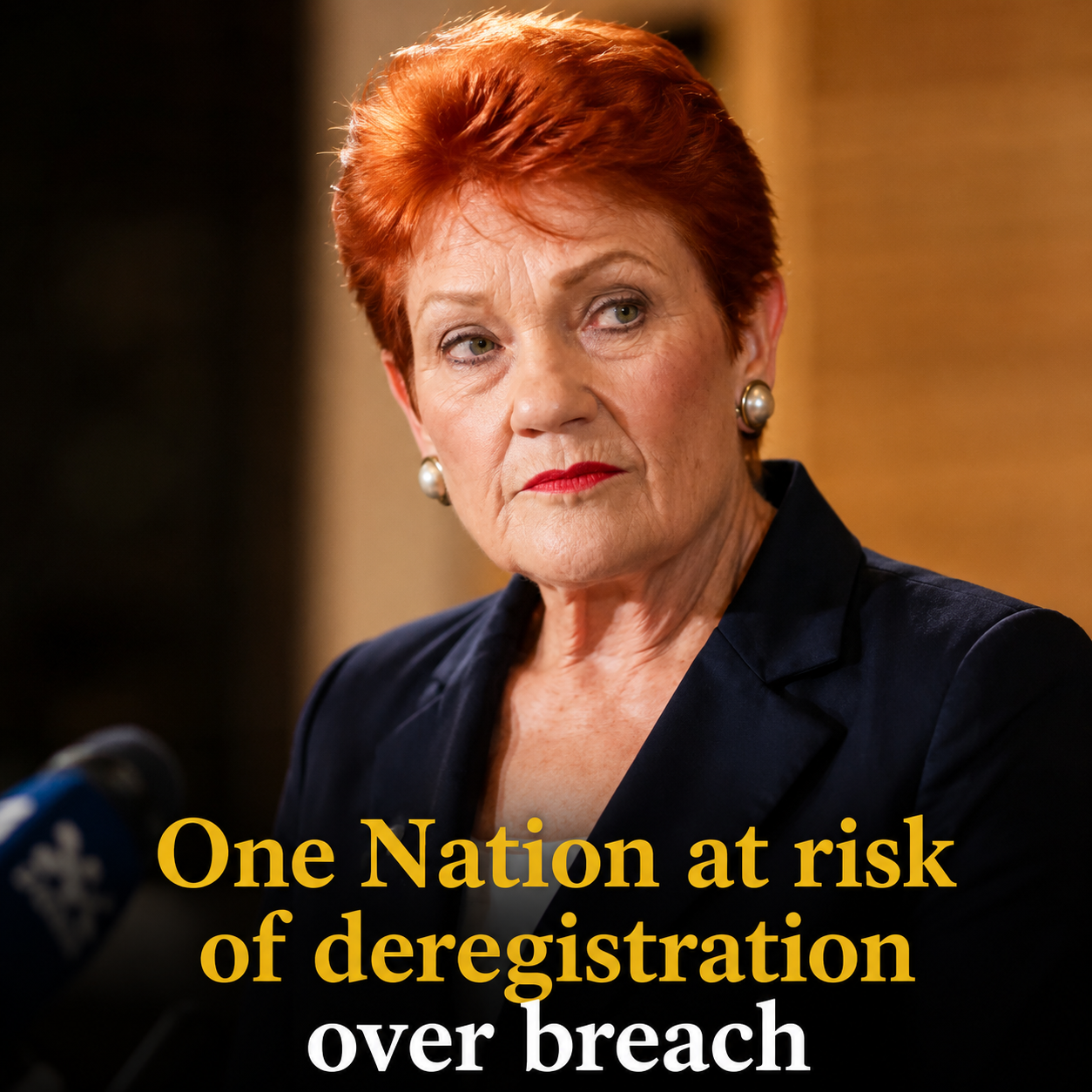
The matter centres on compliance with Queensland’s Associations Incorporation Act 1981, which requires incorporated associations to prepare audited financial statements and lodge them with the Queensland Office of Fair Trading (OFT) each year.
According to the regulator, One Nation Queensland recently submitted overdue annual returns covering the 2022–23, 2023–24 and 2024–25 financial years. However, those returns did not include the audited financial statements required under the legislation.
The Office of Fair Trading has now given the party until 18 August 2026 to provide the missing documents.
If the party fails to meet that deadline, enforcement options available to the regulator include issuing financial penalties to responsible officeholders or commencing a “show cause” process that could ultimately lead to the cancellation of the association’s incorporation.
What does “deregistration” actually mean?
Much of the public discussion surrounding the case has focused on the suggestion that One Nation could be “struck off” in Queensland.
Legal experts, however, note that the issue concerns the party’s incorporated association rather than its registration as a political party with electoral authorities.
If the Queensland incorporated association were cancelled, One Nation would not automatically disappear from elections or lose its elected representatives. Instead, it would lose the legal benefits attached to incorporated status, including the ability to operate as an incorporated legal entity under Queensland law until alternative arrangements were made.
That distinction is important because political party registration and incorporated association status are governed by different legal frameworks.
Nevertheless, losing incorporated status would create significant administrative and reputational challenges for a party preparing for major election campaigns over the next two years.
Why Pauline Hanson could personally face penalties
Under Queensland records, Pauline Hanson is listed as president of the One Nation Queensland Division, while fellow One Nation senator Sean Bell is listed as secretary.
Those officeholders have statutory responsibilities for ensuring the organisation complies with its reporting obligations.
If the regulator determines that legal obligations have not been met, Hanson, Bell and other responsible officers—including the party treasurer—could face financial penalties under Queensland law.
At this stage, however, no penalties have been imposed.
The Office of Fair Trading has instead given the party an opportunity to remedy the outstanding compliance issues before deciding whether further enforcement action is necessary.
One Nation says it is fixing the problem
Despite the headlines, One Nation insists it is already working with the regulator to resolve the issue.
A party spokesperson said the Office of Fair Trading had requested the outstanding audited financial statements be lodged by 18 August and maintained that the party was complying with that request.
The party has previously attributed the reporting delays to high staff turnover at its Brisbane headquarters and described the failure to lodge the audited accounts as an administrative oversight rather than an attempt to avoid financial transparency.
If the outstanding statements are submitted before the deadline, the matter could potentially be resolved without more serious enforcement action.
An awkward distraction during a political surge
The compliance issue has emerged at a politically sensitive moment for One Nation.
Over recent months, the party has enjoyed a noticeable rise in public support, fuelled by voter concern over immigration, cost-of-living pressures, housing affordability and energy prices.
Pauline Hanson has recently unveiled what she describes as One Nation’s first 100-day agenda if the party were ever to form government, including proposals to reduce immigration, abandon net zero policies, investigate childcare spending, overhaul the National Disability Insurance Scheme and expand support for self-funded retirees.
The party has also announced plans to contest almost every electorate at the Victorian state election later this year, reflecting its growing confidence following stronger polling performances.
Against that backdrop, questions surrounding financial reporting have provided political opponents with an opportunity to challenge One Nation’s administrative competence.
Government criticism
Treasurer Jim Chalmers criticised the party following news of the reporting failure, arguing the compliance issue reflected broader concerns about One Nation’s ability to meet basic governance standards.
He suggested the administrative failures were significant, while also accusing the party of pursuing policies that he believes would negatively affect Australian workers and families.
One Nation rejects those criticisms, maintaining that the issue is administrative rather than political and insisting it is taking the necessary steps to satisfy the regulator.
Financial transparency under increasing scrutiny
The episode has also renewed broader discussion about transparency and governance within Australian political parties.
Although electoral donations and campaign funding attract the greatest public attention, incorporated associations are also required to comply with financial reporting obligations designed to ensure members, regulators and the public can have confidence in an organisation’s financial management.
Audited financial statements play an important role because they provide independent verification of an organisation’s financial position, helping ensure assets, liabilities, income and expenditure have been properly recorded.
Failure to submit those reports does not necessarily imply financial misconduct, but it does constitute a breach of reporting obligations that regulators take seriously.
Political parties across Australia have periodically faced scrutiny over governance, fundraising and financial reporting, regardless of ideological affiliation. Transparency advocates argue timely financial disclosure is essential for maintaining public confidence in democratic institutions, particularly when parties receive public funding or seek elected office.
Historical context
The latest compliance issue also recalls One Nation’s long and often complicated legal history.
Since its establishment in the late 1990s, the party has experienced several periods of deregistration, legal disputes and organisational restructuring while also returning to electoral prominence on multiple occasions.
Those earlier legal battles centred largely on electoral registration and funding, whereas the current issue relates specifically to compliance obligations for the Queensland incorporated association.
Despite the current controversy, One Nation continues to hold representation in the Federal Parliament and several state parliaments, while recent opinion polling suggests the party remains competitive in a number of jurisdictions.
What happens next?
The immediate focus now turns to the 18 August deadline imposed by the Queensland Office of Fair Trading.
If One Nation submits the outstanding audited financial statements before then, the matter may conclude without further action.
If it fails to do so, the regulator could begin a formal enforcement process that may include fines for officeholders and a show cause notice requiring the party to explain why its incorporated status should not be cancelled.
For Pauline Hanson, the issue represents an unwelcome distraction during one of the party’s strongest political periods in years. While One Nation argues the reporting failure is an administrative oversight that is being rectified, critics contend that political parties seeking to govern should themselves demonstrate full compliance with the laws they expect others to follow.
Whether the matter proves to be a short-lived paperwork problem or develops into a more significant political controversy will largely depend on what happens before the regulator’s August deadline. Until then, One Nation’s electoral momentum will continue alongside renewed scrutiny of its internal governance and financial reporting practices.






