Former Victorian Premier Daniel Andrews has re-entered the political conversation for the first time since Labor’s dramatic leadership upheaval, issuing a rare public statement after new Premier Ben Carroll repeatedly sought to distance himself from his predecessors by declaring, “I am not Daniel Andrews.”
The intervention marks Andrews’ first significant public comment on Victorian politics since Jacinta Allan resigned as premier and Carroll emerged victorious from an internal Labor leadership battle just months before the November state election.
Although Andrews has largely avoided political commentary since leaving office in 2023, he chose to publicly back both his former deputy Jacinta Allan and her successor, attempting to steady a Labor Party confronting one of its most turbulent periods in more than a decade. 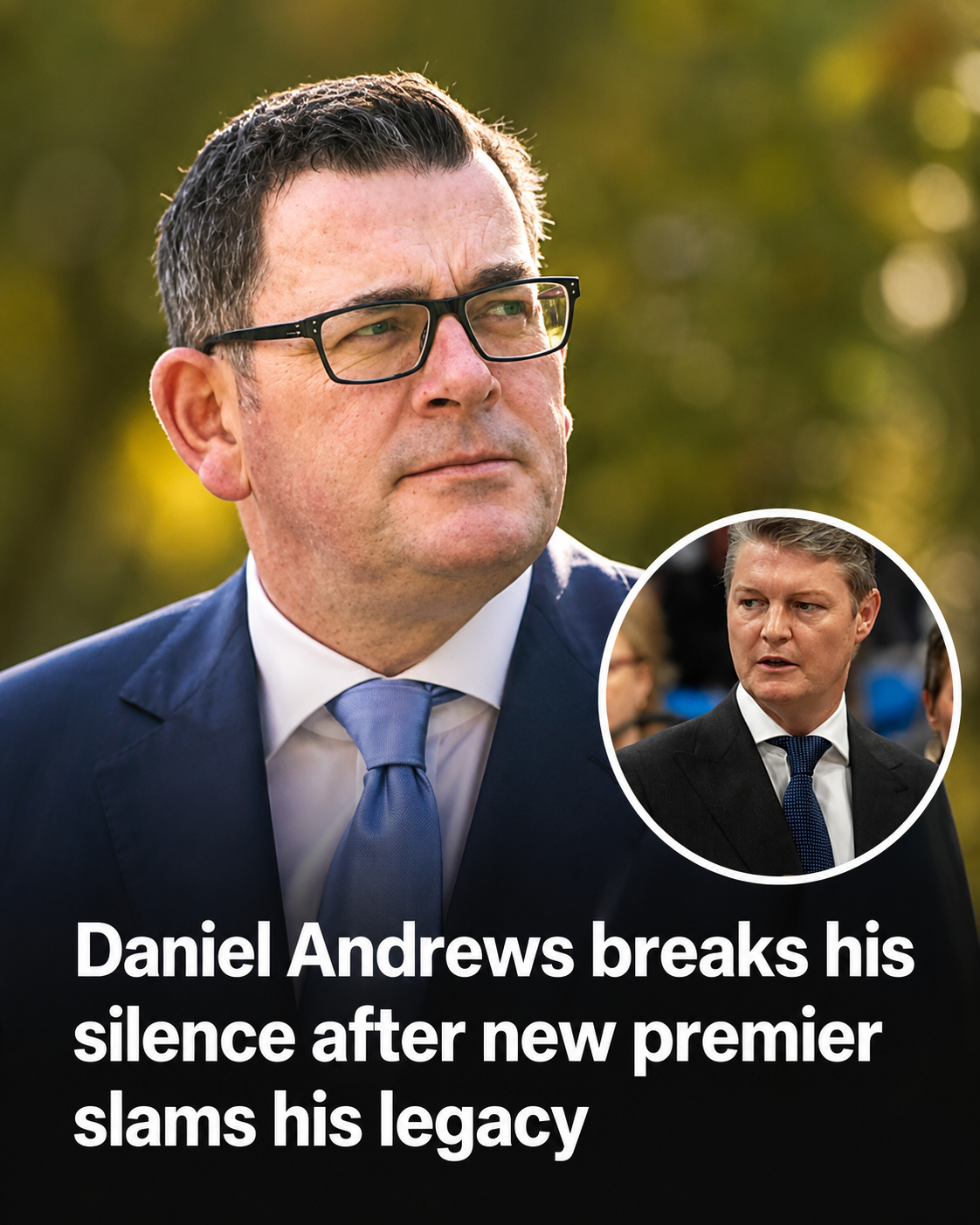
The timing of Andrews’ statement is significant because it followed Carroll’s repeated efforts to convince Victorians that his government would represent a clear break from the previous leadership.
During his first media appearances as Premier, Carroll repeatedly told voters:
“I am not Daniel Andrews. I am not Jacinta Allan.”
The remarks quickly became one of the defining political messages of the leadership transition, signalling Labor’s recognition that many voters wanted evidence of change after more than a decade in government.
Carroll has argued that while Labor remains proud of many of its achievements, Victoria now requires a different style of leadership to confront mounting concerns surrounding the cost of living, government debt, crime and public confidence.
His message reflects the difficult political position Labor now occupies.
On one hand, the party continues to defend major achievements delivered during the Andrews years, including large-scale transport infrastructure projects, education investment, hospital expansion and renewable energy initiatives.
On the other, Labor also faces criticism over rising state debt, the cancellation of the 2026 Commonwealth Games, prolonged COVID-19 lockdowns, integrity controversies and growing concerns about crime and housing affordability.
By declaring he was “not Daniel Andrews,” Carroll appeared to acknowledge that many voters associate those controversies with the previous administration while simultaneously attempting to preserve Labor’s broader record in government.
Andrews, however, made clear he did not interpret Carroll’s comments as criticism.
In his public statement, the former premier praised Jacinta Allan’s leadership during an extraordinarily difficult period and said she should be proud of her contribution to Victoria.
“Let me make one thing very clear,” Andrews said before paying tribute to Allan’s work and thanking her for her years of service to the Victorian Labor Government.
He also threw his support behind Carroll, expressing confidence the new premier would be capable of leading Labor into the upcoming state election.
According to Andrews, Carroll is an energetic campaigner with the ability to connect with Victorian voters during what is expected to be one of Labor’s most difficult electoral contests since first winning government in 2014.
The endorsement represents a notable show of unity after several days of intense speculation surrounding Labor’s internal divisions.
Jacinta Allan resigned after losing support within sections of the parliamentary caucus, ending a premiership that lasted less than three years following Andrews’ own resignation in September 2023.
Her departure triggered a leadership contest in which Carroll emerged as Labor’s new leader and Victoria’s premier only months before voters head to the polls on 28 November.
The rapid change has inevitably prompted questions about Labor’s election strategy.
Political analysts say Carroll’s immediate challenge is convincing voters that changing leaders represents more than simply replacing one premier with another.
His decision to emphasise that he is “not Daniel Andrews” reflects an attempt to present himself as a fresh political figure while avoiding an outright rejection of Labor’s record in office.
That balancing act may prove one of the defining themes of the election campaign.
Daniel Andrews remains one of the most consequential—and polarising—figures in modern Victorian politics.
Serving as Premier from December 2014 until September 2023, he became Victoria’s longest-serving Labor premier and oversaw significant reforms across transport, health, education and renewable energy.
His government delivered landmark infrastructure programs including the Metro Tunnel, the Level Crossing Removal Project and the Suburban Rail Loop proposal, while also introducing free kindergarten initiatives and major investments in hospitals and schools.
Supporters argue those projects transformed Victoria and positioned the state for long-term growth.
Critics, however, point to rapidly rising state debt, the abandoned Commonwealth Games, integrity controversies and some of the world’s longest cumulative COVID-19 lockdowns as defining negatives of the Andrews era.
Those contrasting assessments continue to shape Victorian politics years after his resignation.
Carroll’s leadership therefore begins under unique circumstances. He must retain Labor voters who remain loyal to Andrews’ legacy while simultaneously attracting undecided voters seeking political change.
His early messaging suggests Labor believes it can achieve both objectives by presenting Carroll as a different type of leader rather than abandoning the party’s broader policy agenda.
Whether that strategy succeeds will depend largely on how voters interpret the distinction Carroll is attempting to draw.
Some may see the leadership change as evidence Labor has listened to public concerns and is prepared to renew itself before the election. Others may conclude that changing the premier does little to alter the record of a government that has now been in office for more than twelve years.
Andrews’ intervention may help stabilise internal Labor morale by signalling that the party’s most influential modern leader supports the transition rather than resents it.
At the same time, his comments inevitably place renewed attention on the political legacy Carroll is trying to move beyond.
Opposition parties have already argued that Labor cannot separate itself from decisions made under Andrews because many senior ministers, including Carroll himself, served throughout much of that period.
Coalition MPs have contended that a new premier does not erase years of government decisions on debt, taxation, infrastructure spending or public services. Labor rejects that argument, maintaining that new leadership naturally brings different priorities, management styles and policy emphasis while preserving the party’s core values.
The coming election campaign is therefore likely to feature an unusual contest over political identity as much as policy. Carroll is asking Victorians to believe Labor can offer meaningful renewal without changing government, while the Coalition argues genuine change requires a different administration altogether.
Daniel Andrews’ rare return to public debate has ensured that his influence remains firmly embedded in that conversation. His endorsement of Carroll provides the new premier with the backing of Labor’s most successful electoral leader in modern Victorian history, yet it also reminds voters of the very political era Carroll has sought to distinguish himself from.
As Victoria moves closer to polling day, that tension is expected to remain one of the defining storylines of the campaign. Labor will continue promoting Ben Carroll as the face of a refreshed government, while opponents will work to convince voters that, despite the new premier’s declaration that he is “not Daniel Andrews”, the party’s record over the past decade cannot be separated from the election choice now facing Victorians.






